





























Former Apple team debuts Acme Weather with a fresh approach to forecasting
Acme Weather, launched by a former Apple team, introduces a modern approach to weather forecasting with improved design, hyperlocal data, and clearer predictions.
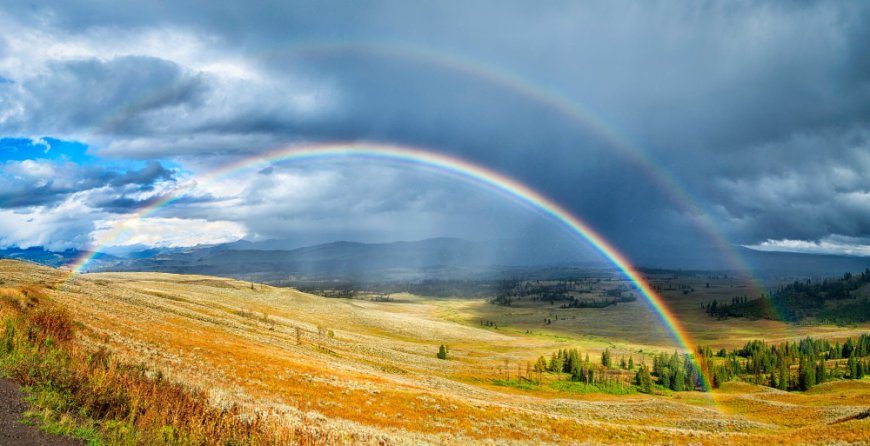
The people behind Dark Sky — the widely loved weather app Apple purchased in March 2020 — are returning with a brand-new product that rethinks how forecasts should be presented. The group has now introduced Acme Weather, a new app they say delivers forecasts that are both more dependable and more transparent than those offered by Dark Sky. Along with improved forecasting, Acme Weather will include a set of distinctive notifications, including playful ones such as alerts for potential rainbows and especially scenic sunsets.
Acme Weather is taking a different path from most weather apps, which typically provide a single “best guess” forecast. In Acme Weather, the main forecast is supported by a set of alternative projections meant to help users understand uncertainty and improve decision-making.
Dark Sky co-founder Adam Grossman explains in an introductory blog post that Acme Weather’s in-house forecasting approach draws on multiple sources, including numerical weather prediction models, satellite data, ground station observations, and radar data. That foundation, he says, makes the forecast reliable.
But the app goes a step further: it also displays extra forecast paths that reflect other plausible outcomes. These appear as grey lines overlaid on the forecast graphs, offering a quick view of what the weather might do, in addition to the single primary prediction.
“Forecasts are often wrong — it’s the weather, right? It’s one of the hardest things to predict,” Grossman said in a telephone interview. He added that one long-standing frustration with many weather apps is that they only show a single expected result without revealing how confident the system is. “And our biggest pet peeve with a lot of weather apps is you just get their best guess, and you don’t know how certain they are,” he said.
Grossman argues that seeing alternative forecast scenarios can be especially helpful when people are planning around important events.
He offered winter storms as a clear example. Sometimes a storm may look like it will bring snow in the morning, but there may also be a meaningful chance that precipitation shifts later, turning snow into rain. “I find it most useful for winter storms, where, maybe the storm starts in the morning, and you’re going to get snow, but maybe there’s also a possibility it holds out a little bit later — to the afternoon — in which case it’s rain,” Gross explained. In his view, being able to see uncertainty directly on the timeline makes it easier to judge whether the models are aligned — for instance, whether nearly all outputs point toward snow — or whether the forecast is split, with half suggesting snow and half suggesting rain. That kind of at-a-glance clarity can influence everything from commute plans to major scheduling decisions.
This richer forecasting style could be valuable not only for everyday users but also for developers seeking access to higher-quality data.
When the team ran Dark Sky, it offered a paid weather API that other developers could integrate into their own products. After Apple acquired Dark Sky, the team helped build WeatherKit, Apple’s subscription-based developer toolkit that provides access to Apple’s weather data. Grossman said the Acme Weather team has not yet made a final decision on whether Acme Weather will eventually include a developer-facing API.
For now, Acme Weather is designed as a consumer product. The app costs $25 per year and includes a two-week free trial. The subscription model helps cover the expense of pulling in and processing multiple weather models and other data sources, which can be costly to maintain at scale.
“Most of our time has been spent on building our own forecast — our own data provider, in a way,” Grossman said. He noted that building their own forecasting pipeline enables features that would be difficult if they were dependent on outside providers. “And this lets us do things like build multiple forecasts … [and] create any map we want, rather than having to rely on a third-party map provider,” he added.
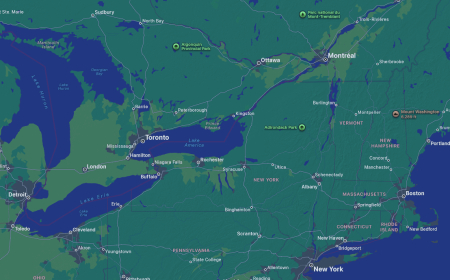
At launch, Acme Weather includes a broad set of maps and layers. These include radar and lightning, rain and snow totals, plus views for wind, temperature, humidity, cloud cover, and hurricane tracks. The team says the mapping experience is a core part of the product, designed to help users explore conditions rather than just read a single summary.
Acme Weather also introduces a community-driven feature called Community Reports, which allows users to share what they are seeing in real time. The goal is to improve live reporting by incorporating on-the-ground feedback about current conditions.
Dark Sky became a favourite in part because of its reputation for pinpointing the start times of rain with surprising accuracy. Acme Weather aims to build on that legacy — while also introducing features that add a bit of personality and experimentation to the experience.
The app includes standard notifications for common events, such as incoming rain, nearby lightning, community updates, and government-issued severe weather alerts. But it also plans to test more creative alerts — including predictions for rainbows or a heads-up when the sky might produce a particularly beautiful sunset.
Those experimental notifications will live in an “Acme Labs” section of the app. Grossman said the team plans to be cautious and conservative with these predictions because they are inherently difficult to forecast consistently.
In addition, Acme Weather allows users to tailor notifications to the conditions they care about most — such as wind levels, UV index, or the chance of rain within the next 24 hours — rather than forcing a one-size-fits-all alert system.
Grossman said one reason the team wanted to return to building an independent app was the freedom to experiment more aggressively with ideas that might be too risky or slow-moving inside a large company.
“I absolutely love Apple … but as a big company, it’s difficult to try weird, new, experimental ideals. If you have a billion users, mistakes are costly,” he said. There are long software development cycles, there are a lot of stakeholders, and this idea of being able to try a bunch of things, I think, is interesting.”
Acme Weather is currently available on iOS, and the team says an Android version is planned.
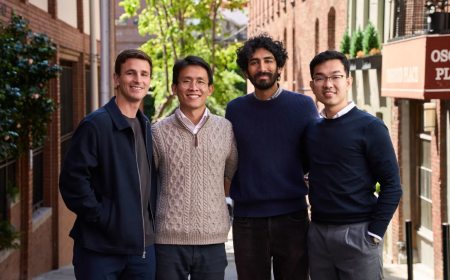
The startup is bootstrapped and is led by co-founders Josh Reyes and Dan Abrutyn, who previously worked on Dark Sky. The team is small, made up of both former Dark Sky members and new hires as they build out the next chapter of their weather platform.
What's Your Reaction?
 Like
0
Like
0
 Dislike
0
Dislike
0
 Love
0
Love
0
 Funny
0
Funny
0
 Angry
0
Angry
0
 Sad
0
Sad
0
 Wow
0
Wow
0