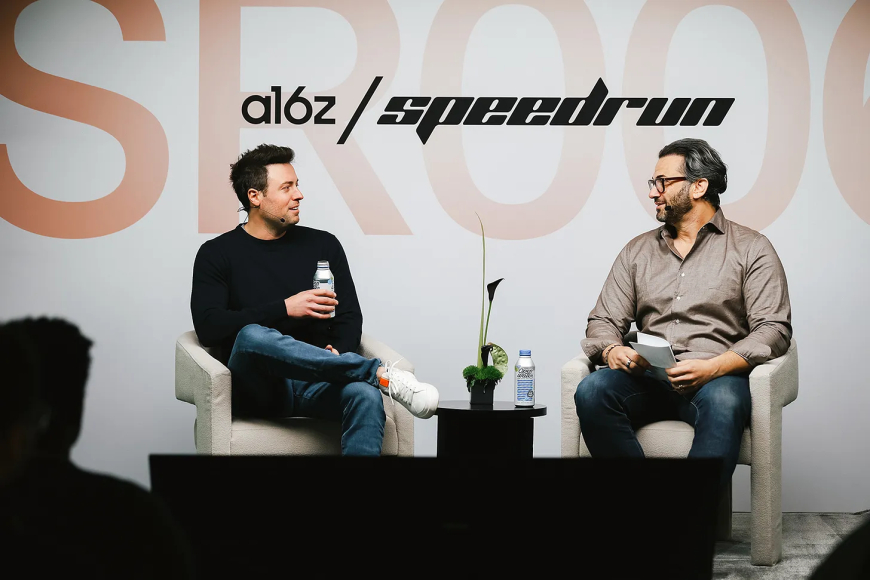
One of the most sought-after startup accelerators in technology today is Andreessen Horowitz's Speedrun program. Since launching in 2023, the accelerator has become known for its rigorous selection process. In a January blog post, the firm revealed that more than 19,000 startups applied for its latest cohort, with fewer than 0.4% ultimately accepted. Overall, the program's acceptance rate sits below 1%.
Originally centred on gaming startups, Speedrun later expanded to include entertainment and media companies. It has since evolved into what Joshua Lu, the program's general manager and partner at a16z, described as a "horizontal program." Today, founders across all industries are eligible to apply. The 12-week program is now based exclusively in San Francisco, after previously operating a Los Angeles cohort. Lu confirmed that the firm will continue to focus its efforts on San Francisco.
Speedrun runs two cohorts annually, admitting roughly 50 to 70 startups per class. The program can invest up to $1 million in each company, though its equity terms are more demanding than those of some other accelerators. Typically, Speedrun provides $500,000 upfront in exchange for 10% ownership via a SAFE note. An additional $500,000 is available if the startup raises its next funding round within 18 months, at terms set by those subsequent investors.
By comparison, Y Combinator generally takes a fixed 7% equity stake for $125,000, along with another $375,000 invested on an uncapped MFN SAFE.
Speedrun has acknowledged that its structure is "equity expensive," but says the value lies in the depth of support it offers. Founders gain access to a16z's advisory and operating networks, helping with go-to-market strategy, branding, media positioning, talent recruitment, and more. Participating startups also receive benefits, including up to $5 million in credits from partners such as Amazon Web Services, OpenAI, Nvidia, and Deel.
I'd like you to focus on the founding team.
Because Speedrun primarily targets early-stage startups, the founding team is a key factor in evaluation. Lu said the program assesses how well the founders' capabilities align and complement one another.
"That doesn't mean one has to be technical and one has to be commercial and one has to be marketing," Lu explained. Rather, the team prefers not to see major gaps in skill sets or interests. Founders should demonstrate self-awareness and show that any weaknesses are accounted for in their hiring strategy.
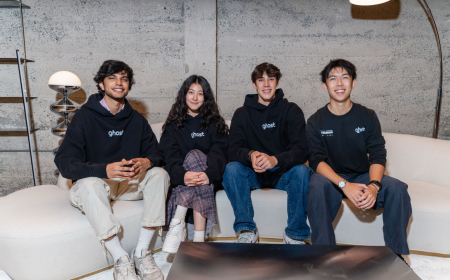
The program also values teams with shared experience. Founders who have previously worked together or have established histories tend to navigate challenges more effectively. According to Lu, shared context helps teams manage disagreements constructively and move forward with stronger alignment.
Although advances in AI have reduced the barriers to building software products, technical expertise within the founding team remains a significant advantage. AI tools have accelerated development and hypothesis testing, but Speedrun still wants to see evidence of early traction or validation. Even minimal proof of product-market resonance can make a difference.
"Speedrun as a program is really great at helping teams pour gasoline on a very small spark or fire," Lu said. The accelerator looks for early indicators of potential that it can help amplify.
Don't overemphasise market theory.
Lu noted that many applicants make the mistake of over-focusing on market theory — explaining at length why a problem exists and why their solution should work. While that analysis may be valid, he cautioned that even highly successful technology companies often pivot from their original concepts.
"What we really want to hear about is why this founding team is really good together," Lu said, emphasising that the team's dynamic and capabilities matter more than theoretical projections. Validation of the idea is important, but clarity about the founders themselves carries greater weight.
AI can help — but only to a point.
Speedrun encourages founders to use AI tools to refine and polish their applications. With modern AI writing tools readily available, basic errors such as grammar mistakes or unclear phrasing are increasingly avoidable. AI can help founders organise their thoughts and present them more coherently.
However, reliance on AI has limits. Founders who advance to the next stage will participate in a live video interview, where they must articulate their ideas clearly without automated assistance. Lu emphasised that communication skills will be tested directly during these conversations.
Only about 10% of applicants reach the video interview stage, where typically two to three investors evaluate candidates. Following that discussion, additional screening conversations may take place before final cohort decisions are made.
Be proactive about networking.
While numerous accelerator options exist, Speedrun distinguishes itself by providing access to a substantial operating team within a16z. Of the firm's roughly 600 employees, Lu said only about 10% are investment professionals; the majority are operators dedicated to supporting portfolio companies.
Founders in the program can engage with specialists in marketing, finance, management, and other critical domains. According to Lu, the most successful participants are those who actively seek exposure to these resources and approach the experience with ambition.
"We tell founders that come through the program, what you get out of Speedrun is what you put into it," Lu said. Founders who are eager to leverage domain expertise early in their journey may find particular value in the structure Speedrun provides.
A founder's perspective
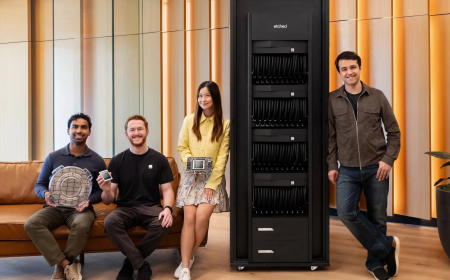
Mohamed Mohamed, a participant in a recent cohort, recently announced a $5 million funding round for his proptech startup Smart Bricks, led by a16z's Speedrun. He was drawn to the accelerator because it stood out as one of the few programs explicitly designed for co-founders developing frontier AI applications. He sought an environment where he could rigorously test an ambitious technical vision.
Mohamed approached the application process as though he were drafting an internal strategy memo rather than crafting a marketing pitch. Instead of relying on buzzwords, he focused on articulating the core problem, explaining why it is structurally challenging, and clarifying why his team was uniquely suited to address it. He was candid about both strengths and gaps, which he believes strengthened his application.
He described the selection process as thorough and intellectually demanding, with conversations diving into product architecture, data strategy, and long-term ambition. The experience felt more like a partner-level discussion than a standard accelerator interview.
His advice to other founders is toprioritisee intellectual honesty and precision. Avoid exaggeration, he suggested, and focus instead on clear articulation of your current position and challenges. Inflated narratives tend to unravel quickly under scrutiny.
Ultimately, he believes Speedrun is less concerned with perfection and more interested in founders who demonstrate thoughtful reasoning and conviction when tackling complex problems. "Depth beats polish every time," he said.
































 Like
0
Like
0
 Dislike
0
Dislike
0
 Love
0
Love
0
 Funny
0
Funny
0
 Angry
0
Angry
0
 Sad
0
Sad
0
 Wow
0
Wow
0