







































Key Facts About the Historic Warner Bros. Discovery Sale
Key details about the landmark Warner Bros. Discovery sale, including what it means for the media industry, streaming competition, and the future of the company.
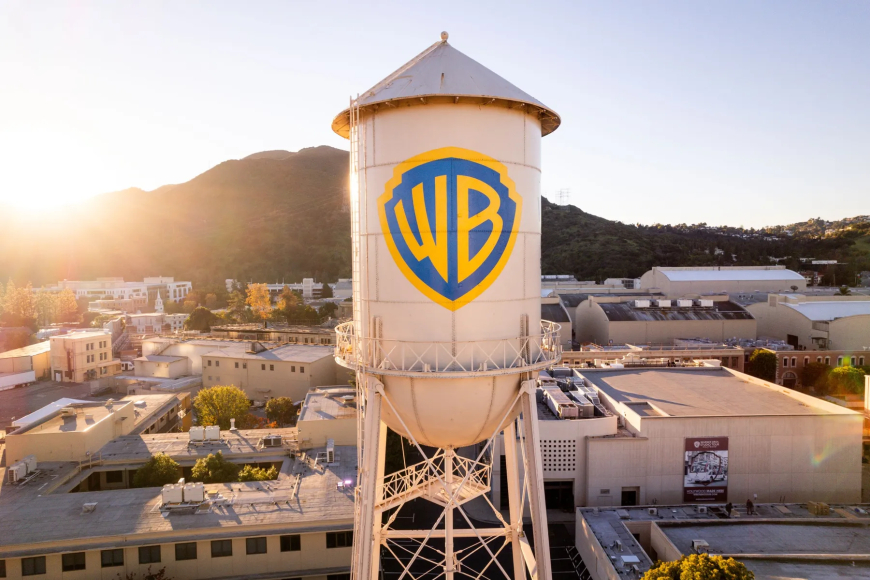
The streaming and entertainment sector has just seen one of the most consequential megadeals in its history, catching many industry watchers off guard. The scale of the transaction is remarkable in its own right, and it is widely expected to reshape Hollywood and the broader media landscape in significant ways.
Following years of Warner Bros. Discovery grappling with tens of billions of dollars in debt, declining cable audiences, and mounting pressure from streaming competitors, the company had been weighing significant strategic options, including a sale of its entertainment operations to a rival.
Several major companies recognised the opportunity in pursuing the media giant, and in December, Netflix announced plans to acquire WBD’s studios and streaming business for $82.7 billion.
But in a dramatic late-stage turn this month, it now appears that Paramount, led by David Ellison, will emerge as the winner in the contest, after putting forward a $111 billion offer to purchase all of Warner Bros. Discovery’s assets. That includes its studios, HBO, streaming services, gaming business, and television networks such as CNN and HGTV. Paramount was only recently acquired by Ellison, with major backing from his father, Larry Ellison, the Oracle chairman, the world’s sixth-richest person, and a major donor to Trump.
Paramount’s proposal still requires formal approval from WBD’s board of directors, and any eventual deal could also come under substantial regulatory pressure.
Here is a closer look at what has happened so far, what is at stake, and what may happen next.
What has happened so far?
The chain of events began in October, when Warner Bros. Discovery disclosed that it was exploring a possible sale after receiving unsolicited interest from several major industry players.
The process quickly became competitive, with Paramount and Comcast emerging as serious contenders, even though Paramount was initially seen as the favourite.
Still, WBD’s board ultimately concluded that Netflix’s proposal was the most attractive. Netflix offered $82.7 billion, but only for Warner’s film, television, and streaming businesses.
That decision set off a new phase of the bidding battle. Paramount argued that its own offer — roughly $108 billion for all of Warner’s assets — was stronger than Netflix’s more limited proposal focused only on studios and streaming. In an effort to strengthen its case, Netflix revised its deal in January to an all-cash proposal of $27.75 per share for Warner Bros. Discovery, giving investors more confidence and clearing a path for the transaction to move forward.
Paramount, however, did not back away from its pursuit of WBD. Even so, Warner’s board repeatedly rejected its bids, citing concerns about Paramount’s significant debt burden and the greater risk associated with its proposal. The board was also uneasy about the group of investors supporting Paramount’s bid, which includes sovereign wealth funds from Saudi Arabia, Qatar, and Abu Dhabi. According to the board, Paramount’s proposal would have left the merged company carrying $87 billion in debt, which they were not willing to accept at that stage.
In January, Paramount filed a lawsuit seeking additional details about the Netflix transaction. One month later, it sought to improve its position by offering WBD shareholders a $ 0.25-per-share “ticking fee” for every quarter the deal did not close by December 31, 2026. Paramount also said it would cover the $2.8 billion breakup fee if Warner chose to back out of its agreement with Netflix.
Then, in a final push to land the deal, Paramount raised its offer to $31 per share in February. That prompted the WBD board to extend talks with Paramount about a possible agreement, treating it as a superior proposal. Netflix chose not to increase its offer and exited the negotiations.
“The transaction we negotiated would have created shareholder value with a clear path to regulatory approval,” Netflix co-CEOs Ted Sarandos and Greg Peters said in a statement on February 26. “However, we’ve always been disciplined, and at the price required to match Paramount Skydance’s latest offer, the deal is no longer financially attractive, so we are declining to match the Paramount Skydance bid.”In addition to the billions Paramount already owes, the company is also poised to assume the roughly $33 billion in debt that Warner Bros. Discovery carries under the terms of the agreement. Financing for the deal will come from a $54 billion debt commitment from Bank of America, Merrill Lynch, Citi, and Apollo Global Management, plus $45.7 billion in equity from Larry Ellison.
Regulatory hurdles and other concerns
Beyond the fact that assuming such a large amount of debt would place a major financial strain on Paramount, the company also faces several other obstacles in its proposed acquisition of WBD that could affect whether the transaction succeeds.
For one thing, Ellison has warned that significant job cuts are likely in the near future. That has already led to widespread concern among critics about potential layoffs and downward pressure on wages.
Ellison is also a divisive figure within the industry, and his ownership of CBS News has been viewed as sympathetic to and supportive of Donald Trump’s administration, whose major donor list includes his father, Larry Ellison. Under Ellison’s control at Paramount, critical reporting on the administration has reportedly been either shelved or subjected to greater scrutiny by Ellison or his chosen head of CBS News, conservative provocateur Bari Weiss.
That has fueled unease among staffers at Warner-owned CNN. Trump has personally pressed news divisions that have been critical of him for concessions, including securing a $16 million settlement from CBS before the FCC approved the Ellison takeover of Paramount. Before Netflix withdrew from the contest, Trump had also pressured the company to remove former Biden White House official Susan Rice from its board. He has publicly said he wants CNN brought to heel under new ownership.
Regulatory review is another major obstacle. A merger of this size has already drawn attention from lawmakers.
For example, California Attorney General Rob Bonta said in a statement on February 26 that “these two Hollywood titans have not cleared regulatory scrutiny — the California Department of Justice has an open investigation, and we intend to be vigorous in our review.”
Just one day before Netflix exited the bidding, it was disclosed that a coalition of 11 state attorneys general had urged the U.S. Department of Justice to examine the merger over concerns that it could reduce competition and drive up subscription prices. That followed warnings issued months earlier by U.S. senators Elizabeth Warren, Bernie Sanders, and Richard Blumenthal to the Justice Department’s Antitrust Division. The senators cautioned that a merger of this size could create serious consequences for both consumers and the industry more broadly. In their view, the combination could give the new media giant too much market power, allowing it to raise prices for consumers while suppressing competition.
When is the deal expected to close?
The transaction has not been finalised yet.
Initially, the Netflix deal was expected to move toward a stockholder vote in April, with the transaction projected to close within 12 to 18 months after that vote. However, the shift to a Paramount agreement will likely reset the approval timeline. Additionally, the regulars remain outstanding, and the level of scrutiny could affect the outcome.
Stay tuned…
What's Your Reaction?
 Like
0
Like
0
 Dislike
0
Dislike
0
 Love
0
Love
0
 Funny
0
Funny
0
 Angry
0
Angry
0
 Sad
0
Sad
0
 Wow
0
Wow
0