



































Reid Hoffman comments on the growing ‘tokenmaxxing’ debate
Reid Hoffman shares his perspective on the tokenising debate, highlighting how AI tokens, compute access, and productivity are reshaping tech compensation.

Just days after Meta reportedly shut down its internal “tokenmaxxing” dashboard following reports that its AI leaderboard had leaked, Reid Hoffman publicly voiced support for the broader idea gaining traction across Silicon Valley.
An AI token refers to a small unit of data that an artificial intelligence system processes when interpreting a prompt and generating a response. Tokens are also used as a standard way to measure AI usage and to calculate the cost of AI-powered services.
Because of this, many companies have started tracking how many tokens employees use to gauge engagement with AI tools. This internal metric has been informally labelled “tokenmaxxing,” with “maxxing” reflecting a Gen Z slang trend that refers to optimising or maximising something, similar to terms like “looksmaxxing” or “sleepmaxxing.”
The approach has sparked debate among engineers and tech professionals, with some questioning whether token usage is a meaningful indicator of productivity. Critics argue that measuring employees by token consumption can resemble ranking individuals by how much they spend, rather than by how effectively they work.
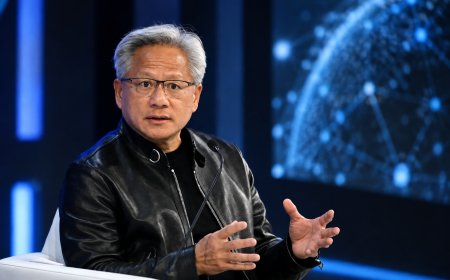
Speaking during an interview at Semafor’s World Economy summit, Hoffman offered a more supportive perspective. While he did not use the term “tokenmaxxing” directly, he suggested that monitoring token usage can provide useful insight for organisations adopting AI technologies.
“You should have people across different roles actively engaging and experimenting with AI,” Hoffman said. “One helpful metric to observe — not a perfect measure of productivity, but still informative — is how much token usage is happening as people work.”
He emphasised that token usage alone should not be interpreted in isolation. Some employees may consume a large number of tokens through exploratory or experimental activities that do not always yield immediate results. For that reason, he suggested combining usage tracking with a deeper understanding of how AI tools are being applied.
“Some experiments won’t succeed, and that’s okay,” Hoffman added. “The key is maintaining a cycle of experimentation and ensuring that a wide range of people are using these tools together and at the same time.”
Beyond token tracking, Hoffman also shared broader recommendations for companies shaping their AI strategies. He encouraged organisations to integrate AI across all departments rather than limiting its use to specific teams. He also proposed regular internal discussions where employees can share what they have learned from using AI tools.
“We should have regular check-ins — maybe weekly — where teams discuss what new things they tried with AI for personal, team, or company productivity, and what they discovered,” he said. “You’ll find that some of those experiments lead to genuinely valuable outcomes.”
What's Your Reaction?
 Like
0
Like
0
 Dislike
0
Dislike
0
 Love
0
Love
0
 Funny
0
Funny
0
 Angry
0
Angry
0
 Sad
0
Sad
0
 Wow
0
Wow
0