For the most in-demand founders, the prestige of joining a top accelerator is increasingly weighed against the cost of handing over a large chunk of ownership early on.
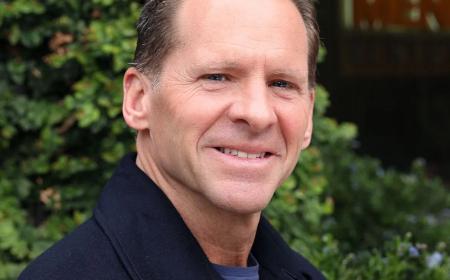
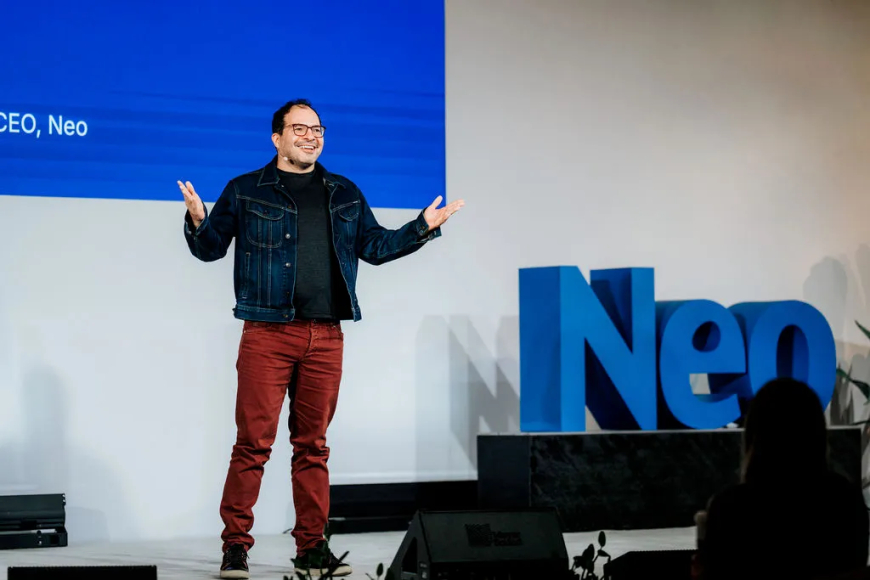
Ali Partovi, the longtime investor and CEO of venture firm Neo, says he wants to deliver the mentorship and community of an elite accelerator program without requiring promising founders to give up 7% — or in some cases 10% — of their company before they have even fully gotten started.
Partovi, known for early investments in Facebook, Cursor, and Kalshi, has now unveiled Neo Residency, a new program with a competitive structure that combines Neo’s four-year-old accelerator with a track specifically designed for current college students.
The terms being offered through Neo Residency are so founder-friendly that they are “not even comparable to any other accelerator,” Partovi said.
For the summer cohort of 12 to 15 startups entering the program, Neo will invest $750,000 using an uncapped SAFE. This agreement gives the investor future equity in exchange for funding now, without a valuation cap determining the stake. Unlike the fixed-percentage arrangements common in other accelerators, Neo will not take equity immediately. Instead, the equity will convert at the startup’s next formal funding round, and the percentage will depend on the valuation of that round. If the company raises at a $15 million valuation, Neo’s stake becomes 5%. But if the valuation is $100 million, Neo’s ownership would fall to 0.75%.
“We take the risk up front, so this is extremely favourable to startups,” Partovi said.
By comparison, Y Combinator typically takes a fixed 7% of the company for $125,00, and also provides an additional $375,000 through an uncapped MFN most-favoured nation. SAFE, a clause that ensures early investors receive terms at least as favourable as those offered to later investors. Andreessen Horowitz’s Speedrun program generally invests $500,000 in a startup via a SAFE note, with another $500,000 available if the company raises its next round within 18 months at whatever terms are negotiated by the other investors.
“We’re offering a deal so great that it’s appropriate even for founders who are not even considering any other accelerator,” Partovi said.
The reduced equity cost is only one part of Neo Residency’s appeal.
Founders will spend three months working out of Neo’s offices in San Francisco’s Jackson Square neighbourhood, attend a two-week bootcamp in the Oregon mountains, and receive mentorship from roughly 30 experienced operators. Mentors include Russell Kaplan, president of Cognition, and Fuzzy Khosrowshahi, CTO of Notion, who is credited as the creator of Google Sheets and is also Partovi’s uncle.
Still, the program’s biggest draw may be its prestige, as Seed and Series A investors tend to place strong weight on founders personally selected by Partovi.
“The one [accelerator] I like right now that has a very high signal, and every founder I met there is just wicked smart, is Neo,” Wesley Chan, co-founder and managing partner of FPV Ventures, said.
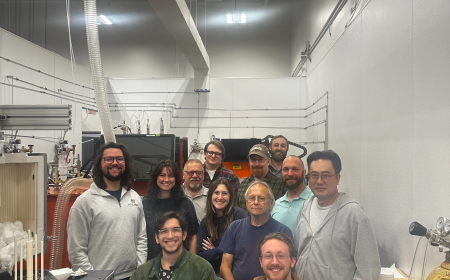
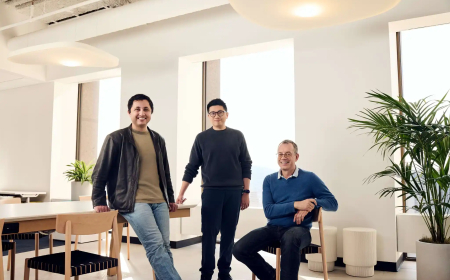
Startups that have already participated include Moment, a fintech company that has raised $56 million from investors such as Andreessen Horowitz, and Anterior, a healthcare AI startup backed by NEA and Sequoia.
Neo Residency will also pick five to eight students — either individuals or small teams — and provide them with a $40,000, no-strings-attached grant so they can take a semester off to work on a project. There is no requirement for students to drop out or immediately form a company. Still, Partovi said he hopes participants will develop an entrepreneurial drive and, when they eventually launch a startup, come to Neo for funding.
Neo plans to keep the program small and highly selective, capping its two annual cohorts at 20 teams each, made up of a mix of active startups and student projects.
Why is Neo offering terms this generous? “We have more confidence in our ability to attract and pick out future superstars than ever before,” Partovi said.
Partovi’s track record suggests that confidence may be justified. He famously met Cursor co-founder Michael Truell when Truell was still an MIT student and later wrote one of the first checks into the AI coding startup, which is now valued at nearly $30 billion.






















 Like
0
Like
0
 Dislike
0
Dislike
0
 Love
0
Love
0
 Funny
0
Funny
0
 Angry
0
Angry
0
 Sad
0
Sad
0
 Wow
0
Wow
0