



































Elon Musk reveals plans to manufacture chips for SpaceX and Tesla
Elon Musk unveils plans to develop in-house chip manufacturing for SpaceX and Tesla, aiming to boost AI performance and reduce dependence on the supply chain.
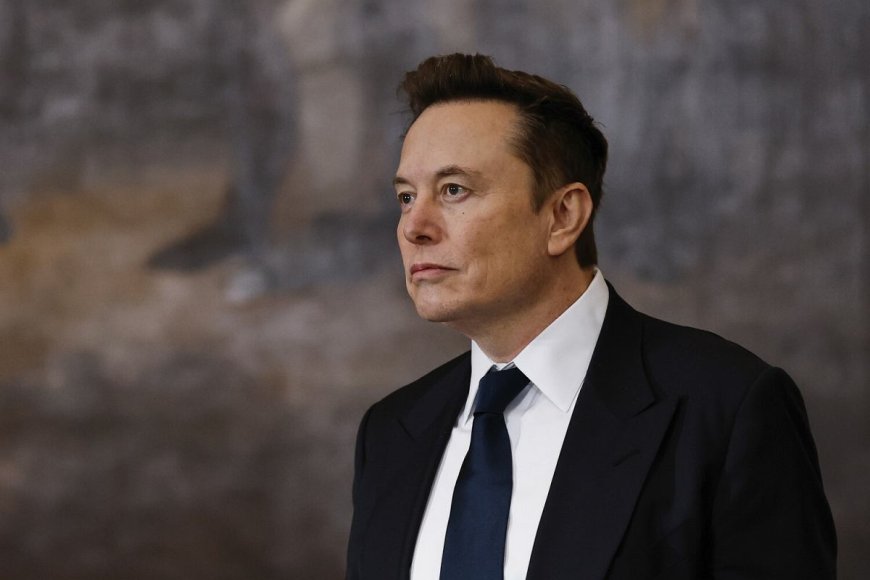
Elon Musk has unveiled plans to expand into semiconductor production, outlining a chip manufacturing initiative involving both Tesla and SpaceX. The announcement reflects Musk’s broader strategy to secure critical hardware for his companies as demand for artificial intelligence and robotics computing continues to grow.
According to a Bloomberg report, Musk shared details of the plan during an event on Saturday night in downtown Austin, Texas. A photo presented at the event indicated that the proposed facility, which Musk has referred to as “Terafab,” would likely be constructed near Tesla’s existing headquarters and gigafactory in Austin.
Musk explained that the project's motivation stems from limitations in the current semiconductor supply chain. He expressed concern that external chip manufacturers are not producing components at a pace sufficient to meet his company's needs. Emphasising the urgency of the situation, Musk stated that building an in-house solution is becoming necessary to ensure access to the required computing resources. He framed the decision in practical terms, suggesting that without such a facility, Tesla and SpaceX may struggle to secure the chips needed to support their expanding technological ambitions.
The proposed Terafab facility is intended to produce chips capable of supporting between 100 and 200 gigawatts of computing power annually on Earth. In addition to terrestrial production, Musk also spoke about plans to extend chip manufacturing capabilities into space, targeting up to a terawatt of computing capacity beyond Earth’s surface. These figures highlight the scale of the project and its alignment with Musk’s long-term vision for high-performance computing infrastructure across multiple environments.
Despite outlining the scope and objectives of the initiative, Musk did not provide a specific timeline for when the Terafab facility might be developed or become operational. The absence of a detailed schedule leaves open questions about how quickly the project could move from concept to execution.
Bloomberg also noted that while Musk has extensive experience leading companies in sectors such as electric vehicles, aerospace, and energy, he lacks a direct background in semiconductor manufacturing. At the same time, observers note that Musk has previously set ambitious targets that have sometimes proven difficult to achieve within initial timelines, adding an element of uncertainty to the proposal.
The announcement underscores the increasing importance of chip production in the race to advance artificial intelligence, robotics, and large-scale computing systems, as companies seek greater control over the technologies that power their future developments.
What's Your Reaction?
 Like
0
Like
0
 Dislike
0
Dislike
0
 Love
0
Love
0
 Funny
0
Funny
0
 Angry
0
Angry
0
 Sad
0
Sad
0
 Wow
0
Wow
0