



































Apple seeks Supreme Court review in ongoing App Store legal battle
Apple moves to take its App Store dispute to the Supreme Court, escalating its long-running legal fight over platform rules and competition.
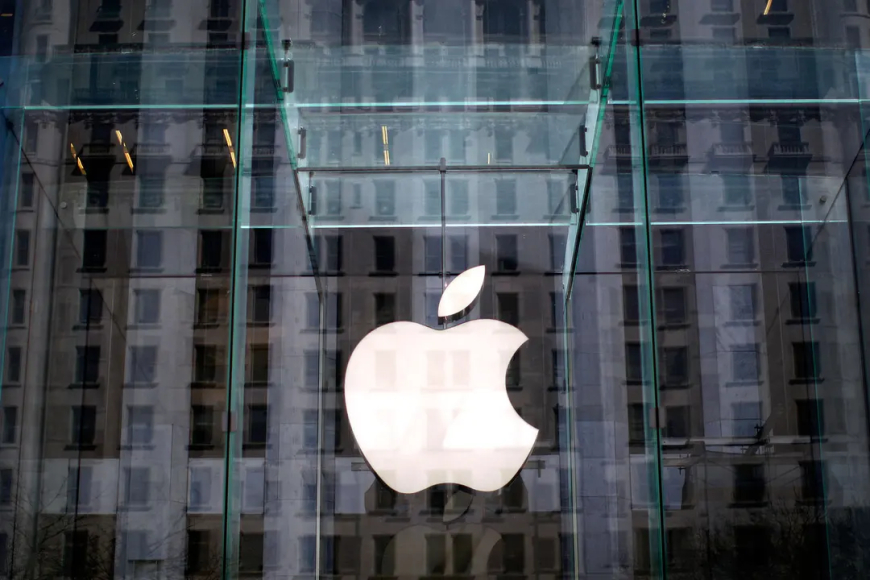
Apple is preparing to escalate its long-running legal fight over App Store policies by asking the U.S. Supreme Court to review another key aspect of its dispute with Epic Games. In a recent court filing, the iPhone maker confirmed its intention to seek Supreme Court intervention regarding how it charges developers for transactions conducted outside its App Store ecosystem.
While that process unfolds, Apple also requested a temporary pause on an appeals court ruling that restricts how it can impose fees on external payment systems. On Monday, April 6, the court granted Apple's request to stay the ruling, though Epic Games quickly pushed back and challenged the decision.
The legal battle dates back several years to 2020, when Epic Games — the company behind the hit title Fortnite — introduced its own in-app payment system to bypass Apple's App Store commission structure. This move triggered a high-profile lawsuit that has since shaped ongoing debates about app marketplace control and developer rights.
In 2021, a court ruled largely in Apple's favour, determining that the company did not operate as a monopoly. However, the ruling also required Apple to allow developers to include links to external payment options, opening the door for alternative billing methods outside Apple's system.
Apple appealed that ruling to the Supreme Court, but the court declined to hear the case, effectively leaving the Ninth Circuit Court of Appeals decision in place. Following that outcome, Apple began permitting external payment options but introduced a 27% commission on those transactions — only slightly lower than its standard 30% fee within the App Store.
For comparison, Google recently resolved a similar dispute with Epic Games and reduced its Play Store commission to 20% as part of a settlement.
Epic Games and other developers argued that Apple's 27% commission undermines the intent of the court's order. They pointed out that developers still incur additional costs from third-party payment processors, meaning the change offers little to no financial benefit.
The U.S. District Court for the Northern District of California sided with Epic, finding Apple in contempt for failing to comply with the spirit of the ruling. The Ninth Circuit Court later upheld that decision in December 2025. The appeals court concluded that Apple's external payment fee effectively negated the purpose of allowing alternative payment options. However, it did not specify what a revised fee structure should look like. The matter is now expected to return to a lower court to determine appropriate remedies. Apple attempted to secure a rehearing within the Ninth Circuit, but that request was denied in March 2026, leaving the company with limited legal avenues within that jurisdiction.
As a result, Apple is now turning to the Supreme Court once again. If the court agrees to hear the case, Apple is expected to challenge the legal reasoning behind the contempt ruling and argue that courts should not have the authority to dictate how it structures fees for its platform. The company has consistently maintained that its 27% commission is not solely tied to payment processing, but also reflects the broader value it provides through hosting, app discovery, security, and developer tools within the App Store ecosystem.
However, given that the Supreme Court previously declined to hear a related appeal from Apple, there is no guarantee that it will agree to review this latest request.
The eventual outcome of this dispute could have major financial implications for Apple's App Store business, particularly as digital ecosystems evolve and users increasingly rely on alternative platforms, including AI-driven tools and services.
Responding to Apple's latest move, Epic Games spokesperson Natalie Munoz criticised the request to pause the ruling, calling it "another delay tactic" aimed at preventing meaningful limits on Apple's ability to charge what she described as excessive fees on third-party payments.
She added that courts have repeatedly found Apple's practices unlawful. She said that only a small number of developers — including companies like Spotify, Kindle, and Patreon — have been willing to use external payment options so far.
Munoz emphasised that Epic Games will continue to challenge Apple's approach, arguing that broader adoption of alternative payment systems would ultimately benefit both developers and consumers by fostering greater competition within the app ecosystem.
What's Your Reaction?
 Like
0
Like
0
 Dislike
0
Dislike
0
 Love
0
Love
0
 Funny
0
Funny
0
 Angry
0
Angry
0
 Sad
0
Sad
0
 Wow
0
Wow
0