




































Esther and Anne Wojcicki support the launch of a new healthcare accelerator and fund
Esther and Anne Wojcicki back a new healthcare accelerator and fund aimed at supporting innovation in biotech, digital health, and medical startups.
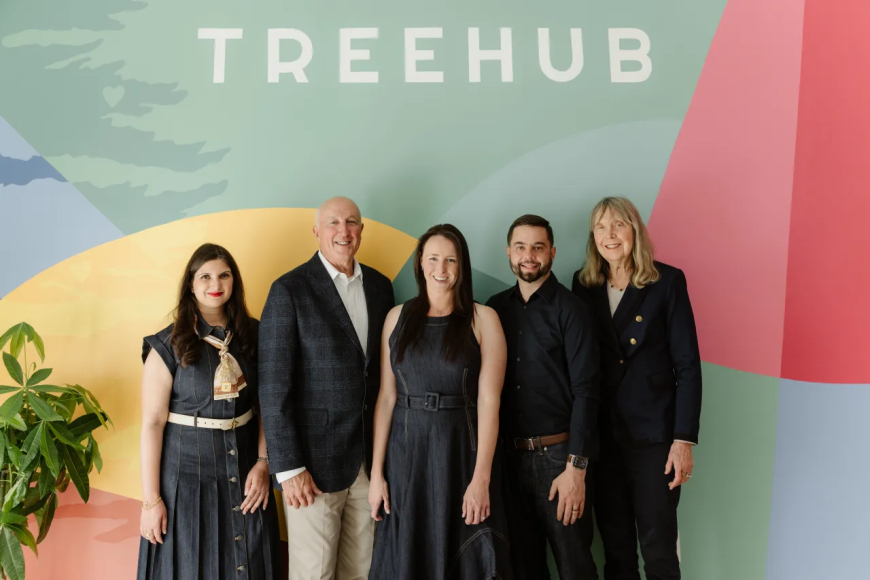
A new residency-venture initiative is aiming to address one of the most urgent challenges in the United States—healthcare innovation. Mary Minno, an investor and former product manager at Google, announced on Wednesday the launch of an early-stage startup accelerator called Treehub, along with an associated venture firm named the AI Health Fund, which will support startups working at the intersection of healthcare and artificial intelligence.
The AI Health Fund serves as the investment arm of the Treehub residency program, where founders first apply to incubate and develop their ideas. The residency spans six months in total. According to Minno, the first 12 weeks are focused on helping founders achieve product-market fit. In comparison, the final 12 weeks are dedicated to defining the company's next steps—whether that means raising a large funding round, joining a traditional accelerator, or deploying solutions within hospital systems.
Minno said the idea for Treehub emerged late last year during a deeply personal period in her life. She was six weeks postpartum with her second child when a family member was diagnosed with acute leukaemia and rapidly went from being healthy to critically ill. The experience exposed her to systemic challenges in healthcare access, including delays in specialist availability, treatment timelines, and inefficiencies caused by outdated systems and policy constraints.
"It's only when people went outside of that system and broke the rules that things could happen," she said. "I realised that we need more startups here because they're going to challenge the status quo."
Following this realisation, Minno turned to longtime friend Esther Wojcicki—an educator and the mother of late Susan Wojcicki, former CEO of YouTube, and Anne Wojcicki, co-founder of 23andMe. Esther had previously been Minno's high school journalism teacher, and the two have maintained a close relationship over the years. Together, they discussed how to drive more innovation in healthcare and how academic researchers often struggle to translate their work into scalable startup companies.
According to Minno, many researchers cannot effectively communicate their ideas in ways that appeal to venture capital investors, and they often struggle with commercialisation. The Treehub program aims to bridge this gap by pairing academic founders with experienced operators, helping them build companies in a more structured, venture-style environment.
In addition to the Treehub residency program, Minno and Esther Wojcicki have partnered with members of Stanford University's biomedical data science department to launch the AI Health Fund. The fund will provide early-stage investments ranging from $50,000 to $150,000 to startups emerging from academic research environments. It plans to raise a total of $10 million and closed its first tranche last year at $1.5 million, including $500,000 from family and friends and a $1 million investment from billionaire venture capitalist Tim Draper.
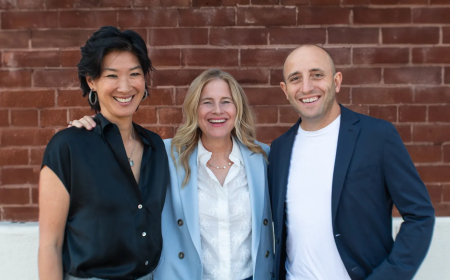
Anne Wojcicki has joined the initiative as an operating partner, while Esther Wojcicki serves as a founding advisor. The Stanford-affiliated team also includes Roxana Daneshjou, assistant professor of biomedical data science and dermatology at Stanford Medicine; Derek Minno, president of VC firm Point Capital and Mary Minno's father; and Alexander Ioannidis, assistant professor of biomedical data science and genetics at Stanford.
The AI Health Fund aims to invest in at least 60 companies during its initial phase. It operates independently from the Treehub residency to allow investments in founders who may not go through the accelerator program, including experienced entrepreneurs building second or third ventures.
So far, the fund has backed 12 companies emerging from the Treehub ecosystem, including Clair Health, a women's hormone-tracking startup that also participated in the a16z Speedrun program, and a new pediatric autism-focused company founded by researcher Dennis Walls.
Minno said the residency is still in an experimental stage as the team refines its hybrid accelerator-investment model. A key feature of Treehub is its focus on extremely early-stage founders—often even before a formal company is established.
"In more than half the cases, we introduce the founders to the lawyers that helped them incorporate, so we almost play a co-founder-like role," she said.
Esther Wojcicki emphasised that the program goes beyond traditional accelerator support. "The difference between us and the other accelerators out there is we're really helping them strategise and to get along well; when there's a problem, we help them with problem-solving skills," she said.
The Treehub team also assists founders with operational needs such as scheduling meetings, strategic guidance, and scaling support. Unlike traditional accelerators, the program does not include a demo day, as companies progress at different speeds.
"We don't have demo day because these companies mature at different rates," Minno said.
Looking ahead, the team plans to evaluate which parts of the model can scale nationally and which elements require a more hands-on approach.
"It's really important to us that we make every company we work with successful," Minno said. "Our vision is to 10x it, so we're starting with something very small, and then our plan is, after we run this cycle a few times, hopefully do this across the country."
What's Your Reaction?
 Like
0
Like
0
 Dislike
0
Dislike
0
 Love
0
Love
0
 Funny
0
Funny
0
 Angry
0
Angry
0
 Sad
0
Sad
0
 Wow
0
Wow
0