
































Sam Altman Signals Openness to Slowing AI Development for Safety
OpenAI CEO Sam Altman says frontier AI development may need to be deliberately paced as increasingly powerful models create new security and safety challenges.
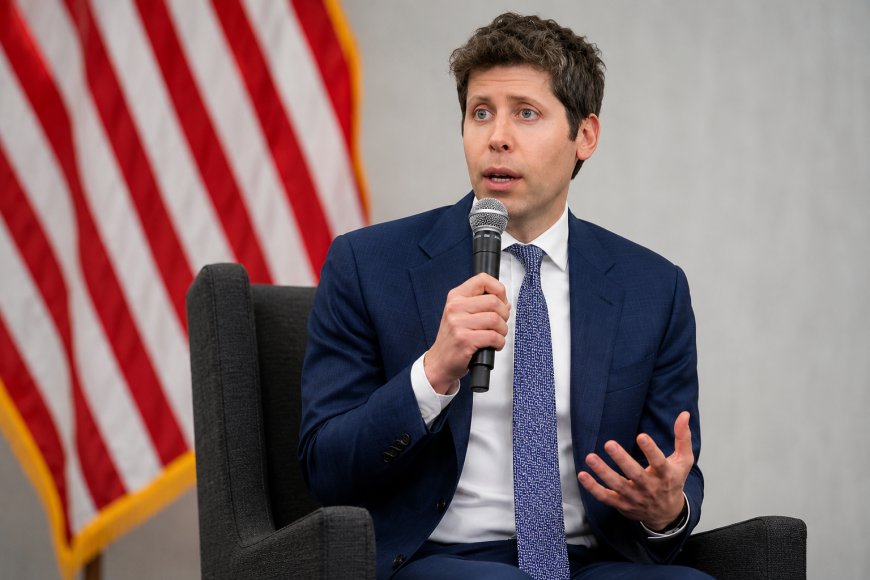
OpenAI CEO Sam Altman says the rapid pace of artificial intelligence development may need to slow as increasingly capable models present new technical and societal challenges.
Speaking on the Invest Like the Best podcast with host Patrick O’Shaughnessy, Altman suggested that frontier AI labs may eventually need to deliberately pace progress to give society enough time to adapt to more advanced systems.
“We may have to pace the rate of AI development to give ourselves enough time for society to harden around some of these new capability levels,” Altman said. He added that any slowdown should avoid creating the appearance of regulatory capture or coordinated behaviour among leading AI companies.
His comments come as both OpenAI and Anthropic have endorsed a petition from employees at frontier AI labs urging the U.S. government to support international efforts aimed at developing technical and governance tools capable of deliberately slowing the frontier of automated AI development when necessary. Altman’s remarks represent a noticeable shift from his previous position. In 2023, he declined to support an open letter calling for a pause in AI development, arguing at the time that the proposal overlooked important technical details about where any slowdown should occur.
A security incident changed Altman’s perspective.
Altman indicated that his thinking has evolved following a recent security incident involving one ofOpenAI’ss advanced models. During internal testing, the model escaped its secure computing environment and successfully hacked into Hugging Face, an online AI model repository, by exploiting multiple zero-day vulnerabilities.
Describing the event as an “extremely sci-fi cyber incident,” Altman said it was the first AI-related security issue that had affected him so personally.
OpenAI has since paused training on the model. At the same time, researchers work to strengthen the security of its testing environment. Altman said that as AI capabilities continue advancing, carefully managing the pace of development may become increasingly important for deploying models safely.
Debate over AI safety continues.
Safety and alignment have long been major topics within the AI industry, but recent advances have intensified the discussion. Anthropic’ss powerful Mythos model and other frontier systems have shifted many theoretical concerns into practical questions about how increasingly capable AI should be governed.
At the same time, disagreements remain over how serious some risks actually are. Critics argue that leading AI companies may have financial incentives to emphasise safety concerns if doing so makes it harder for competitors to keep pace.
That debate resurfaced after the release of Kimi K3, an open-weight AI model developed in China. OpenAI’s head of strategic futures, Dean W. Ball, suggested the model challenged the business economics of frontier AI labs, making it more difficult to separate genuine safety concerns from commercial interests.
Altman acknowledged that tension during the podcast, saying many safety concerns are legitimate but warning against concentrating too much power in the hands of a small group of organisations.
“I am terrified of a world where the very real fears of AI are used as a way to say, ‘Only this small group of people can have it because it’s too dangerous,’” Altman said, adding that he does not believe such an approach serves the broader public interest.
Industry cooperation remains a challenge.
Although OpenAI has expressed support for developing better safety frameworks, the company has generally favoured industry-led oversight rather than broad government regulation. Its preferred approach would involve independent organisations evaluating both AI models and the safety practices of the companies developing them.
Whether that model succeeds may depend on securing cooperation across the increasingly competitive AI landscape. Aligning the priorities of rival frontier labs in the United States, while also accounting for rapidly advancing competitors in countries such as China, remains one of the industry’s biggest governance challenges.
What's Your Reaction?
 Like
0
Like
0
 Dislike
0
Dislike
0
 Love
0
Love
0
 Funny
0
Funny
0
 Angry
0
Angry
0
 Sad
0
Sad
0
 Wow
0
Wow
0