































Ultrahuman launches redesigned smart ring to regain momentum in the US after dispute with Oura
Ultrahuman is introducing a redesigned smart ring aimed at strengthening its position in the US wearable market following a legal dispute with Oura over smart ring technology.
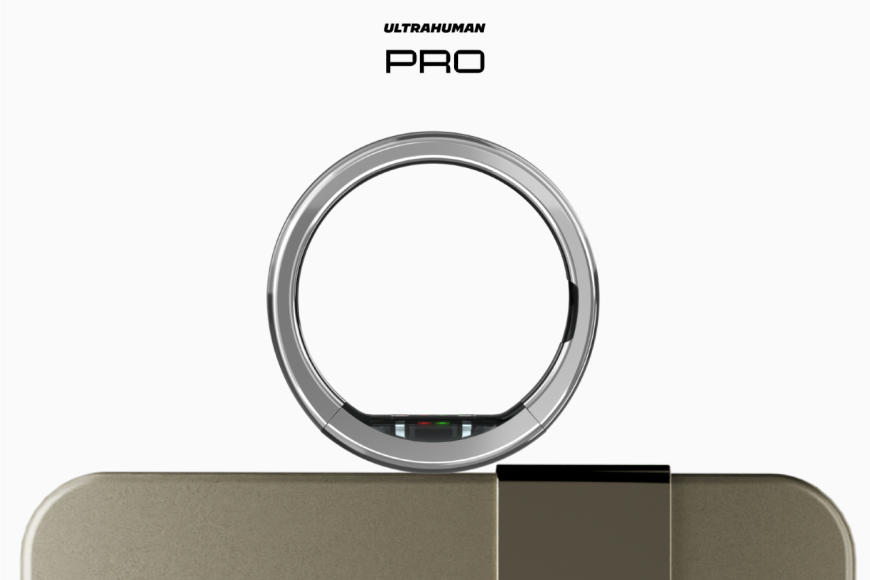
Ultrahuman on Friday introduced a new smart ring featuring longer battery life and an updated design, as the Bengaluru-based wearable company works to rebuild momentum in the U.S. after its business there was disrupted last year by a patent dispute with rival Oura.
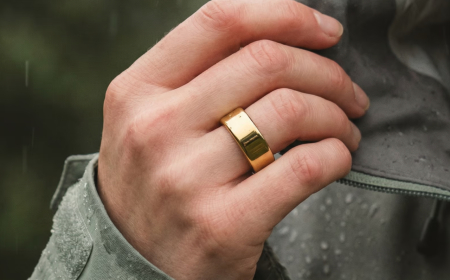
Called the Ring Pro, Ultrahuman’s third-generation smart ring promises up to 15 days of battery life—up from the four to six days offered by the Ring Air—and will sell for $479. The device will open for preorders globally, excluding the U.S., and shipments are set to begin in March.
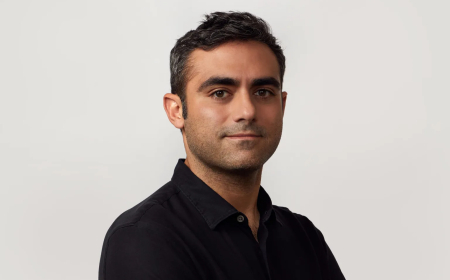
Ultrahuman’s U.S. operations were hit in October 2025 after the U.S. International Trade Commission, the federal agency that adjudicates certain trade disputes, ruled in Oura’s favour in a patent case. That decision blocked the startup from importing new ring inventory into the United States, though existing retail stock continued to be sold. The impact was significant: the U.S. accounted for about 45% of Ultrahuman’s roughly 700,000 daily active users worldwide, according to co-founder and CEO Mohit Kumar.
Separately, Ultrahuman filed another patent infringement case against Oura in August 2025 in the Delhi High Court, which remains pending.
To navigate around the patent at the centre of Oura’s claim, Ultrahuman developed the Ring Pro with a redesigned form factor, Kumar said, adding that the device has been submitted to U.S. Customs and Border Protection for clearance to confirm it can legally be imported into the country.
Even with the U.S. disruption, Ultrahuman is currently operating at an annualised revenue run rate of about $150 million, Kumar said. The company reported $64 million in operating revenue for the financial year that ended March 2025. Ultrahuman remains profitable after tax, though Kumar said margins are expected to narrow due to litigation expenses, tariffs, and the engineering work required for the redesign.
Alongside the Ring Pro, Ultrahuman also launched Jade. This real-time “biointelligence” system evaluates user health data across the company’s devices and services to deliver personalised insights and recommendations.
Kumar said Jade is intended to move beyond backwards-looking health summaries and toward real-time guidance that users can act on. “Most AI tools today look backwards at your data,” he said. “Jade is built to react to your health in real time and surface actions users can take.”
Jade will be offered to all Ultrahuman users, including those with the older Ring Air, Kumar said, and it currently does not require a subscription.
The Ring Pro includes a redesigned heart-rate sensing architecture to improve signal quality during sleep, as well as a new dual-core processor to boost data accuracy and on-device computing. The ring can store up to 250 days of health data and weighs about 5% to 6% more than the Ring Air, which launched in July 2023 at $349.
Ultrahuman has also introduced a Pro Charger designed to support on-the-go charging. It offers up to 45 days of battery life, enables faster updates and diagnostics through direct case connectivity, and supports wireless charging via Qi, the same standard used by most modern smartphones.
Women now make up about 68% of Ultrahuman’s user base, up from around 65% a year earlier, Kumar said, pointing to strong adoption of the company’s women’s health features.
Beyond the ring, Ultrahuman also sells subscription-based services across its wider health platform, including PowerPlugs (a coaching and recovery program), the Blood Vision metabolic panel, Ultrahuman Home, and a continuous glucose monitoring product. Subscriptions contribute about 16% of Ultrahuman’s revenue, while Blood Vision accounts for around 5% to 6% of the business, Kumar said.
Kumar said Ultrahuman’s key growth markets include the U.K., Canada, Australia, and India, with India contributing roughly 8% to 9% of overall revenue after the company invested in local customer support.
Global smart ring shipments rose nearly 80% year over year in 2025, driven by demand for compact wearables that offer advanced sleep tracking and longer battery life, said Anshika Jain, a senior analyst at Counterpoint Research. Oura remains the category leader, with more than two-thirds of the market, while Ultrahuman ranks second.
Jain said sensor accuracy, AI-driven insights, and smooth integration into broader ecosystems will define the next leaders in the category.
Separate IDC data showed global smart ring shipments increasing about 30% year over year in Q3 2025 to nearly 1 million units, driven by rising demand for screenless fitness trackers, said Navkendar Singh, associate vice president at IDC India. Ultrahuman captured about 25% of the market during that period, according to IDC.
Founded in 2019, Ultrahuman has raised about $55 million so far and lists Alpha Wave Incubation, Blume Ventures, Steadview Capital, and Nexus Venture Partners among its investors. Kumar said Ultrahuman is also building additional production capacity to meet expected demand for the Ring Pro in the months ahead.
What's Your Reaction?
 Like
0
Like
0
 Dislike
0
Dislike
0
 Love
0
Love
0
 Funny
0
Funny
0
 Angry
0
Angry
0
 Sad
0
Sad
0
 Wow
0
Wow
0