






































AWS introduces an AI agent platform designed for healthcare organisations
AWS has launched a new AI agent platform for healthcare providers, designed to automate clinical workflows, improve patient care, and support secure processing of medical data.

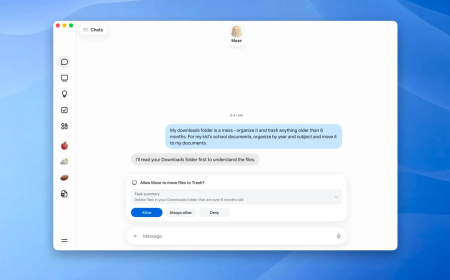
Amazon Web Services announced on Thursday the launch of Amazon Connect Health. The new AI agent-powered platform is designed to help healthcare organisations automate repetitive administrative tasks, including appointment scheduling, documentation, and patient verification.
Amazon Connect Health is HIPAA-eligible and integrates with electronic health record (EHR) software. According to the company, the platform is already working with EHR providers, data integrators, and patient engagement companies.
This is not AWS’s first step into healthcare, and it comes as the cloud giant continues trying to expand its role in the $5 trillion U.S. healthcare industry. The company introduced Amazon Comprehend Medical in 2018, a HIPAA-eligible natural language processing service for unstructured medical data, and followed that with Amazon HealthLake in 2021, a HIPAA-eligible Fast Healthcare Interoperability Resources, or FHIR, infrastructure platform used to organise health information. In 2022, AWS also launched HealthOmics, a bioinformatics workflow product.
Still, Amazon Connect Health is its first major product to offer AI agents — software that can carry out complex tasks on behalf of humans — within a platform built to meet regulatory compliance requirements. The company said Amazon Connect Health works with existing clinician software to help manage providers’ administrative workflows, including medical history reviews, medical coding, and clinical documentation.
At present, Amazon Connect Health offers patient verification and ambient documentation. Appointment scheduling and patient insights are available in preview, while medical coding and additional features are expected to roll out to customers later.
The software is priced at $99 per user per month, with up to 600 encounters per month. AWS noted that most primary care physicians handle up to 300 encounters in a month.
Outside its cloud business, Amazon has made several major moves into healthcare over the past few years. The company acquired online pharmacy PillPack in 2018 for about $1 billion and bought primary care provider One Medical in 2022 for $3.9 billion. Since then, Amazon has folded parts of those businesses into its broader retail and physical operations, including same-day prescription delivery and same-day virtual doctor visits for children.
Using AI to reduce administrative burden in healthcare — the area Amazon Connect Health is targeting — has long been a popular focus for startups, even before the current AI boom.
For example, Regard, founded in 2017, uses AI to take notes for doctors during appointments and analyse patient data to help reduce administrative burnout. Notable is another startup founded in 2017 that uses AI to ease burnout by automating intake and scheduling.
Larger AI companies have also moved quickly into the same area.
In January, OpenAI introduced ChatGPT Health, a version of its chatbot designed to answer health-related questions. Just one week later, Anthropic announced its own healthcare-focused offering, Claude for Healthcare. Like OpenAI’s product, Claude for Healthcare can provide medical advice to consumers, but, like Amazon Connect Health, it also includes tools built for medical professionals. According to the companies, Claude for Healthcare and OpenAI’s enterprise healthcare services are designed to work with HIPAA-compliant products. At the same time, ChatGPT Health is aimed at consumers and is not HIPAA-compliant.
What's Your Reaction?
 Like
0
Like
0
 Dislike
0
Dislike
0
 Love
0
Love
0
 Funny
0
Funny
0
 Angry
0
Angry
0
 Sad
0
Sad
0
 Wow
0
Wow
0