


































Era secures $11M funding to develop software platform for AI-powered devices
Era has raised $11 million to build a software platform for AI gadgets, aiming to streamline the development and integration of next-generation smart devices.

Earlier in April, startup Era hosted a gathering in New York for artists who had received its developer kit. At the event, participants demonstrated a range of experimental mini devices they had built, including a souvenir that shares facts and jokes about France, a phone-like gadget that tracks stocks and suggests whether it might be the right time to quit a job, and another device that provides air-quality updates.
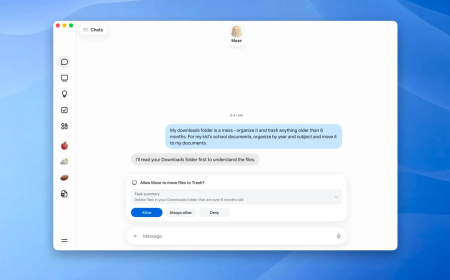
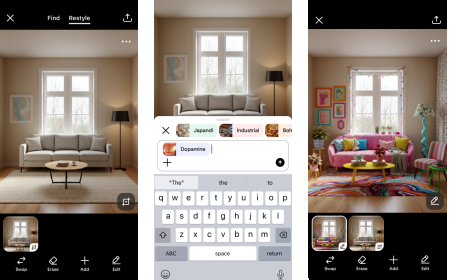
While these devices remain experimental, they are unified by Era's underlying platform, which enables hardware developers to build AI agents and orchestrate functionality for AI-powered devices. Rather than producing hardware itself, the company focuses on providing a software layer that enables others to create devices with embedded intelligence, including capabilities such as customized voice generation and AI functionality for traditional devices like headphones.
The startup has raised $11 million in total funding to date. This includes a $9 million seed round led by Abstract Ventures and BoxGroup, with participation from Collaborative Fund and Mozilla Ventures. Before that, the company raised $2 million in pre-seed funding from Topology Ventures and Betaworks.
Individual angel investors in Era include Flickr co-founder Caterina Fake, iPhone keyboard creator Ken Kocienda, OAS founder Tony Wang, Little Guy co-founder Daniel Kuntz, Sandbar co-founder Mina Fahmi, former Rabbit CPO ShaoBo Z, and Poetry Camera creator Kelin Zhang.
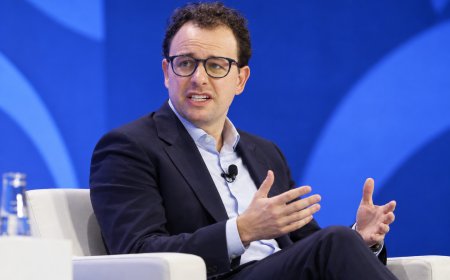
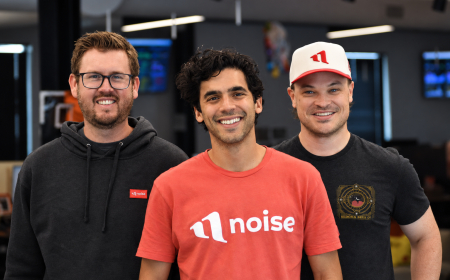
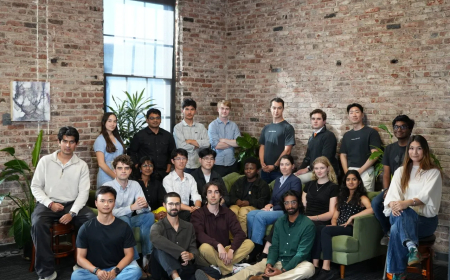
Era was founded last year by CEO Liz Dorman, CTO Alex Ollman, and CPO Megan Gole. Dorman previously worked on AI orchestration at Humane before moving to HP after HP acquired Humane. Ollman worked at HP on agentic frameworks for enterprise systems, while Gole worked at Sutter Hill Ventures on the Jony Ive and Sam Altman io project before joining Era.
Era investor Casey Caruso, founder and managing partner at Topology Ventures, said the company's orchestration platform stands out for its dynamic routing across models and its ability to manage real-world constraints, such as connectivity.
Dorman said the core vision behind Era is to build a platform that supports the next generation of devices, potentially replacing the traditional app-based model.
"I think one of the incredible things that we can do with these AI models today is that you can replace that app layer. So what we're building is the intelligence layer that allows anyone to create these types of intelligent objects and devices. And we really believe people in San Francisco should not make the future of tech…It should not be people in their high fortresses who are so out of touch with reality, making devices and forcing them onto everyone. I want a choice over my devices again," Dorman said.
Currently, the company provides access to more than 130 large language models (LLMs) from over 14 providers, enabling AI devices in various form factors, such as glasses, jewellery, and home speakers. Era believes that as new device categories emerge, hardware makers will increasingly require a software layer capable of handling multimodal inputs and real-time inference.
"You can imagine this intelligence layer going to many different types of hardware. So we believe it won't just be glasses, rings, or bracelets. We're going to have a Cambrian explosion of what's possible, and this is because tech is commoditized," she said. Dorman's commoditized platform is designed to scale across millions of devices while also supporting custom AI hardware experiments for specific user segments.
The company's long-term vision includes enabling users to choose their own memory systems and model providers in a privacy-focused way. Alongside its artist showcase, Era plans to make its platform available to the open-source and maker communities to demonstrate how it can power a wide range of devices.
However, the AI hardware sector remains uncertain, with no clear dominant success story so far. HP acquired Humane Rabbi, which has remained largely quiet, and Plaud has found some traction in meeting transcription tools, while startups like Sandbar and Taya are still early-stage. Despite this, Era believes that as adoption of AI devices grows and use cases expand, some products will eventually gain lasting user traction.
What's Your Reaction?
 Like
0
Like
0
 Dislike
0
Dislike
0
 Love
0
Love
0
 Funny
0
Funny
0
 Angry
0
Angry
0
 Sad
0
Sad
0
 Wow
0
Wow
0