






























Pangram Raises $9 Million to Detect AI-Generated Text and Images
Pangram has raised $9 million to expand its AI detection technology as machine-generated text and images become increasingly common across the internet.
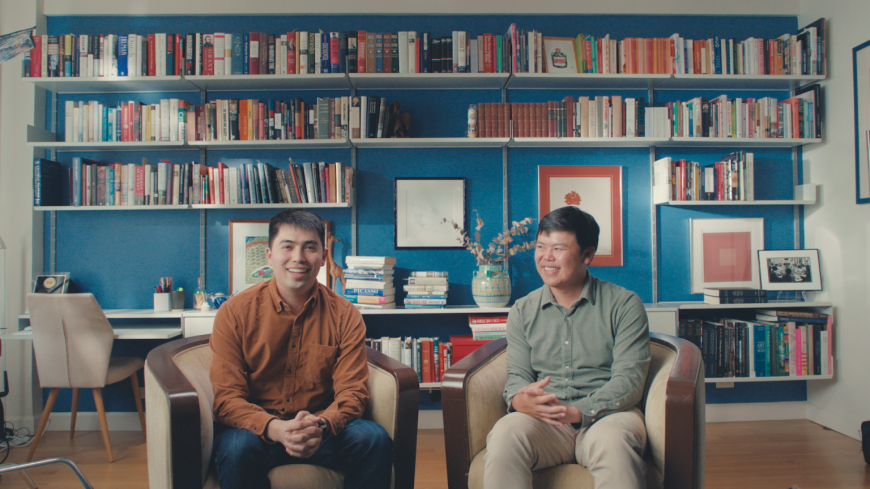
As AI-generated content spreads across the internet, New York-based startup Pangram has raised $9 million to improve technology designed to distinguish human-created material from text and images produced by artificial intelligence.
The funding round was led by Menlo Ventures, with participation from Haystack, ScOp, Script Capital and Cadenza. Alongside the financing, Pangram is launching Pangram 4, the latest version of its AI text detector, and Pangram Image, a new system for identifying AI-generated imagery.
Pangram says its updated text model achieves more than 99% accuracy when detecting AI-assisted writing and content combining human and AI-generated text. The company also says Pangram 4 is better at recognising content processed through so-called AI humanisers, which attempt to rewrite generated text so it appears more human.
Pangram Image is currently available as a research preview, with a broader release planned in the coming weeks.
Pangram trains on human and AI versions of documents
Stanford AI and machine learning graduates Max Spero and Bradley Emi founded Pangram about two years ago as generative AI tools began making machine-generated content increasingly common online.
Spero argues that knowing whether a person or an AI system produced content can influence how readers evaluate what they see, particularly when generated material may contain hallucinations or inaccurate information.
Pangram’s detection technology is based on a large machine learning model trained using tens of millions of documents known to have been written by humans. The company then creates what it calls a “synthetic mirror” of each document, using a frontier large language model to reproduce its topic, length and tone.
By comparing those versions, Pangram says its model learns recurring stylistic decisions made by AI systems and can identify generated writing without depending on hidden watermarks or copy-and-paste metadata.
The company also attempts to measure different levels of AI involvement rather than simply classifying an entire document as human or machine-generated. That includes cases where someone writes original material and later uses an AI assistant to edit or polish it.
Institutions are tightening rules around AI content
Pangram’s growth comes as AI-generated writing increasingly appears in journalism, academia, politics and legal work, sometimes with embarrassing or costly consequences.
The open-access research archive arXiv introduced an enforcement policy this year covering submissions that show evidence authors failed to review output generated by large language models properly. Signs such as fabricated references or leftover chatbot instructions can result in a one-year submission ban.
Pangram is competing in an increasingly busy AI detection market that also includes Winston AI, Originality.ai, Copyleaks and GPTZero.
The company offers its detector through a $20 monthly web subscription and a Chrome extension. The extension can automatically label content on platforms including X, LinkedIn, Substack, Reddit and Medium while providing a “feed health” score showing the estimated proportion of human and AI-generated material visible to the user.
Pangram also sells access through an API. Substack has integrated its technology to help identify AI use in newsletters, while other customers include Quora, educational institutions, publishers, literary agents and recruiters.
Pangram says false positives remain rare.
Spero says Pangram incorrectly identifies approximately one in every 10,000 human documents as AI-generated, although no detection system is perfect.
Tests of the latest model found it could reliably identify articles generated entirely by ChatGPT and Clau. They wasas difficult to fool by manually editing AI-generated material or prompting models to evade detection. However, some completely human-written sentences were still incorrectly flagged.
The system was also able to identify more subtle AI assistance. When a human-written article was polished using ChatGPT and Claude, Pangram estimated that about 13% of the resulting text involved AI assistance, although individual sentence classifications were not always correct.
Tests using more personal, distinctive writing also showed the detector could generally separate original human passages from sections generated by AI models instructed to imitate the same writing style.
Pangram expands detection beyond text.
Pangram’s new image detector takes a different approach from watermark-based systems offered by companies such as OpenAI and Google DeepMind, which are generally designed to identify content produced by their own models.
Instead, Pangram analyses pixel-level distributions and learns statistical differences between genuine photographs and AI-generated imagery. Spero says the technology can even recognise an AI-generated picture appearing within a photograph of a real-world scene.
Early testing showed the model successfully identifying both photorealistic and illustrated AI imagery, including generated pictures displayed inside real photographs, although some errors remained.
Spero says the company’s goal is not to punish people for using artificial intelligence but to provide greater transparency as synthetic content becomes more prevalent.
His concern is that the accelerating production of machine-generated material could eventually overwhelm human-created work online. Pangram is betting that as that imbalance grows, tools capable of reliably identifying the difference will become increasingly valuable.
What's Your Reaction?
 Like
0
Like
0
 Dislike
0
Dislike
0
 Love
0
Love
0
 Funny
0
Funny
0
 Angry
0
Angry
0
 Sad
0
Sad
0
 Wow
0
Wow
0