
























The Unsolved Mystery of Phineas Fisher, the Hacker Who Eluded Capture
A decade after breaching FinFisher and Hacking Team, elusive hacktivist Phineas Fisher remains one of cybersecurity’s biggest mysteries, with their true identity still unknown.

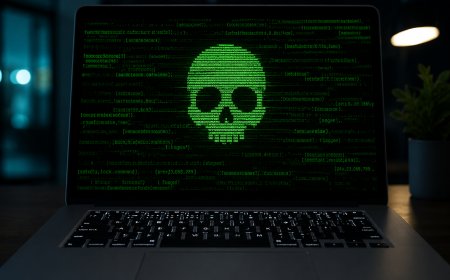
Few figures in modern cybersecurity have captured the public’s imagination like Phineas Fisher. More than a decade after carrying out some of the most consequential hacks against the commercial spyware industry, the elusive hacktivist remains unidentified despite years of investigations. Unlike many online personas that eventually disappear after being exposed, Phineas Fisher has never been publicly unmasked, making the hacker one of the most enduring mysteries in cyber history.
As governments increasingly relied on commercial spyware to monitor journalists, activists and political opponents, companies such as Gamma Group and Italy-based Hacking Team emerged as leading suppliers of digital surveillance tools. Long before firms such as Israel’s NSO Group dominated headlines, these businesses helped establish the global market for government spyware. Phineas Fisher’s attacks placed that industry under unprecedented scrutiny and exposed the inner workings of companies that largely operated behind closed doors.
From FinFisher to Hacking Team
Phineas Fisher first surfaced publicly in August 2014 after breaching Gamma Group, the developer of the FinFisher spyware platform. Using a parody Twitter account named @GammaGroupPR, the hacker published stolen documents, internal product manuals, mobile spyware files and pricing information. While the breach embarrassed the company and exposed confidential material, FinFisher continued operating. Before disappearing from public view, Phineas released a detailed technical write-up explaining how the intrusion was carried out while also outlining personal political beliefs rooted in anarchism.
Roughly a year later, the hacker returned with an even more damaging operation targeting Hacking Team. The attack exposed more than 400 gigabytes of confidential information, including source code, customer databases, contracts and tens of thousands of internal emails. Journalists and researchers used the leaked material to uncover surveillance-related controversies involving governments in Ecuador, Mexico and Panama. The breach significantly damaged Hacking Team’s reputation, and years later the company was sold by its chief executive, David Vincenzetti, for the symbolic price of one euro. Former employees have described the incident as the beginning of the company’s collapse.
Hacks driven by political beliefs
Unlike financially motivated cybercriminals, Phineas consistently portrayed the attacks as acts of hacktivism. The hacker later targeted the union representing Catalonia’s Mossos d’Esquadra police force, publishing another technical post-mortem alongside a 39-minute tutorial explaining the methods used during the breach. The operation aligned with publicly expressed anti-police views.
Another high-profile target was Turkey’s ruling political party during the presidency of Recep Tayyip Erdoğan. According to Phineas, the attack was carried out in solidarity with Rojava, the autonomous Kurdish-led region in northern and eastern Syria that was facing military pressure from Turkey. Throughout multiple public statements, the hacker framed cyberattacks as a form of political activism rather than conventional cybercrime.
A different side emerges.
The final publicly known operation involved Cayman National Bank’s branch in the Isle of Man. Although the breach occurred in 2016, Phineas waited several years before revealing it while announcing a “Hacktivist Bug Bounty Program,” an initiative designed to reward hackers who exposed unethical or illegal corporate behaviour.
In interviews, Phineas acknowledged using illegal hacking activities to generate income before donating surplus funds to activist causes. The hacker publicly confirmed donating at least $10,000 worth of Bitcoin to organisations supporting Rojava and later claimed to have compromised multiple banks over several years. Cayman National Bank confirmed it had been among several financial institutions targeted but provided few additional details.
An identity that remains a mystery
Despite the global attention surrounding these attacks, investigators have never publicly identified Phineas Fisher. Former FinFisher employees have said the company never contacted law enforcement after its breach, while Italian authorities investigating the Hacking Team attack reportedly found no evidence establishing the hacker’s real identity.
Speculation has ranged from Phineas being a lone hacktivist to a collective operating under a shared identity. Others have questioned whether the persona could have been created or influenced by a state intelligence service seeking to disguise its own cyber operations. Phineas has repeatedly rejected suggestions of working for Russia or any government, arguing that the chosen targets do not fit such theories.
The hacker has also deliberately blurred personal details. While references to Spanish-speaking anarchist circles and Latin American political movements have fuelled speculation about geographical origins, Phineas once said neither English nor Spanish was their native language despite living in a Spanish-speaking country. The hacker later admitted that many statements containing clues about their identity were intentionally misleading, saying they were “in the habit of saying misinformation.”
Phineas Fisher’s public presence largely disappeared after 2019, with social media accounts eventually deleted and no new operations publicly attributed to the hacker. Even so, the legacy of the FinFisher and Hacking Team breaches continues to influence debates over commercial spyware, digital surveillance and hacktivism. More than 10 years after first emerging, Phineas Fisher remains one of cybersecurity’s most influential and elusive figures, leaving behind a trail of landmark hacks but few definitive answers about the person responsible.
What's Your Reaction?
 Like
0
Like
0
 Dislike
0
Dislike
0
 Love
0
Love
0
 Funny
0
Funny
0
 Angry
0
Angry
0
 Sad
0
Sad
0
 Wow
0
Wow
0