




































Robots outperform humans at the Beijing half-marathon
Robots have surpassed human performance records at the Beijing half-marathon, showcasing rapid advancements in robotics, AI, and endurance technology.
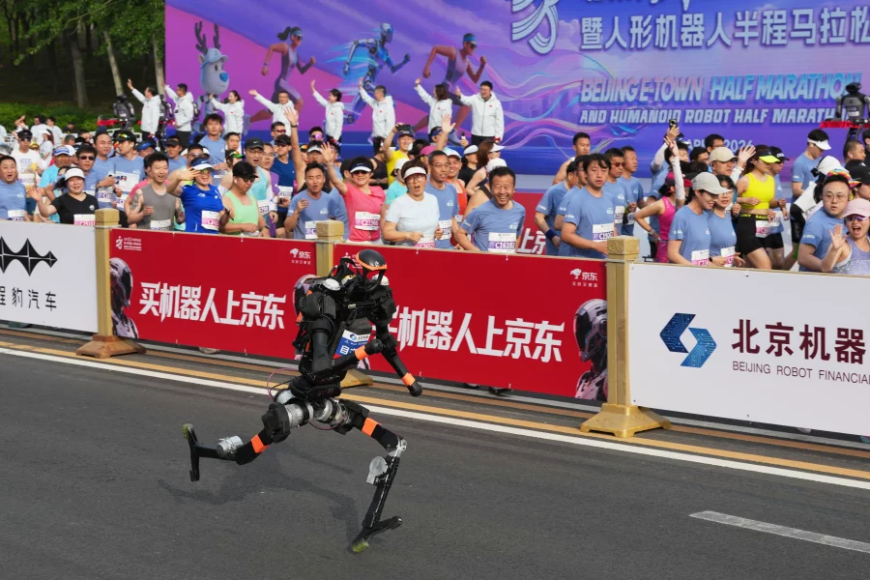
The winning humanoid robot at a Beijing half-marathon completed the race in 50 minutes and 26 seconds, a result that stands out even when compared with elite human marathon performances, including the recently recorded 57-minute benchmark by Jacob Kiplimo.
While direct comparisons between humans and machines are inherently imperfect, the result has drawn attention online. One social media user commented, “My car can outrun a cheetah too,” highlighting the obvious physical differences between robotic systems and human athletes. Even so, the latest performance marks a dramatic improvement over last year’s event, when the fastest robot took 2 hours and 40 minutes to finish the course. At the time, observers noted that such a result would not be competitive even in amateur human categories.
According to reporting by the Associated Press, this year’s winning robot was developed by the Chinese smartphone manufacturer Honour. Interestingly, another robot from Honour reportedly completed the course even faster, finishing in 48 minutes and 19 seconds. However, that unit was operated remotely, whereas the 50:26 finisher was fully autonomous and ultimately ranked higher due to the weighted scoring rules used in the competition.
The event featured a mix of autonomous and remotely operated machines. Organisers from Beijing’s E-Town technology hub stated that approximately 40% of the participating robots operated autonomously, while around 60% were controlled by human operators.
Performance across the field varied significantly. While some robots completed the race successfully, others struggled with basic movement and stability. One unit reportedly fell at the starting line, while another collided with a barrier during the course.
The event highlights both rapid progress in humanoid robotics and the ongoing gap between controlled demonstrations and reliable real-world autonomous performance in endurance-based physical tasks.
What's Your Reaction?
 Like
0
Like
0
 Dislike
0
Dislike
0
 Love
0
Love
0
 Funny
0
Funny
0
 Angry
0
Angry
0
 Sad
0
Sad
0
 Wow
0
Wow
0