The iron-core transformer is a 140-year-old technology that continues to support both the electrical grid and AI companies. These devices are bulky but dependable, which is a big reason they have remained in use for so long: if something is not broken, there is little incentive to replace it.
But as electricity demand from data ccentresrises sharply and batteries and renewable energy sources claim a larger share of the grid, this old technology may finally be approaching its limits. That could create an opening for its electronic successor — the solid-state transformer — at a moment when the shift may be arriving just in time.
Over the past few months, startups focused on solid-state transformers have raised $280 million. The technology is expected to reduce the number of components required by data centres, improve grid stability, and reduce the physical footprint of power-conversion systems.
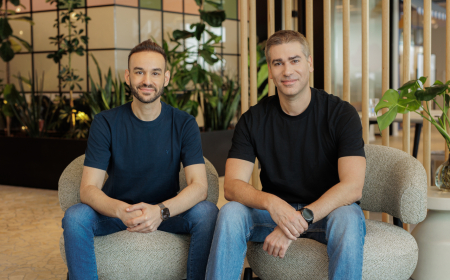
Now, Hyperscale Power says it can shrink that equipment even further. “We haven’t seen something that is as small as our system will be,” Daniel Rothmund, co-founder and CEO of Hyperscale Power, said.
To develop a prototype of its transformer, Hyperscale recently raised a €5 million seed round led by World Fund and Vsquared Ventures, the company said.
In the last couple of years, the solid-state transformer market has gone from being almost nonexistent to becoming increasingly active. Competitors include Amperesand, which Temasek’s early-stage fund incubated; DG Matrix, which counts industrial giant ABB among its investors; and Heron Power, founded by former Tesla executive Drew Baglino and backed by Andreessen Horowitz. According to PitchBook, those companies together have raised more than $330 million.
At first glance, Hyperscale may appear to be arriving late to the sector. But both Rothmund and his co-founder, Sami Pettersson, have been working on the technology for some time. Rothmund in particular has deep experience: he completed his PhD at ETH Zürich in part by designing and building a solid-state transformer that reached 99.1% efficiency.
All solid-state transformers are smaller than their iron-core counterparts. Still, Hyperscalele says it has found a way to go even further by building a transformer that can operate at much higher frequencies than rival systems. When power enters the transformer, it is stepped up to the tens-of-kilohertz range. It is then converted into the required voltage before being stepped back down to the necessary frequency.
Physical size is becoming increasingly important inside data centres as the power density of server racks continues to rise. NVIDIA’s latest racks consume more than 100 kilowatts of electricity, and the company is already preparing for 1 megawatt racks — enough power for as many as 1,000 homes.
At that scale, the transformers and rectifiers needed to prepare electricity for the servers will become enormous. “It’s more than twice as large as the server racks themselves,” Rothmund said.
He said the aggressive roadmaps being pursued by AI companies and data centre developers are making solid-state transformers increasingly necessary.
“It will actually slow down the progress in scaling up data centres if you don’t have solid-state transformers ready quite soon,” Rothmund said. “It’s not a question of if solid-state transformers will come; it’s a question of when they will come.”






































 Like
0
Like
0
 Dislike
0
Dislike
0
 Love
0
Love
0
 Funny
0
Funny
0
 Angry
0
Angry
0
 Sad
0
Sad
0
 Wow
0
Wow
0