Wayve’s automated-driving technology has attracted a broad mix of investors in its latest $1.2 billion funding round, including three global automakers, major venture and institutional firms, and returning backers Microsoft, Nvidia, and Uber. The total amount raised could reach $1.5 billion, as Uber is also committing an additional $300 million, contingent on deploying robotaxis in London.
The interest underscores how many major players want exposure to the U.K.-based startup, which is now valued at $8.6 billion. The round highlights the growing push among Big Tech, traditional automakers, and investors to gain ground in the expanding automated-driving industry.
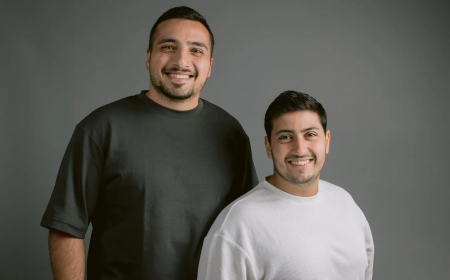
Wayve offers what founder and CEO Alex Kendall described as a “contrarian” path in autonomous driving — contrarian both in technology strategy and business model, he said in an interview Tuesday.
“I think the technology chessboard is set around where different companies have invested in the technology strategy, and now the commercial chessboard is being arranged,” Kendall said. “We took a very contrarian view on the technology side. We were the first to build end-to-end deep learning for autonomous driving and to pioneer this approach. Now, when it comes to this phase of moving into commercialisation, we’re also taking a contrarian business model approach.”
Founded in 2017, Wayve builds its driving software using a self-learning method. The company developed a software layer based on an end-to-end neural network that does not rely on high-definition maps and instead uses data to teach the vehicle how to drive.
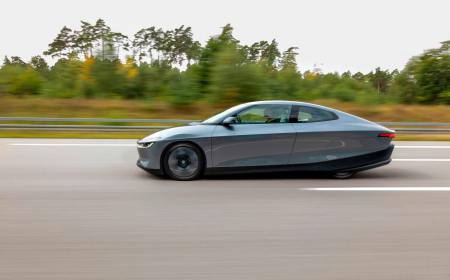
This data-driven approach supports two offerings: an “eyes on” assisted-driving system and a “eyes off” fully automated-driving system intended for applications such as robotaxis or consumer vehicles that can handle all driving tasks in certain conditions.
Wayve markets its technology as sensor- and map-agnostic. The software can take input from the sensors already installed in a vehicle and make driving decisions accordingly. The company also says its system can run on the chips its OEM partners already have inside their vehicles.
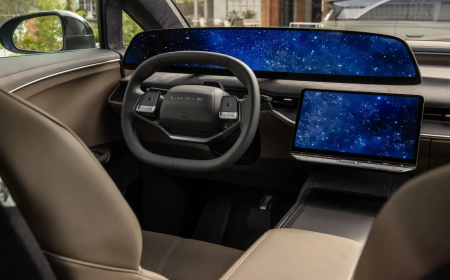
However, Nvidia — which is one of Wayve’s investors — has had a close development relationship with the startup since 2018. Wayve’s Gen 3 platform, unveiled last fall, uses an in-vehicle compute autonomous vehicle development kit called Nvidia Drive AGX Thor. The Gen 3 system is designed to help Wayve deliver eyes-off advanced driver-assistance features and Level 4, or fully driverless, capabilities on both city streets and highways.
Wayve’s technology has some parallels with Tesla’s approach to automated driving, though there are key differences in how the companies plan to operate commercially.
Wayve does not want to operate its own hands-free driving-assistance system or its “eyes-off” fully automated-driving system. (Waymo, by contrast, largely operates its own robotaxi services, though it also works with partners.) Wayve also does not want to build vehicles integrated with its own software, as Tesla does. Instead, Wayve aims to sell its “embodied AI” to automakers and to technology partners such as Uber.
Kendall said this strategy gives Wayve the largest total addressable market, but he argued it only works because Wayve’s AI can generalise across hardware configurations and environments.
“If you build an autonomy stack that’s specific to a sensor or compute architecture, [or] if you build it where it requires mapping or something like this, then you can’t take option three,” Kendall said, referring to Wayve’s chosen business model.
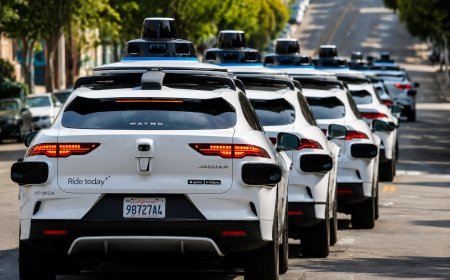
Two of Wayve’s customers already include Nissan and Uber. Nissan said Wayve’s self-driving software will be used to strengthen the advanced driver-assistance system in its vehicles starting in 2027. Uber, meanwhile, plans to begin commercial trials later this year using vehicles equipped with Wayve’s software.
Wayve’s relationship with Uber may extend beyond a pilot stage. In a statement released Tuesday, Uber CEO Dara Khosrowshahi said the partnership is intended to scale across multiple regions.
“We are very proud to continue to deepen our partnership with Wayve, with plans to deploy together in more than 10 markets around the world. Wayve’s powerful end-to-end approach is purpose-built for scale, safety, and effectiveness, and we’re excited to work with them across multiple OEMs and geographies, which we’ll share more about soon.”
Eclipse, Balderton, and SoftBank Vision Fund 2 led the round. Wayve said new investors also included the Ontario Teachers’ Pension Plan, Baillie Gifford, British Business Bank, Icehouse Ventures, Schroders Capital, and other global institutional firms.
Automakers Mercedes-Benz, Nissan, and Stellantis — all planning to use Wayve’s technology — also participated in the round. NVIDIA, which also backed Wayve’s $1.05 billion Series C round, said last year it was evaluating a $500 million strategic investment in the company’s next raise. NVIDIA participated, but Kendall did not disclose the exact size of NVIDIA’s investment or whether it came close to the $500 million figure.































 Like
0
Like
0
 Dislike
0
Dislike
0
 Love
0
Love
0
 Funny
0
Funny
0
 Angry
0
Angry
0
 Sad
0
Sad
0
 Wow
0
Wow
0