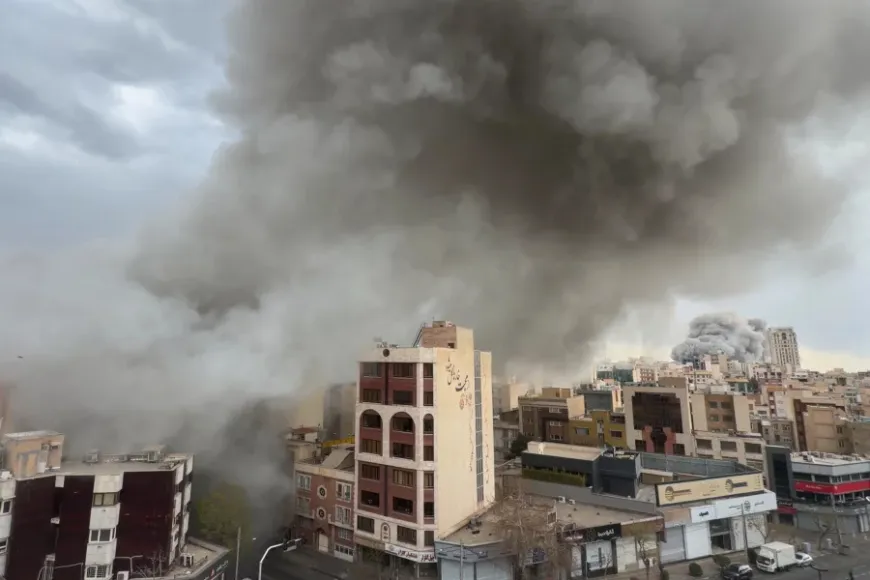
On Saturday, U.S. and Israeli aircraft launched a bombing campaign against Iran, killing Supreme Leader Ali Khamenei along with several senior government officials. The strikes also hit military and civilian sites across the country, including a girls’ school, where at least 168 children and adults were killed.
After several days of fighting, multiple reports and statements from government officials have indicated that cyber operations played an important role in the opening phase of the war. The situation highlights how, in modern conflict, hacking can become a meaningful part of real-world military operations, supporting physical strikes, gathering intelligence through surveillance, and serving as a tool in psychological operations (psyops).
The clearest confirmation that a cyber operation was involved came from U.S. Chairman of the Joint Chiefs of Staff Gen. Dan Caine, who said that “coordinated space and cyber operations effectively disrupted communications and sensor networks” inside Iran before the attack, “leaving the adversary without the ability to see, coordinate or respond effectively.”
The objective, Caine said during a press conference, was to “disrupt, disorient and confuse the enemy.”
In another example of a combined cyber and kinetic operation, Israel initially bombed the offices of two state-run Islamic Republic of Iran Broadcasting, or IRIB, channels.
The Israel Defence Forces then reportedly hijacked the broadcasts to air speeches by Donald Trump and Israeli Prime Minister Benjamin Netanyahu calling on Iranians to join the fight against the regime, according to The Jerusalem Post. A similar hack targeting one of the channels also occurred in January.
As part of the effort to kill Khamenei, Israeli operatives reportedly relied on information gathered from hacked traffic cameras across Tehran, according to the Financial Times. Citing two anonymous sources, the newspaper said Israel had maintained access to that camera network for years, along with “deeply penetrated mobile phone networks.”
There have also been additional reports of unattributed cyberattacks that strongly suggest the involvement of either American or Israeli government hackers.
According to multiple reports, on the first day of the war, hackers breached a widely used Iranian prayer app called BadeSaba Calendar and sent several messages to all users.
“For the freedom of our Iranian brothers and sisters, this is a call to all oppressive forces — lay down your weapons or join the forces of liberation,” one message said. “Only in this way can you save your lives. For a free Iran.”
The content of those messages made it clear that this was intended as a psychological operation to influence people who may have been more supportive of the regime than other parts of the population.
So far, Iranian hackers have largely been ineffective in responding to these operations, according to Bloomberg. At this stage, it remains unclear why Iranian government-backed hackers have been relatively quiet. One expert told Bloomberg that the near-total internet shutdown in Iran may be a factor.
It is worth noting that while these operations may have taken place, they may not have played as decisive a role in the conflict as some reports suggest. This is not surprising, given that wars are still primarily decided by physical force and bombing campaigns. There may also be a tendency among authorities to overstate the impact of cyber operations to intimidate or frighten the enemy.
That appears to have happened in Venezuela earlier this year, when U.S. officials, including Trump, suggested that American hackers had caused a power outage in Caracas during the operation to abduct President Nicolás Maduro. But as a Cyberscoop analysis suggested, it is far more likely that cyber activity played only a limited role, and that the partial blackouts were instead caused by fighter jets striking electrical substations.