Gamma, a platform known for enabling users to create presentations and websites using artificial intelligence, is rolling out a new image-generation product to build marketing assets, as it looks to strengthen its position against competitors like Canva and Adobe.
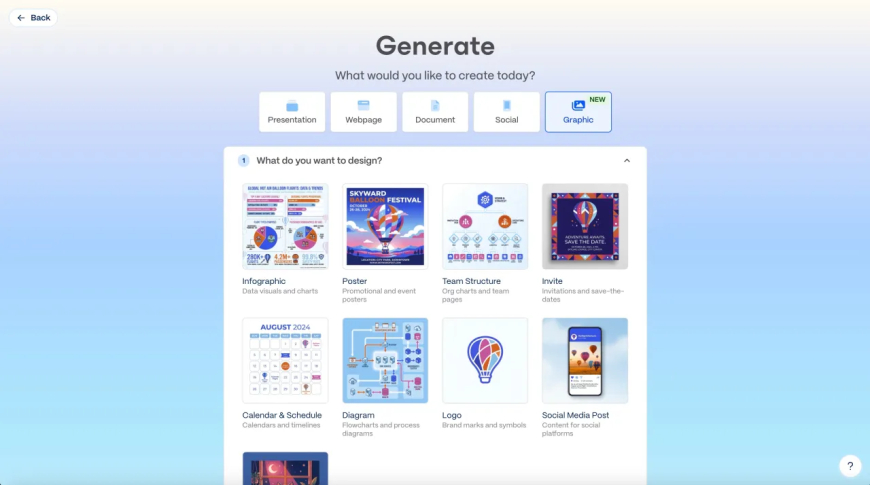
The new offering, called Gamma Imagine, allows users to generate brand-aligned assets using text prompts. These assets include interactive charts and visualisations, marketing materials, social media graphics, and infographics. Gamma already provides more than 100 templates that can be combined with its AI capabilities to produce a wide range of visual content.
To support data-driven asset creation, the company is integrating its platform with tools such as ChatGPT, Claude, Make, Zapier, Atlassian, n8n, and Superhuman Go.
“As we started working with a lot of our early users, we realised that in the presentations they want to create, there was a variety of graphical design use cases that they all had,” said Grant Lee, Gamma’s CEO and co-founder. “So we worked alongside them to develop basically a new set of tools that allows them to go far beyond just the traditional presentation format.”
Lee believes Gamma occupies a middle ground between professional-grade design tools like Adobe or Figma and more traditional software such as Microsoft PowerPoint.
“We think we can serve the very long tail of knowledge workers and business professionals whose demand for their job is to communicate visually, but they just don’t have the tools. They need to pull in a design resource to be able to help with this stuff, and we want to make an AI-native approach that serves their needs in the sort of middle that we feel is really underserved,” he said.
In November of last year, Gamma raised $68 million in a Series B funding round led by a16z, reaching a valuation of $2.1 billion. At that time, the company reported $100 million in annual recurring revenue and a user base of 70 million. It has since grown further and is now approaching 100 million users, according to the company.
































 Like
0
Like
0
 Dislike
0
Dislike
0
 Love
0
Love
0
 Funny
0
Funny
0
 Angry
0
Angry
0
 Sad
0
Sad
0
 Wow
0
Wow
0