



























How Google Invented the Future of AI and Still Lost the Race
Google created the chips and research behind modern AI, yet competitors moved ahead. Explore how Google lost its early AI advantage and why catching up is so difficult.
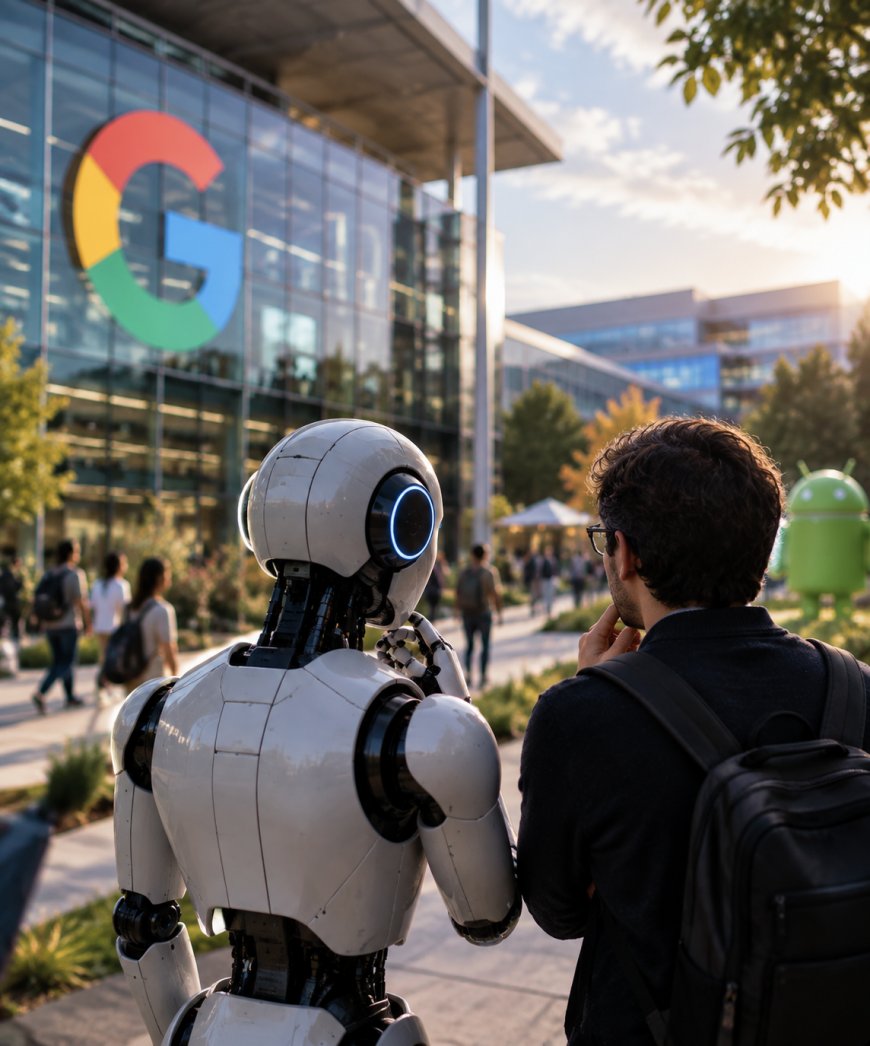
Google spends roughly half a billion dollars every single day on AI infrastructure. Servers, data centres, custom chips, the whole stack. In 2026 alone, that adds up to more than $195 billion. It is one of the largest sustained corporate investments in a single technology in modern history.
And after all that spending, Google’s flagship AI model is currently sitting somewhere around eighth place on the artificial intelligence index.
Not first. Not third. Eighth.
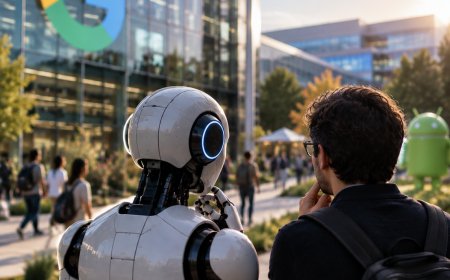
For most companies, that would be a bad quarter. For Google, it is something much stranger. Because Google is not just another company that showed up late to the AI race. Google built the road, drew the map, invented the vehicle, and somehow ended up watching everyone else drive past.
This is how that happened.
Google Built the Chip in 2015.
To understand how weird GGoogle’scurrent position is, you have to go back a decade.
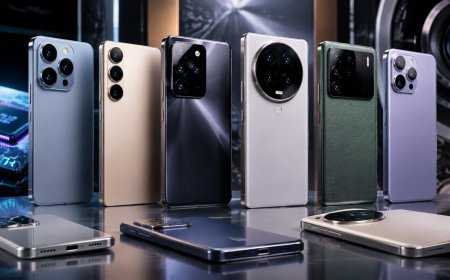
In 2015, Google quietly deployed the first Tensor Processing Unit, or TPU. It was a custom silicon chip designed specifically for the kind of math AI models require. Not a general-purpose graphics card retrofitted for machine learning. Not a repurposed data centre CPU. A chip built from the ground up to accelerate AI workloads.
At the time, almost nobody else in the industry was thinking this way. Nvidia was still primarily a gaming graphics company. Most AI research ran on general-purpose GPUs designed for rendering video games. Google built a chip that could do AI calculations dramatically faster and more efficiently than anything commercially available.
To put that lead in context: OpenAI is producing its first custom AI chip, called Jalapeño, in 2026. Google shipped a functionally equivalent purpose-built AI chip eleven years earlier. When the rest of the industry was still figuring out whether specialised silicon mattered, Google had already deployed it in production.
That was advantage number one. It was massive. It should have been decisive.
Google Wrote the Paper That Started Everything
Two years later, in 2017, eight researchers at Google published a paper titled “Attention Is All You Need.”
If you have never heard of it, that is fine. If you use AI in any form, you rely on it every day.
The paper described a new neural network design called the transformer. That architecture is the foundation of every large language model in existence today. ChatGPT, Claude, Gemini, Qwen, DeepSeek, Llama, Mistral. Every single one of them is a transformer. The “T” in GPT literally stands for “transformer.”
Google did not just contribute to the modern AI era. Google invented the underlying architecture that made it possible. And then, in a move that has aged into one of the most consequential decisions in tech history, they published the paper openly. Anyone could read it. Anyone could build on it.
Someone did. His name was Sam Altman, and his company was called OpenAI.
The Fumble Begins
Here is the part that is genuinely difficult to explain.
Google had the hardware. Google had the architecture. Google had DeepMind, one of the world’s most respected AI research labs. Google had the largest engineering talent pool on the planet. When ChatGPT launched in late 2022 and the world realised something had fundamentally shifted, Google should have been ready. It should have been the one to launch first, not scramble to respond.
Instead, in early 2023, Google rushed out a chatbot called Bard. Its first public demo included a factual error that spread across the internet within hours. Google’s stock lost approximately $100 billion in market value in a single day. One wrong answer. One day.
Google eventually rebuilt. It scrapped the Bard brand, rebuilt around Gemini, and started spending money at a scale that made the previous investments look modest. In 2026, Alphabet’s capital expenditure jumped from roughly $91 billion the previous year to somewhere between $195 and $205 billion. Nearly all of it aimed at closing the AI gap.
The results are mixed at best. Gemini 3.1 Pro reached the top of the Artificial Analysis Intelligence Index earlier in 2026, briefly leading the frontier. But that lead did not hold. By the time GLM 5.3, Fable 5.1, and GPT-6 Astra arrived, Google’s public-facing Gemini offering had slipped meaningfully in the rankings. Users interacting with the free tier of Gemini are often still routed to older versions from earlier in the year. The best models Google can build sit in labs waiting for release while smaller, faster-moving competitors ship, iterate, and ship again.
For a company that spends half a billion dollars a day on this technology, being anywhere outside the top three is a story that requires an explanation.
The Smaller Companies Eating Google’s Lunch
The most striking part of Google’s current position is not that it lost to other giants. Losing to OpenAI or Anthropic would be one thing. Both are well-funded, well-staffed, and focused entirely on this problem.
Google is losing to companies that, on paper, should not be competing at Google’s level at all.
Z.ai, the Chinese lab behind GLM 5.3, has somewhere between 800 and 1,100 employees. Google has over 180,000. Z.ai’s model scored 60 on the Artificial Analysis Intelligence Index. Gemini’s public Flash model scores lower. GLM 5.3 is free, open-weight, and can be run on your own hardware. Gemini’s competitive version is behind a subscription paywall.
Moonshot AI, the team behind Kimi K3, has roughly 300 employees. Its model beats Gemini on multiple benchmarks. Moonshot AI’s entire company would fit inside a single Google office building with room to spare.
Even Grok, which spent most of 2024 and early 2025 being treated as a joke in developer circles for its unreliable coding and reasoning, has now overtaken parts of Google’s public model lineup. Grok did not have TPUs sitting in a warehouse waiting to be used. It did not have researchers who invented the transformer. It has Elon Musk, a lot of money, and a much smaller team, and it is still competitive with Google.
This is what the phrase “generational fumble” actually means. It doesn’t mean Google is bad. Google is not bad. Google’s underlying models are, by most technical measures, genuinely capable. It means that a company with every possible structural advantage produced a competitive position that companies with a fraction of its resources are now surpassing.
The User Experience Tells Its Own Story
Numbers on a leaderboard are one thing. What actually happens when someone tries to use Google’s AI is another.
Developers who have tested Gemini 3.8 Flash through platforms like Cursor have documented recurring failure modes. The most striking one is a file-reading loop bug that has apparently been present for months. Under certain conditions, the model can get stuck reading the same file over and over. One developer walked away from a coding session and returned 40 minutes later to find that Gemini had spent that time doing nothing but re-reading a single file, consuming 330 million tokens, and generating a bill of $118. If that developer had not returned to check, the loop could have run all night. Eight hours of that behaviour would have produced a bill in the thousands of dollars.
This is not an edge case that only surfaces under exotic conditions. Multiple users have reported it over an extended period. The kind of thing a competitive AI provider would treat as a fire drill. In Google’s case, it has apparently persisted long enough to become a running joke in some developer communities.
The user-facing Gemini website has its own issues. Free users are often routed to Gemini 3.1 Pro, a model released in February. That’s like a competitor showing you their February inventory in December while their newer stock sits in a locked back room. Even paying users cannot always access the frontier version. Anti-gravity, Google’s most powerful research-facing model, is described widely but used by almost no one in practice. In months of following developer conversations, it is genuinely difficult to find someone who actively uses it as their primary tool.
Why This Happened
The question worth sitting with is not what happened—the what is documented. The question is why.
The uncomfortable answer, based on the pattern of decisions over the past several years, is that Google’s structural advantages became structural weaknesses.
A company with 180,000 employees moves slowly because coordination costs scale non-linearly. A company that invented a technology tends to see it through the lens of the version they invented, which can make it harder to adapt when the technology evolves in ways they did not anticipate. A company with a dominant existing product, in Google’s case, Search, has to weigh every new capability against the risk of cannibalising the thing that already prints money.
OpenAI did not have any of these problems in 2022. It had a few hundred employees, no legacy product to protect, and a singular focus on shipping the best language model it could. It moved fast because it had nothing to lose. Google moved slowly because it had everything to lose.
Anthropic followed the same pattern. So did Mistral. So did the Chinese labs that are now producing models that punch far above what their team sizes should allow.
Google is spending its way out of the problem now. The 2026 capital expenditure numbers are massive, and the underlying technology- the TPUs, the DeepMind research, the model architecture- is still world-class in raw capability. Gemini 4 is reportedly in training. Gemini 3.5 Pro is in testing. The next generation could shift the standings dramatically.
But the fumble already happened. Google invented the future of AI in 2015 and 2017. It spent the next seven years watching other companies build the industry on Google’s research. In contrast, its own AI product strategy meandered through Bard, rebrands, delayed launches, and models that, as of this writing, still aren’t the best in the world on most independent benchmarks.
The half-billion dollars a day is not spent trying to lead. It is spent trying to catch up.
What This Actually Means
One version of the AI industry’s story goes: the biggest tech companies dominate because they have the resources. Google, Microsoft, and Amazon control the future because they can outspend everyone else.
Google is the counterexample to that narrative. It had the resources. It had the head start. It had the fundamental research advantage. And it still fell behind.
That has real implications for how the technology industry is likely to evolve. The AI race is not being decided by capital expenditure. It is being decided by focus, speed, and organisational capacity to move without stumbling over legacy commitments. Companies with a fraction of Google’s resources are producing models that meet or beat Google’s public offerings, which means the moat that most people assumed the hyperscalers had is more porous than it looked.
For Google, the path back to the top is not blocked. The company still has extraordinary technical talent and effectively unlimited capital. If Gemini 4 delivers on the roadmap being described, the standings could look very different by mid-2027. But recovering from a generational fumble is different from never fumbling in the first place. Every quarter that Google spends catching up is a quarter that its competitors spend extending their lead, deepening their moats, and building the ecosystems that will make them hard to displace.
Google invented the technology. Google built the chips. Google published the papers. And somehow, in the middle of the biggest technology shift of the past two decades, Google turned an insurmountable lead into an uphill climb.
That is the fumble. And it is one of the most improbable, expensive, and thoroughly documented misfires in the history of the technology industry.
What's Your Reaction?
 Like
0
Like
0
 Dislike
0
Dislike
0
 Love
0
Love
0
 Funny
0
Funny
0
 Angry
0
Angry
0
 Sad
0
Sad
0
 Wow
0
Wow
0