With investor enthusiasm for quantum technology still high, another European player in the sector is preparing to move beyond private markets. Only two weeks after Finnish quantum unicorn IQM announced plans to go public through a merger with a special purpose acquisition company, or SPAC, French competitor Pasqal has revealed that it will follow the same path.
Together with a separate private financing round worth $200 million, Pasqal’s SPAC transaction will involve a merger with Bleichroeder Acquisition Corp II, after which the company will trade on the Nasdaq. The deal assigns Pasqal a pre-money valuation of $2 billion.
Bleichroeder is supported by Michel Combes, the French telecom executive who previously led Vodafone and Alcatel-Lucent, along with investment adviser Andrew Gundlach.
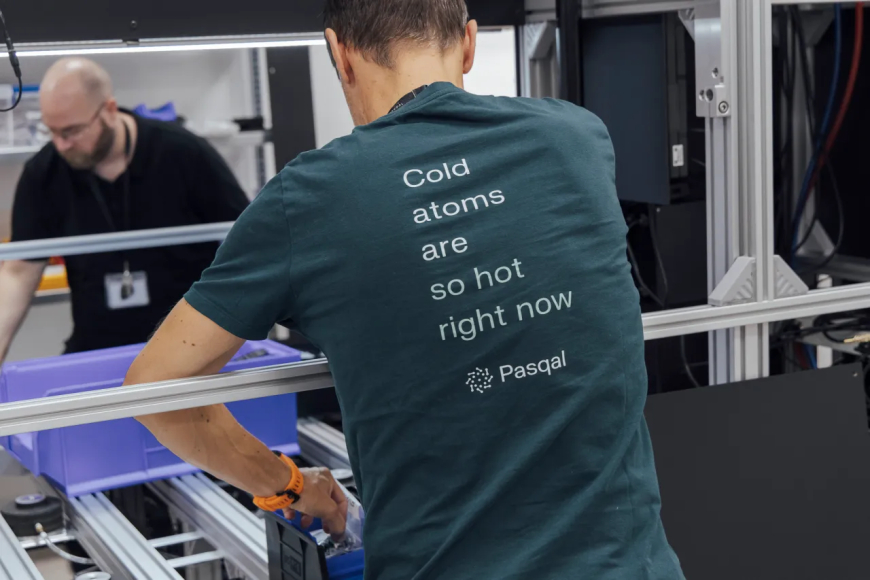
Pasqal is a full-stack quantum computing company positioning itself against Big Tech. It brings in annual revenue in the tens of millions through sales of hardware, software, and cloud-based services to laboratories and industrial partners.
The agreement comes as Pascal’s North American peers, many of whom used the same route to access public markets, have enjoyed strong share price gains in recent months. U.S. exchanges offer companies such as Pasqal a level of scale and valuation multiples that are often more difficult to secure in Europe, as well as access to the capital needed for the long, expensive road to realising quantum computing’s promise.
At the same time, Pasqal — like IQM — intends to pursue a dual U.S.-European listing strategy. Its Nasdaq debut is planned for this year, with preparations expected to begin for an Euronext listing later in 2026 or 2027.
That dual-listing plan may also help Pascal reassure its French supporters. Bpifrance, France’s public investment bank, remains one of the company’s major shareholders and, according to a press release, will continue to play an active role both on Pasqal’s cap table and on its board.
Pasqal also emphasised that it expects to stay a French legal entity with headquarters in Palaiseau, a suburb outside Paris known for its concentration of academic institutions and industrial research facilities, including centres operated by Pasqal customers such as energy giant EDF and defence contractor Thales. The company further said it intends to appoint “a new non-executive chair of French nationality” to its board.
An investor presentation from Bleichroeder states that Combes is expected to become the “lead independent director of Pasqal” once the transaction is completed, though that appointment may not be viewed favourably in France.
In 2015, French President Emmanuel Macron publicly criticised Combes for resigning as CEO of Alcatel-Lucent before Nokia completed its takeover of the struggling company. Combes’s exit package sparked major controversy at the time and was later reduced by half.
His later career moves have helped restore some of his standing in French technology circles. After succeeding Marcelo Claure as CEO of Sprint, Combes went on to lead SoftBank Group International, where he supported French scale-ups, including Swile. However, he left that role after just five months, as part of a broader wave of departures in 2022.
Pasqal itself is not unfamiliar with management reshuffles. Tucked into the announcement is the detail that former executive chairman Wasiq Bokhari is now serving as CEO. Meanwhile, Loïc Henriet, who previously served as CTO and later became co-CEO, has now returned to the CTO position.
Restating its commitment to France could also deliver less tangible advantages for Pasqal. The company is effectively signalling to taxpayers that its expansion will create highly skilled jobs in the country, with plans to recruit 50 people over the next 18 months. In addition, in the current geopolitical environment, not being an American company may help create opportunities — something French AI lab Mistral AI has also experienced.
Still, no company can succeed for long without a strong product. Competition in quantum computing remains fierce, with several technical approaches still seen aspromisinge. IQM, for example, focuses on superconducting qubits, while Pasqal pursues the neutral-atom approach championed by co-founder and Nobel Prize-winning physicist Alain Aspect.
That scientific basis will be central to Pasqal’s plans, as the company intends to continue investing heavily in research and development to build a fault-tolerant quantum computer by the end of the decade. Progress on that front will be crucial for unlocking practical uses in fields such as drug discovery, healthcare, and cybersecurity.
The SPAC deal is expected to be completed in the second half of 2026, and Pasqal projects a pro forma market capitalisation of approximately $2.6 billion. The company says the added cash will support its objective of doubling production capacity within 24 months.
The $200 million private financing round included backing from Parkway, Quanta Computer, LG Electronics, and CMA CGM. Pasqal’s existing investors include the European Innovation Council Fund, Series B lead investor Temasek, Saudi Aramco Entrepreneurship Ventures, and ISAI.



























 Like
0
Like
0
 Dislike
0
Dislike
0
 Love
0
Love
0
 Funny
0
Funny
0
 Angry
0
Angry
0
 Sad
0
Sad
0
 Wow
0
Wow
0