




























Pool App Organizes Screenshots Into Searchable Collections With AI
Pool is a new AI-powered iPhone app that transforms screenshots into searchable collections. It automatically categorises saved content, finds original links, and helps users rediscover products, recipes, travel ideas, and more.
For years, the Camera Roll on smartphones has served multiple purposes. Beyond storing personal memories and important moments, it has also become a catch-all archive for content people discover online, including recipes, fashion inspiration, travel plans, product recommendations, memorable quotes, humorous social media posts, and countless other ideas. A new app called Pool aims to bring order to that growing collection of digital clutter.
Getting started with Pool is straightforward. Users grant the app access to their photo library, after which screenshots and saved images are automatically sorted into categories known as “pools.” These collections are created based on the products, places, interests, and topics a user has accumulated over time, making each experience highly personalised.
Pool joins a growing number of companies rethinking bookmarking tools in the age of artificial intelligence. Platforms such as mymind, Fabric, and Raindrop help users organise links, images, and saved content, while Pool focuses specifically on screenshots. The app uses AI to help people rediscover and act on items they intended to revisit later, similar to services such as Captr and Sorti.
After screenshots are imported, Pool can identify and retrieve the source connected to the image. For example, if a screenshot contains a product a user was considering purchasing, the app can locate and link directly to the retailer’s website. If the screenshot shows a recipe from Instagram, Pool may surface the ingredient list and preparation instructions originally shared by the creator.
According to Pool co-founder Maxime Junique, the concept emerged from a common problem he and fellow co-founder Piet Terheyden experienced. They frequently captured screenshots of things they wanted to remember but later found themselves unable to locate them when needed.
“It sounds pretty obvious, right now, when we say it, but it’s something that we do so naturally — you don’t notice it, necessarily,” Junique said.
The founders, who first met while working in a co-working space several years ago, discussed the habit with friends and discovered they faced the same issue. Many admitted to taking screenshots of design concepts, creative inspiration, and other ideas, only to forget about them later.
Interestingly, Pool was the very first concept developed within Spinoff Studio, the founders’ product and design company, around three years ago. The initial version of the app was created in Lisbon over a few weeks while the founders were living and working out of a van. During that time, they built the landing page, website, and early product prototype.
However, the founders soon realised they needed to focus on products capable of generating revenue. As a result, they shifted their attention to B2B SaaS offerings and temporarily put Pool on hold.
Spinoff Studio later went on to create several additional products, including customer relationship management software Waitless, which was acquired last year.
What eventually revived Pool was the rapid advancement of AI technology. The founders believed that artificial intelligence had finally reached a point where analysing and organising large collections of personal, largely unstructured information had become practical.
“We were like, it seems like a perfect time to go after this idea,” Junique said. “And it also seemed to us like it’s a super untapped, unexplored dataset for AI. Everyone goes after emails, bank transactions, chat logs — all of those productivity-first datasets. Who is going after this really, deeply emotional dataset we all own?”
Pool approaches screenshots not simply as saved images but as a collection of memories and intentions. As a result, the app recognises that some screenshots remain useful only for a limited period, while others continue to hold value over time.
For instance, a screenshot of an event ticket barcode may become irrelevant once the event has passed and could eventually fade in prominence. On the other hand, if a user saves an Instagram flyer promoting an upcoming event, Pool’s AI-powered tools can help locate ticket-purchasing options and provide links to the relevant ticketing platforms.
Users can locate content inside Pool either by searching directly or by asking the app’s built-in AI assistant to help find specific items.
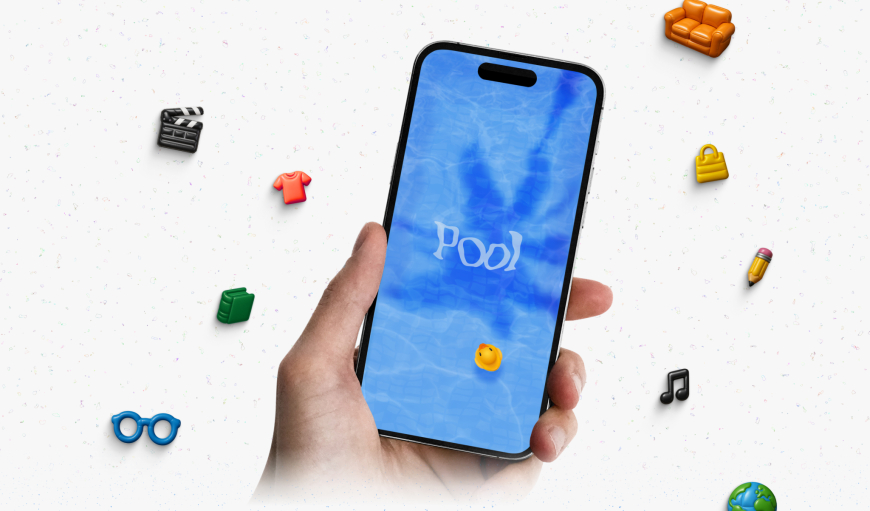
Looking ahead, the founders plan to expand the concept through a second standalone application designed to function more like a personal AI assistant. Pool’s mascot — a small rubber duck that users drag across the screen to enter the app when launching it — is expected to play a central role in the branding of this future agentic AI product.
When discussing the company’s plans, the founders were in Lisbon, though they were no longer working from a van. They were preparing to travel to San Francisco in late May to meet with potential investors.
Pool previously raised a pre-seed funding round of slightly more than $2 million. Investors included General Catalyst, Kima Ventures, Paris-based Source Ventures, and several angel investors, including Winston Du, Julian Blessin, and Thomas Ricouard.
The Pool app is currently available for free download on iOS.
What's Your Reaction?
 Like
0
Like
0
 Dislike
0
Dislike
0
 Love
0
Love
0
 Funny
0
Funny
0
 Angry
0
Angry
0
 Sad
0
Sad
0
 Wow
0
Wow
0