


































US Supreme Court divided over legality of ‘geofence’ search warrants
The US Supreme Court appears split on geofence warrants, a controversial surveillance method that collects location data from tech companies for use in criminal investigations.
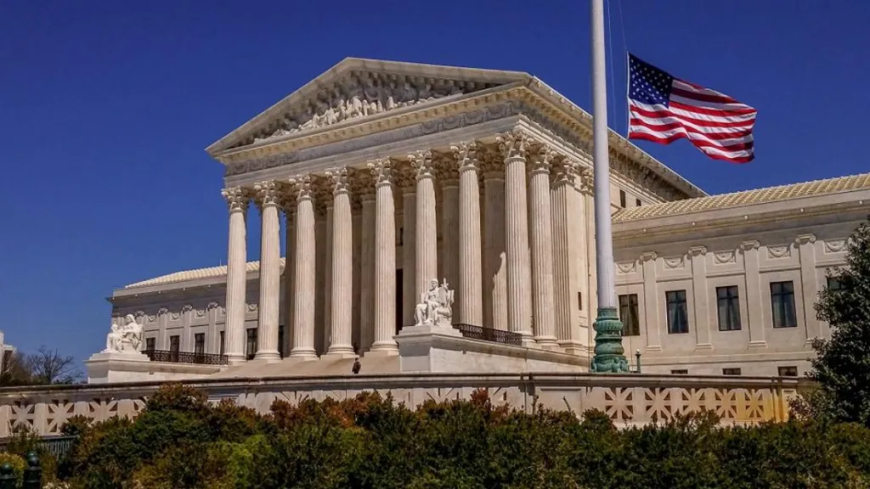
The Supreme Court of the United States on Monday heard arguments in a significant legal case that could reshape digital privacy protections nationwide.
The case, Chatrie v. United States, focuses on the government's use of so-called "geofence" search warrants. These warrants allow law enforcement agencies to require technology companies, such as Google, to provide data identifying which users were present at a specific location within a defined timeframe, based on their devices' location history.
By collecting location data from a wide pool of users, investigators can reconstruct who may have been near the scene of a crime, effectively identifying suspects through a broad search of digital records. This approach has been compared to finding a needle in a haystack, as it involves working backwards from large datasets.
Civil liberties advocates have consistently raised concerns about this practice, arguing that geofence warrants are overly broad and unconstitutional because they capture data from individuals who may have no connection to any alleged crime. There have been instances where such warrants included innocent bystanders, extended beyond their intended scope, or were used to identify people attending protests or other lawful gatherings.
The use of geofence warrants has grown substantially over the past decade. According to reporting by The New York Times, federal agents first used this method in 2016. Since 2018, thousands of these warrants have been issued annually by federal agencies and police departments, forming a significant portion of the legal requests directed at companies that store large amounts of location data derived from searches, maps, and mobile devices.
The Chatrie case marks the first major Fourth Amendment-related case considered by the Supreme Court in this decade. At the heart of the issue is whether individuals have a "reasonable expectation" of privacy regarding location data collected and stored by technology companies. The court's eventual ruling could determine whether geofence warrants are permissible under the Constitution.
It remains unclear how the nine justices will ultimately decide, with a ruling expected later this year. However, the arguments presented during Monday's hearing provided insight into the range of views among the justices.
The casecentress on Okello Chatrie, a man from Virginia who was convicted in connection with a 2019 bank robbery. Investigators reviewing surveillance footage observed a suspect using a cellphone. Subsequently, they obtained a geofence warrant requiring Google to provide information about all devices located within a certain radius of the bank during a specified time window.
Using this method, law enforcement drew a digital boundary around the crime scene and reviewed location data associated with users in that area. Google initially supplied anonymised data for devices present at the time, after which investigators requested additional details for certain accounts that appeared relevant.
Authorities ultimately obtained identifying information for three individuals, one of whom was Chatrie. He later pleaded guilty and was sentenced to more than 11 years in prison.
As the case progressed through the courts, Chatrie's legal team argued that the evidence obtained through the geofence warrant should not have been admitted. They contended that the warrant allowed authorities to conduct a search first and then develop suspicion afterwards, which they claim contradicts the protections against unreasonable searches and seizures outlined in the Fourth Amendment.
According to an analysis cited by SCOTUSblog, a lower court found that the warrant lacked sufficient probable cause to link Chatrie to the crime before the data was collected. The warrant was also criticised for being too general, as it did not specify a particular account to be searched.
Despite these concerns, the court allowed the evidence to be admitted, finding that law enforcement had acted in good faith in obtaining the warrant.
Legal experts and advocacy groups have continued to debate the implications. Civil liberties attorney Jennifer Stisa Granick highlighted arguments presented in an amicus brief filed by technologists and security researchers, which asserted that the warrant effectively required Google to search through vast amounts of user data to locate relevant information, raising concerns about compatibility with constitutional protections.
The government, on the other hand, has argued that Chatrie had consented to Google's collection and storage of his location data, and that the warrant merely directed the company to retrieve and provide specific information. Representing the government, U.S. Solicitor General D. John Sauer suggested that the defence's position could imply that geofence warrants could never be used.
After a divided decision at the appellate level, Chatrie's legal team sought review by the Supreme Court to determine the constitutionality of geofence warrants. Although the outcome may not change Chatrie's sentence, the court's decision is expected to have broader implications for privacy rights in the United States. Observers noted that the justices appeared divided during oral arguments, with some potentially favouring limitations on how such warrants are applied rather than an outright ban.
Legal scholar Orin Kerr suggested that the court may ultimately permit the continued use of geofence warrants, provided they are more narrowly defined. Similarly, attorney Cathy Gellis indicated that the court may take a cautious approach, introducing incremental changes rather than sweeping rules.
While the casecentress on Google's handling of location data, its implications extend to any company that collects and stores similar information. Google has since moved toward storing location data directly on users' devices rather than on its servers, reducing its ability to respond to such requests. The company reportedly stopped responding to geofence warrant requests last year.
Other companies, however, continue to hold location data on their servers. Firms such as Microsoft, Yahoo, Uber, and Snap have previously received geofence warrant requests, suggesting that the broader impact of the court's decision could extend well beyond any single company.
What's Your Reaction?
 Like
0
Like
0
 Dislike
0
Dislike
0
 Love
0
Love
0
 Funny
0
Funny
0
 Angry
0
Angry
0
 Sad
0
Sad
0
 Wow
0
Wow
0