


































1X strikes a deal to deploy its “home” humanoids inside factories and warehouses
Robotics startup 1X has secured a significant partnership to supply up to 10,000 Neo humanoid robots to EQT’s portfolio companies between 2026 and 2030. Marketed initially as a consumer-focused home robot, Neo will now be deployed across factories, warehouses, logistics centres, and industrial environments. The shift highlights rising demand for commercial applications of humanoid robots, even as consumer adoption remains limited.
Robotics startup 1X has secured significant commercial interest in its humanoid robots, initially designed for consumer use, from companies backed by an investor in the startup.
On Thursday, the company announced a strategic partnership that will make thousands of its humanoid robots available to EQT's portfolio companies, a large Sweden-based multi-asset investment firm whose EQT Ventures fund is one of 1X's supporters.
Under the agreement, 1X plans to ship up to 10,000 units of its Neo humanoid robot between 2026 and 2030 to more than 300 EQT-backed companies, particularly those in manufacturing, warehousing, logistics, and similar industrial environments.
The company confirmed to TechCrunch that each EQT portfolio company will negotiate its own individual contract.
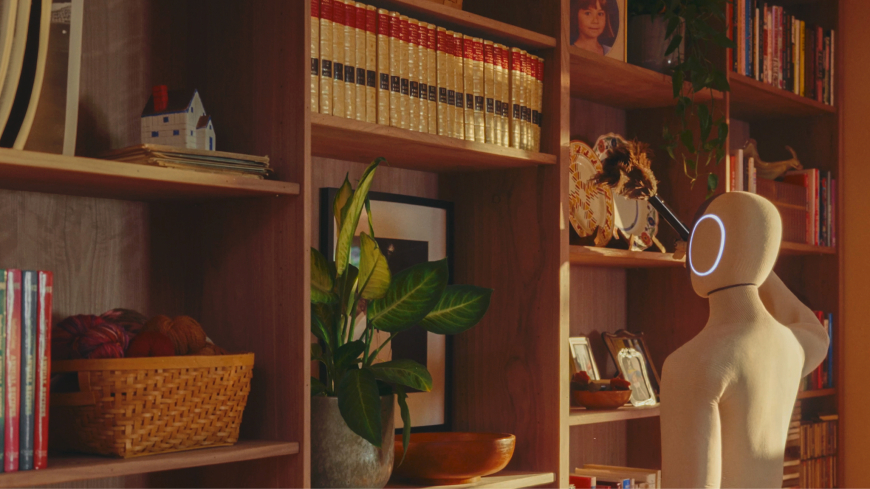
The partnership marks a notable shift for the Neo robot, which 1X has promoted as a home-use humanoid — positioning it as the "first consumer-ready humanoid robot designed to transform life at home." Unlike competitors such as Figure, Neo has not been marketed as an industrial machine.
1X has an industrial-focused robot, Eve Industrial, but this agreement focuses specifically on Neo.
When preorders opened in October for the $20,000 robot, 1X emphasised household applications, highlighting Neo's ability to support daily tasks, interact with people, and assist with chores.
This new arrangement, however, targets an entirely different use case.
Consumer adoption of humanoid robots remains limited, slowed by high prices, privacy concerns, and safety considerations. The $20,000 price alone makes Neo a niche product for homebuyers.
The robot also raises privacy concerns, as 1X's human operators can remotely view a user's home via the robot's cameras.
Safety remains another challenge, particularly in homes with pets or young children, where a humanoid's size and balance could introduce risks. Multiple robotics VCs and researchers have told TechCrunch that widespread consumer adoption of humanoids is still several years — or even a decade — away.
1X declined to disclose preorder numbers for Neo, though a spokesperson said demand "far exceeded" the company's expectations.
Founded in 2014, 1X has raised more than $130 million from investors including EQT Ventures, Tiger Global, and the OpenAI Startup Fund.
What's Your Reaction?
 Like
0
Like
0
 Dislike
0
Dislike
0
 Love
0
Love
0
 Funny
0
Funny
0
 Angry
0
Angry
0
 Sad
0
Sad
0
 Wow
0
Wow
0