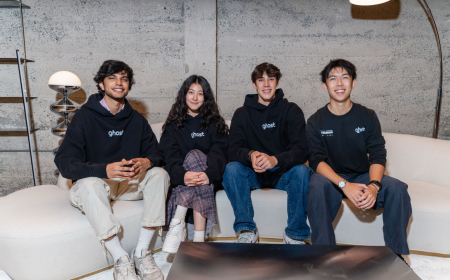
Accel and Prosus have announced the six startups selected for their first joint cohort in India, focusing on ventures they describe as pursuing “off-the-map” ideas — areas where markets are still undefined, and traditional growth metrics cannot measure progress.
The inaugural cohort includes startups operating across sectors such as healthcare, climate, space technology, and longevity. These companies were chosen from a pool of more than 2,000 applicants, reflecting a highly selective process aimed at identifying science-driven ideas with long development timelines and uncertain but potentially transformative outcomes.
Among the selected startups is Praan, a Mumbai-based company developing advanced air-infrastructure systems to improve indoor air quality. Its approach combines purification technology, environmental sensing, and automated controls. Praan has previously secured funding from investors, including Social Impact Capital, Aera VC, Avaana Capital, and other strategic backers and family offices.
Another participant, QOSMIC, is based in Bengaluru and works on optical communication systems that enable faster, more efficient data transfer between satellites and Earth. The company aims to improve bandwidth while reducing latency in space-based communication networks.
Also part of the cohort is Ethereal Exploration Guild, also known as EtherealX, which is developing reusable orbital launch vehicles to reduce the cost of accessing space. The Bengaluru-based startup recently raised a $20.5 million Series A round led by TDK Ventures and BIG Capital, achieving an $80.5 million valuation.
Dognosis is taking a unique approach to early cancer detection by combining dogs’ olfactory capabilities with robotics and artificial intelligence. Its product, BreatheEasy, involves patients breathing into a mask, after which lab samples are analysed to identify cancer-related markers.
Another startup, Ferra, is developing a home-based strength training system designed to help users maintain mobility as they age. The system automatically adjusts resistance levels based on the user’s performance, creating a personalised fitness experience.
The sixth startup in the cohort remains in stealth mode and focuses on developing brain-computer interface technology to enable direct communication between the human brain and external systems.
The program, which was first announced in October, is designed to support startups that fall outside the conventional venture capital playbook. Instead of prioritising companies that are easier to fund or scale quickly, Accel and Prosus are targeting ideas that require longer time horizons and deeper technical breakthroughs.
As part of the initiative, both firms are co-investing in each startup, with Prosus matching Accel’s investment. Funding amounts range between $500,000 and $2 million per company. The investment structure is also tailored to reduce early dilution for founders, with part of the capital deferred, allowing equity to be allocated at a later stage.
According to Pratik Agarwal, partner at Accel, startups in this category need more than just financial backing. “More than capital, they require time to make those breakthroughs,” he said.
Ashutosh Sharma, head of India ecosystem at Prosus, added that such companies often do not follow a linear growth trajectory. Instead, their progress depends on achieving key technical milestones rather than steady, incremental expansion.
With this cohort, Accel and Prosus are signalling a long-term commitment to supporting deep-tech innovation in India, particularly in areas where success depends on scientific advancement and sustained experimentation rather than immediate commercial returns.








































 Like
0
Like
0
 Dislike
0
Dislike
0
 Love
0
Love
0
 Funny
0
Funny
0
 Angry
0
Angry
0
 Sad
0
Sad
0
 Wow
0
Wow
0