


























An AI Just Solved One of the Most Famous Unsolved Problems in Mathematics
OpenAI says an AI system has produced a 166-page proof addressing the Navier-Stokes existence and smoothness problem, one of the seven Millennium Prize Problems. Explore the claimed breakthrough, the 88-hour AI effort, formal verification in Lean, the dispute over attribution, and what the result could mean for mathematics and AI research.
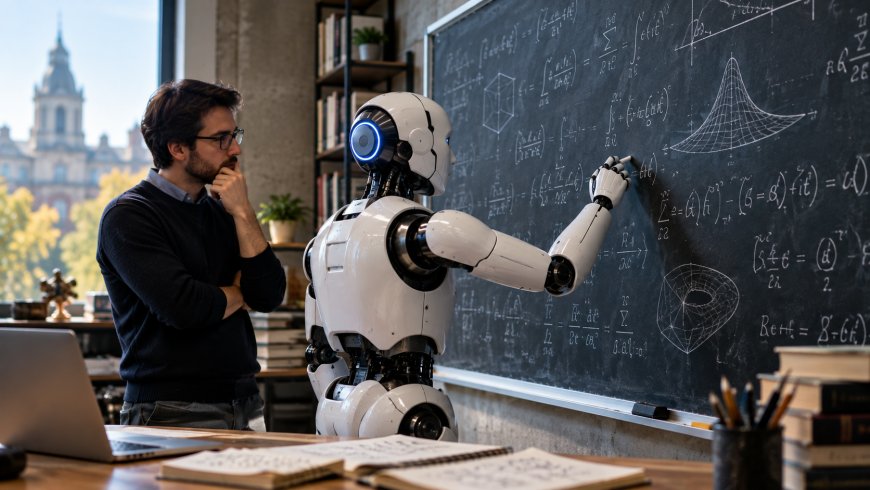
On September 8, 2026, OpenAI published a 166-page proof claiming to solve the Navier-Stokes existence and smoothness problem. It is one of seven Millennium Prize Problems: the deepest unsolved questions in mathematics, each carrying a $1 million reward from the Clay Mathematics Institute and resisting human effort for decades. For roughly 90 years, no one had solved it.
An AI swarm running for 88 hours changed that. If the proof holds.
The mathematics is remarkable. The story around it is messier. Both are worth understanding.
What the Navier-Stokes Problem Actually Is
The Navier-Stokes equations are not an abstract mathematical puzzle with no connection to the real world. They describe how fluids move: water flowing through a pipe, air moving over a wing, blood travelling through a heart, and weather systems forming and dissolving across thousands of kilometres.
Written in the 19th century by Claude-Louis Navier and George Gabriel Stokes, the equations capture three physical behaviors that together account for essentially all fluid motion.
The first is advection: fluid carries itself along with its own flow. If you drop something into a river, the current takes it. The fluid also carries itself the same way.
The second is pressure: where fluid is compressed, it pushes outward. Think of a crowded room where people push toward the edges.
The third is diffusion: differences average out over time. Drop ink into water, and in minutes it spreads until the entire glass is uniformly colored.
These three terms, plus an incompressibility condition that says fluid is neither created nor destroyed, give you equations capable of describing most fluid behavior in the observable universe.
The problem that mathematicians have been trying to solve for 90 years is simpler to state than it sounds: if you start with a smooth, well-behaved fluid and let the Navier-Stokes equations run forward in time, do the equations always stay well-behaved? Or can they blow up? Can a smooth fluid develop a point of infinite velocity in finite time, causing the mathematics to break down completely? OpenAI’s proof claims the answer is yes: breakdown is possible. The equations are not guaranteed to behave nicely forever.
How OpenAI’s AI Found It
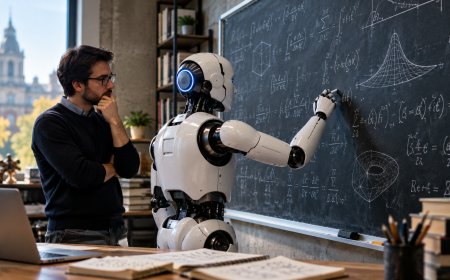
A swarm of about 10,000 AI agents produced the proof using an internal OpenAI model the company describes as significantly more capable than GPT-6 Astra. The company has not publicly released this model.
The agents began running on September 1, 2026. They ran continuously for 88 hours. The breakthrough required roughly 130 billion output tokens on the Navier-Stokes problem alone. At current API prices for Astra, that would cost approximately $15 million in compute.
The solution is a specific mathematical construction: a vortex that spirals inward, stretches into a long, thin shape like spaghetti, and whose central velocity grows toward infinity in finite time while its total energy stays bounded. At that moment of infinite velocity, the Navier-Stokes equations produce a singularity. The mathematics breaks down. The fluid would need molecular-level physics, not continuous equations, to describe what happens next.
OpenAI published both a written proof and a formal verification in Lean, a proof assistant that checks mathematical arguments automatically, step by step, without human judgment. The Lean formalization took an additional 17 hours and was performed by GPT-6 Astra. That formalization makes the result independently checkable: anyone with access to the Lean proof checker can verify each logical step without trusting OpenAI.
The result has received attention from prominent mathematicians. The Clay Mathematics Institute, which administers the $1 million prize, called it an “exciting day.” OpenAI has said it will not claim the prize money.
Peer review, the formal process by which mathematicians evaluate each other’s proofs, has not yet occurred. The result is credible. It is not yet confirmed.
The Controversy Behind the Mathematics
The day after OpenAI published its proof, a PDF appeared on the NYU website of mathematics professor Tristan Buckmaster. It sparked a dispute that has since drawn responses from Fields Medalists, hundreds of petitioning mathematicians, and contested allegations of corporate intimidation.
Buckmaster and Levent Alpöge, a mathematician who is employed as a researcher at Anthropic, had been working independently on a closely related problem. On August 15, 2026, they proved finite-time blowup with smooth forcing for the 3D Euler equations, the frictionless counterpart to Navier-Stokes. They verified this result in Lean on August 22. Their work built on foundational techniques developed by Diego Córdoba and Luis Martínez-Zoroa over more than a year of research.
On September 8, hours before OpenAI published its Navier-Stokes proof, Buckmaster and Alpöge released three papers covering Euler and related equations. Terence Tao, widely regarded as one of the greatest living mathematicians and a Fields Medal recipient, called their work “a remarkable achievement” and said he saw no obvious obstacle to extending the methods all the way to Navier-Stokes.
Those Lean-verified papers went live at 2:30 a.m. Buckmaster had left his office for the first time in days.
Later that day, OpenAI published its Navier-Stokes proof.
Buckmaster’s public statement alleged that OpenAI’s entire effort was triggered by a rumor about his and Alpöge’s unpublished research. He alleged that OpenAI had approached him to propose a joint release, but with a condition: Alpöge’s name would be removed from the attribution. According to Buckmaster, the reason given was that Alpöge worked at Anthropic. When Buckmaster refused and said he would make the dispute public, he alleges that OpenAI researcher Sebastien Bubeck said: “Why would you ruin your career?” and then: “If you don’t want me to be nice, then I don’t have to be nice.”
Buckmaster also raised a question about training data. During his research, he used OpenAI’s Codex tool heavily. OpenAI’s terms of service reserve the right to train on Codex interactions unless users explicitly opt out. He was seeking confirmation that his private work with the tool had not been used to improve OpenAI’s models. OpenAI’s official response was one sentence: “While unlikely, we cannot rule out that the identified data derived from their usage of our product helped improve our models.”
OpenAI and Bubeck have disputed parts of Buckmaster’s account. Bubeck described the allegations as “false and inflammatory.” OpenAI has said its agents did not have access to Buckmaster and Alpöge’s work before its public release, and that it did not inspect any private user data. OpenAI later apologized for specific language used during the discussions while maintaining the substance of its account.
The dispute has not been resolved. Both accounts cannot be entirely true.
Alpöge’s own public comment on the release date was brief and deliberately understated: “Unfortunately this guy didn’t title it ideal fluids explode.”
He was at Anthropic. He is also a co-discoverer of the foundational work that may have pointed OpenAI's agents toward the solution they found.
What Terence Tao Said
TerOpenAI’s's response to the entire situation has been the most widely read commentary from the mathematics community, and it goes beyond the specific dispute.
He congratulated Buckmaster and Alpöge on their work. He confirmed the technical substance: their methods are genuine and meaningful. He called the overall situation an example of a structural problem the mathematical field now faces.
"The indiscriminate strip-mining of open problems for solutions may destr“y the ecosystem from which the next generation of mathematical techniques, problems, and practitioners would have developed," he wrote.
The concern is specific. When a rumour reaches an AI company t”at a human mathematician is approaching a solution, that company can mobilize $15 million in compute in less than four days and publish a result before the human finishes their work. The mathematician loses credit, momentum, and possibly the funding and recognition that depends on being the first to solve something they spent years working on.
This is not a hypothetical. It happened. Whether OpenAI's model acted on information derived from Buckmaster’s Codex sessOpenAI’sunresolved. But the race started when OpenAI’s result was published, and it ended with OpenAI's published proof arriving hours after Buckmaster’s independently.
Nearly 3,900 mathematicians Buckmaster’sthe Leiden Declaration, which opposes AI hype and corporate intrusion into mathematics research. The signing accelerated after this episode.
Why AI Is So Good at Mathematics
The transcript that motivated this article made a point worth stating directly, because it is one of the most important things about AI and mathematics: math is verifiable, and verification can be automated.
When an AI writes an article, or a legal brief, or a piece of code, a human must evaluate whether the output is any good. That evaluation is slow and expensive. An experienced reader might evaluate a hundred pieces of writing per hour.
Computers can verify mathematical proofs. A proof checker like Lean can verify that each step follows from the previous one, according to the formal rules of logic, at enormous speed. This means a mathematical AI system can attempt a proof, check whether it is valid, and learn from the result, hundreds of millions of times per hour.
That feedback loop doesn’t exist for writing, image generation, or most other generative AI tasks. It is why AI progress on mathematics has been so rapid and is likely to continue—the more automated and precise the evaluation signal, the faster the learning. In mathematics, the evaluation signal is nearly perfect.
If the same principle can be extended to biology and medicine, by making disease a verifiable problem the way mathematics is, the implications would be extraordinary. If AI agents can propose a treatment, test it against a validated biological simulation, and receive a clear yes-or-no signal at scale, the same rapid improvement tappening in mathematics could happen in drug discovery and disease mmodelling
That is a large "if." But it is the kind of "if" that serious researchers, including Demi“ Ha”sabis at Google DeepMin“, ”re no longer treating as science fiction.
What This Means
The Navier-Stokes proof, if it stands, is the most significant AI mathematical achievement in history by most measures. It settles a question open for 90 years, has direct implications for how we understand the theoretical limits of the equations we use to simulate fluids and weather, and was produced in 88 hours at a cost equivalent to a mid-sized research grant.
The controversy around it is not a footnote. It is part of the meaning. The same event that demonstrated what AI can do mathematically also demonstrated what AI companies will do strategically when they smell a prize. Whether that behavior was as aggressive as Buckmaster says, or as innocent as OpenAI claims, the structural reality Terence Tao identified is undeniable: the rules that govern credit, priority, and attribution in mathematics were written before an AI swarm could outrun a human researcher in under four days.
Those rules still haven’t been updated. And the machines are not waiting.
What's Your Reaction?
 Like
0
Like
0
 Dislike
0
Dislike
0
 Love
0
Love
0
 Funny
0
Funny
0
 Angry
0
Angry
0
 Sad
0
Sad
0
 Wow
0
Wow
0