




























Bumble sees a decline in paying users ahead of a major app overhaul
Bumble reports a decline in paying users as the dating platform prepares for a major overhaul to improve engagement and long-term growth.

As Bumble prepares for a major overhaul aimed at attracting Gen Z users — a demographic that has been losing interest in traditional dating apps — its latest earnings report shows a continued decline in paying users. In the first quarter of 2026, the total number of paying users dropped by 21.1% to 3.2 million, down from 4 million in the same period last year.
This trend has persisted over several quarters. However, during its investor call, Bumble positioned the decline as part of a deliberate strategy focused on improving user quality rather than maintaining scale.
While overall revenue declined by 14.1% to $212.4 million — though still exceeding expectations — revenue from the Bumble app itself fell to $172.7 million. At the same time, the company reported a nearly 9% increase in average revenue per paying user. Profitability also improved, with net earnings rising to $52.6 million compared to $19.8 million in the same quarter a year earlier, largely due to reductions in sales and marketing expenses.
Speaking on the investor call, founder and CEO Whitney Wolfe Herd described the drop in paying users as part of a broader reset strategy. “This is a period of real transformation at Bumble over the past few quarters,” she said. “We have executed a deliberate reset of our member base. We made a clear choice to prioritise quality over quantity, focusing on well-intentioned, engaged members. That decision reduced overall scale, but meaningfully improved the health of our ecosystem.”
Even with that explanation, the decline in paying users remains a central concern. As a result, much of the company’s discussion focused on its upcoming changes and how they could drive future growth.
“When do we start to see a rebound in the numbers you’re all looking for? Well, the answer is very simple. When our technology and our next-gen recommendation engine can actually help people connect more compatibly and show them who they want to see and get them out on great dates, that’s where the magic happens,” Herd said.
The overhaul centres on replacing Bumble’s legacy technology with a cloud-native, AI-driven platform designed to improve matchmaking and accelerate feature development. The rollout has already begun for a subset of users and is expected to expand in the coming months.
More noticeable updates are scheduled for later. Bumble confirmed that its fully “reimagined” user experience is now expected to launch in the fourth quarter, with a broader rollout continuing into late 2026 and early 2027. This adjusted timeline suggests a phased release rather than a single large relaunch.
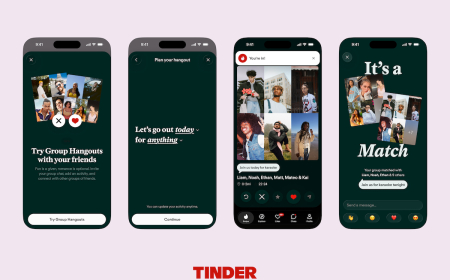
The upcoming changes signal a shift away from the traditional swipe-based model, which the company believes no longer effectively leads to real-life connections. Bumble plans to redesign user profiles, rethink interaction mechanics, and place greater emphasis on helping users meet in person.
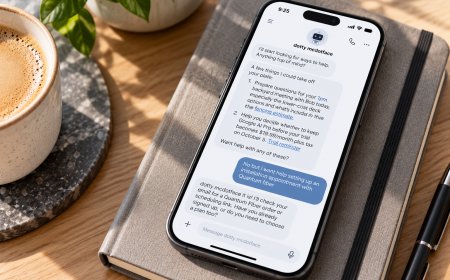
Artificial intelligence will play a central role in this transformation. Earlier this year, Bumble introduced “Bee,” an in-app matchmaking assistant that learns users’ preferences, relationship goals, and communication styles to recommend more compatible matches. Through a feature called “Dates,” Bee can also explain why two users might be a good match before they connect.
User profiles are also evolving. The company has been testing more detailed, “chapter-style” profiles that go beyond simple photos and short bios to provide richer context about each individual.
Beyond dating, Bumble is also seeing increased engagement in other areas of its ecosystem. Its friend-focused app, Bumble BFF, introduced a Groups tab last year, allowing users to join conversations, organise meetups, and plan events. According to Wolfe Herd, engagement in this area is rising, particularly among Gen Z women, with group participation nearly doubling between December and March.
For now, Bumble remains in a transitional phase. The company is betting that improving the path from matching to real-world interaction will help bring users back, but until the full experience is rolled out, that outcome remains uncertain.
What's Your Reaction?
 Like
0
Like
0
 Dislike
0
Dislike
0
 Love
0
Love
0
 Funny
0
Funny
0
 Angry
0
Angry
0
 Sad
0
Sad
0
 Wow
0
Wow
0