




























ChatGPT Launched Three Years Ago Today
Three years after its debut, ChatGPT continues to reshape technology, business, markets, and society. Here’s how the AI chatbot transformed the world.
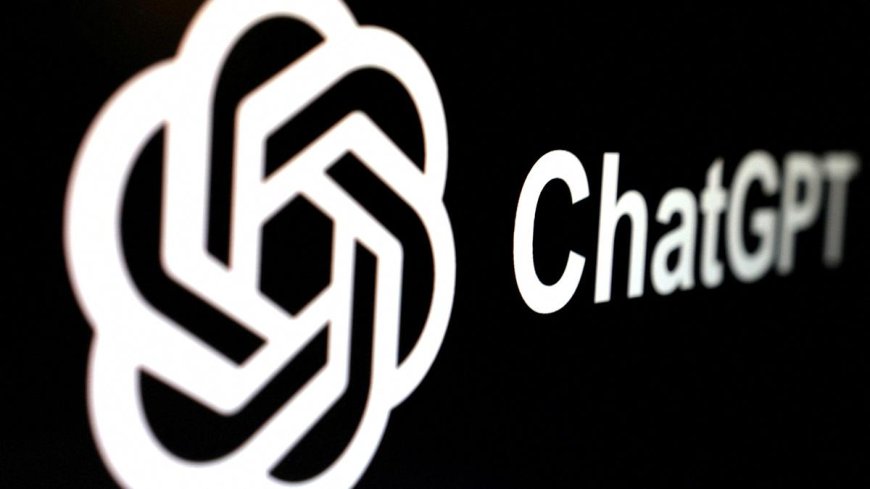
On November 30, 2022, OpenAI quietly introduced a new tool to the public, describing it simply as "a model called ChatGPT which interacts in a conversational way."
What followed, however, was far from simple. ChatGPT went on to reshape the technology and business landscape, becoming a global sensation — and it still holds the top position on Apple's free app charts today. It also triggered a wave of generative AI products across nearly every industry.
It even sparked unexpected cultural debates, including a light-hearted suspicion of the em dash — a punctuation mark many writers jokingly refuse to surrender.
In a recent conversation with TechCrunch, "Empire of AI" author Karen Hao argued that OpenAI has already become "more powerful than almost any nation-state," influencing geopolitics and everyday life at a massive scale.
Others have offered a more cautious lens. Writing in The Atlantic, Charlie Warzel said we now inhabit "the world ChatGPT built," a world he described as defined by constant uncertainty, where society feels as though it is "waiting for a shoe to drop."
"Young people feel the instability most," Warzel wrote, noting that graduates enter a job market with no guaranteed career path. "Older generations, too, are told that the future may be unrecognizable, that the skills they've refined could lose relevance."
Still, many are optimistic — and well-positioned to benefit significantly from an AI-driven era. Yet even AI supporters acknowledge the technology's unpredictability. According to Warzel, boosters and investors are waiting along with everyone else: waiting to see whether their expectations will be fulfilled, and waiting because they believe generative AI "is never in its final form."
Meanwhile, Bloomberg took a more data-driven look at ChatGPT's impact on financial markets. The biggest winner has been Nvidia, whose stock has surged 979% since ChatGPT's debut. AI momentum has propelled other major tech firms as well: the seven most valuable companies on the S&P 500 — Nvidia, Microsoft, Apple, Alphabet, Amazon, Meta, and Broadcom — are all tech giants, and their combined growth accounts for nearly half of the index's 64% rise since ChatGPT launched.
This surge has resulted in a more concentrated market. Because the S&P 500 is weighted by market cap, those same seven companies now account for 35% of the index, up from about 20% three years earlier.
Whether this growth is sustainable remains a critical question. With the notable exception of Nvidia CEO Jensen Huang, many AI leaders now admit that the industry may be in a bubble — or, as some prefer to call it, a "mania."
"Someone is going to lose a phenomenal amount of money in AI," OpenAI CEO Sam Altman said in August during a dinner with reporters.
Likewise, Sierra CEO and OpenAI board chair Bret Taylor said the industry is "in a bubble," likening the moment to the late-1990s dot-com era. While some companies will fail, he added, "AI will transform the economy, and like the internet, it will create enormous economic value in the long run."
In another three years — or perhaps sooner — it may become clear whether these predictions of lasting impact were justified.
What's Your Reaction?
 Like
0
Like
0
 Dislike
0
Dislike
0
 Love
0
Love
0
 Funny
0
Funny
0
 Angry
0
Angry
0
 Sad
0
Sad
0
 Wow
0
Wow
0