








































Runware Unveils Portable AI Data Centre to Expand Inference Capacity
Runware has introduced the Sonic Inference Pod, a modular AI data centre designed to deliver scalable inference closer to users with lower infrastructure costs.
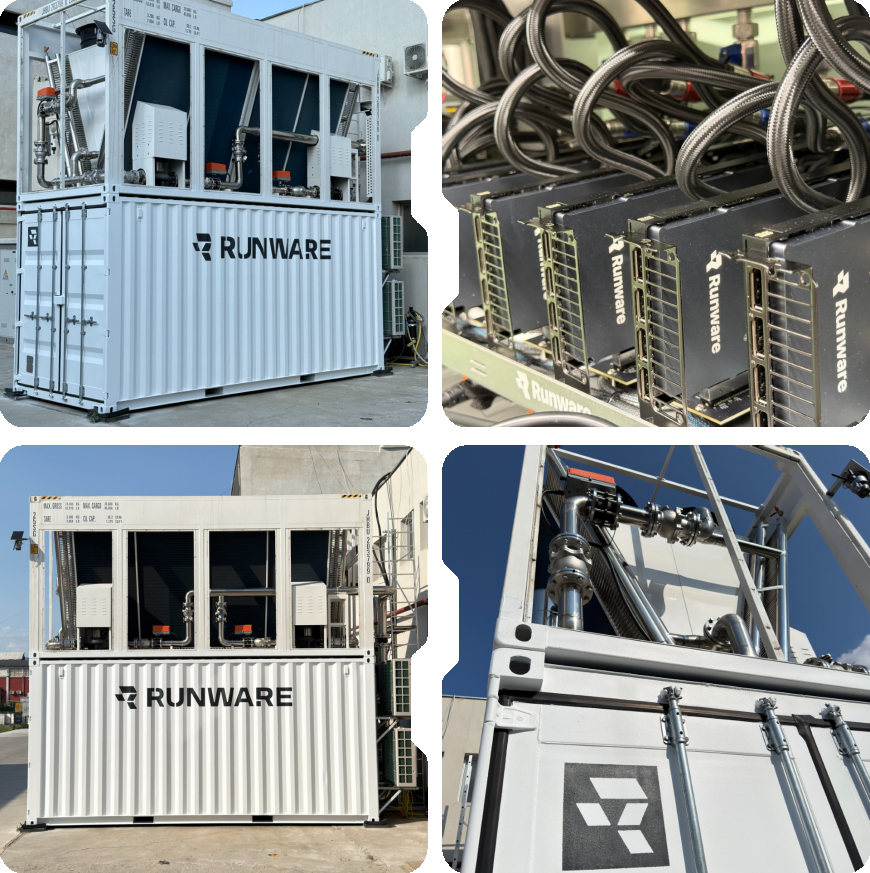
AI infrastructure startup Runware has introduced the Sonic Inference Pod, a modular data centre designed to provide scalable AI inference through transportable computing units that can be deployed wherever power is available. The company says the new system offers an alternative to traditional fixed data centres as demand for AI inference continues to grow.
Announced on Tuesday, the Sonic Inference Pod is built as a self-contained unit that can be added to an existing network instead of expanding a conventional data centre. Runware says the approach enables customers to increase computing capacity more quickly while reducing deployment time.
Chief Executive Officer Flaviu Radulescu said the company believes distributed computing located closer to end users will play an increasingly important role in delivering faster AI inference. According to Runware, the pods are designed to provide higher-quality inference at lower cost than many serverless inference platforms and GPU cloud providers.
Unlike traditional facilities that can take months or years to construct, the pods use a closed-loop cooling system instead of water cooling and can be deployed within days. Radulescu said the design allows the company to respond more rapidly to rising demand and adapt quickly as new hardware becomes available.
Existing network spans three regions.
Runware currently operates 10 Sonic Inference Pods across the United States, Europe and the Asia-Pacific region. The company provides inference services to customers including Higgsfield AI and Wix and says it already has access to 160 sites capable of hosting additional pods.
The company raised a $50 million Series A funding round in December to expand infrastructure supporting AI image generation. Radulescu said the move into modular data centres is a natural extension ofRunware’ss broader mission to provide inference infrastructure rather than focus on a single AI application.
Runware’s distributed architecture allows every pod to operate as part of one network, automatically routing requests to available capacity. If one pod experiences an outage, traffic can be redirected to another location, while customers requiring dedicated infrastructure can reserve entire pods for their own workloads.
Alternative to hyperscale facilities
The launch comes as companies including OpenAI continue investing heavily in large-scale AI data centres. Reports have indicated OpenAI is pursuing a major project in Ohio as part of a broader expansion of AI computing capacity.
Radulescu said Runware does not view hyperscale facilities as direct competition, arguing that portable infrastructure offers greater flexibility while reducing deployment times. He also said developing similar hardware internally is difficult because designing and maintaining specialised computing systems requires highly specialised engineering expertise.
Balancing AI growth and resource use
The rapid expansion of AI infrastructure has drawn scrutiny over electricity consumption and other resource demands. Communities hosting data centres have reported concerns about rising utility costs and increasing pressure on local infrastructure.
Runware said its long-term goal is to operate using renewable energy while minimising demands on local resources. Radulescu argued that AI electricity consumption will continue to rise regardless of which companies supply computing capacity. The company’s focus, he said, is on meeting that demand with infrastructure that avoids transmission losses, eliminates water-based cooling and relies on existing power resources instead of requiring new grid capacity.
What's Your Reaction?
 Like
0
Like
0
 Dislike
0
Dislike
0
 Love
0
Love
0
 Funny
0
Funny
0
 Angry
0
Angry
0
 Sad
0
Sad
0
 Wow
0
Wow
0