































Cohere moves to merge with Aleph Alpha to strengthen AI capabilities
Cohere plans to merge with Aleph Alpha to expand its AI capabilities, strengthen its position in Europe, and compete with global AI leaders.
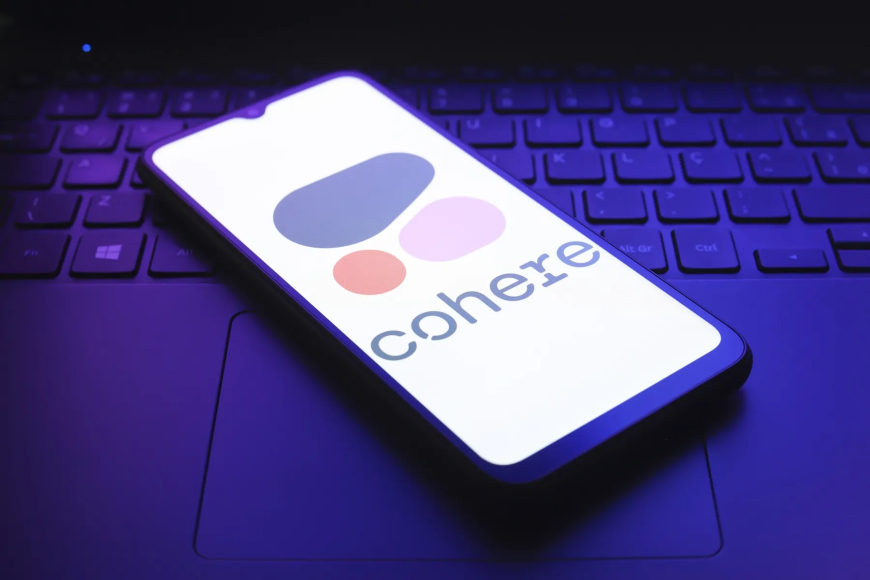
Canadian AI company Cohere is moving to acquire Germany-based Aleph Alpha, with support from their respective governments, as part of an effort to create a sovereign alternative for enterprises in an AI ecosystem largely dominated by U.S. technology firms. The concept of “sovereign AI” centres on enabling organisations and governments to retain full control over their data, rather than relying on infrastructure from providers such as Microsoft or Google.
Both Cohere and Aleph Alpha have been prominent AI players in their home markets, though they remain significantly smaller than global leaders like OpenAI. Despite their similarities, the merger is not structured as an equal partnership. Cohere, previously valued at $6.8 billion, will lead the combined entity, which will integrate Aleph Alpha pending regulatory and shareholder approvals.
A central financial supporter of the deal is Schwarz Group, a major German retail company and existing investor in Aleph Alpha. Schwarz Group is fully backing the acquisition and will provide €500 million (approximately $600 million) in structured financing to support the combined business. In exchange, the new entity will operate on STACKIT, the sovereign cloud platform run by Schwarz Group’s IT division, Schwarz Digits, providing the retailer with a significant enterprise use case for its cloud infrastructure.
To fund operations going forward, Cohere is also raising a new Series E financing round, with Schwarz Group serving as the lead investor. Reports indicate that the combined company’s valuation is expected to reach around $20 billion.
This valuation represents a major increase that is not directly supported by current revenue figures. Cohere reported approximately $240 million in annual recurring revenue in 2025, while Aleph Alpha has historically generated limited revenue and incurred notable losses. Investors, however, appear to be betting that combining capabilities will improve competitiveness against larger AI firms.
The strategy aligns with broader industry trends, in which consolidation is increasingly viewed as a path forward. For instance, xAI, founded by Elon Musk, has reportedly explored a potential partnership involving Mistral AI and Cursor, a company linked to SpaceX. However, such collaborations may pose challenges, particularly for companies like Mistral AI that position themselves as independent alternatives to U.S. tech providers.
Cohere is also aiming to benefit from increasing demand among enterprises for AI solutions that emphasise privacy, control, and independence. The merged company plans to focus on highly regulated sectors such as defence, energy, finance, healthcare, manufacturing, telecommunications, and public-sector services.
Aleph Alpha has developed specialised, enterprise-focused language models, including its PhariaAI suite, for European institutions and organisations. However, a strategic shift away from building its own frontier models, combined with the departure of co-founder and CEO Jonas Andrulis, has created uncertainty around its direction and weakened its negotiating position. Even so, its team of approximately 250 employees and their expertise are expected to complement Cohere’s capabilities.
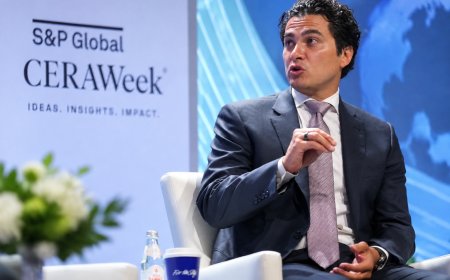
“Their focus on small language models, European languages and tokenisers is a really complementary one to our own, which is more of a general focus on large language models,” said Cohere CEO Aidan Gomez during a press conference announcing the planned merger.
Amid rising geopolitical tensions with the United States, Canada has been strengthening bilateral technology partnerships, including with Germany. The two countries recently established a Sovereign Technology Alliance to enhance independent AI capabilities and reduce reliance on external technology providers.
Questions remain about how European organisations will perceive the sovereignty of a transatlantic initiative that includes Canada, and whether such an alliance can maintain its positioning over time. Gomez stated that “Cohere will become a Canadian-German company.” However, that vision could become more complex if the company eventually goes public, as ownership would then extend to a global shareholder base without a specific national alignment.
What's Your Reaction?
 Like
0
Like
0
 Dislike
0
Dislike
0
 Love
0
Love
0
 Funny
0
Funny
0
 Angry
0
Angry
0
 Sad
0
Sad
0
 Wow
0
Wow
0