
































Commonwealth Fusion Systems Raises Another $1 Billion for Fusion Power
Commonwealth Fusion Systems has raised another $1 billion, bringing its total funding to $4 billion as it develops Sparc and its commercial Arc fusion plant.
Commonwealth Fusion Systems has extended its position as one of the world’s best-funded fusion energy startups after raising another $1 billion from investors.
The company, known as CFS, announced the new financing Thursday, saying the round included significant institutional investors such as pension funds, sovereign wealth funds, infrastructure investors and industrial corporate partners.
The latest investment brings CFS’s total funding to approximately $4 billion as the company increases spending on developing its fusion technology.
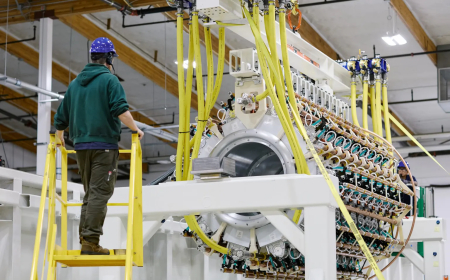
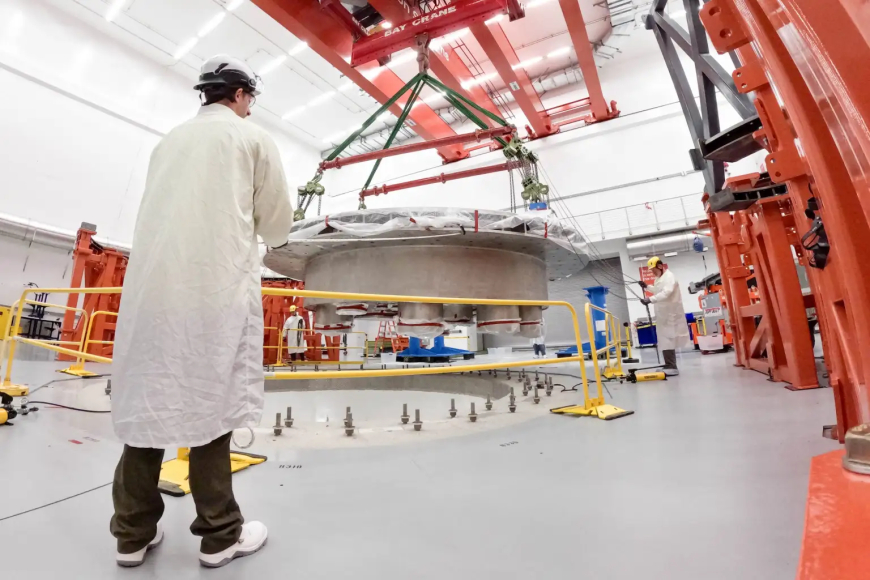
CFS is currently building Sparc, its demonstration fusion reactor, while completing the design of Arc, the company’s first planned commercial fusion power plant.
The startup said the new capital will support its efforts to commercialise fusion energy. CEO Bob Mumgaard has also indicated that the company expects to raise additional funding as development continues.
CFS has not disclosed the expected total cost of either Sparc or Arc. However, former Virginia Gov. Glenn Youngkin described Arc in 2024 as a “multi-billion-dollar fusion power plant.”
CFS extends its funding lead
The $1 billion financing is CFS’s largest funding round since it raised $1.8 billion in 2021.
Its previous round, announced in August, brought in another $863 million and included investors such as Nvidia, Google, Khosla Ventures and Breakthrough Energy Ventures.
CFS is developing fusion using an approach known as magnetic confinement. The technology uses powerful magnetic fields to contain extremely hot plasma inside a reactor and maintain the conditions required for fusion reactions.
When atomic nuclei in the fusion fuel combine, the process releases large amounts of energy. CFS ultimately plans to capture heat from those reactions and use it to generate steam that powers a turbine and produces electricity.
Sparc targets scientific breakeven in 2027
The company has made substantial progress constructing Sparc and now expects the reactor to reach scientific breakeven in 2027.
Scientific breakeven occurs when fusion reactions produce more energy than is required to initiate them. Reaching that milestone would not mean Sparc could economically supply electricity to the grid, but it would provide important evidence that CFS’s approach can produce meaningful fusion energy.
So far, only one fusion facility has demonstrated scientific breakeven: the National Ignition Facility at Lawrence Livermore National Laboratory.
Achieving the same milestone using CFS’s magnetic-confinement approach would represent a significant technical achievement and could strengthen investor confidence in the company’s plans for commercial fusion.
Arc already has major electricity customers
While construction continues on Sparc, CFS is also finalising the design of Arc, its commercial-scale fusion power plant planned for Virginia.
The company has already secured major commitments for electricity expected to be generated by the plant.
Italian energy company Eni has agreed to purchase more than $1 billion worth of electricity from Arc.
Google has separately committed to buying 200 megawatts of electricity from the facility, representing half of Arc’s planned total power output.
The latest $1 billion investment gives CFS additional capital to move from demonstrating that its fusion technology works toward proving that it can eventually operate at commercial scale.
What's Your Reaction?
 Like
0
Like
0
 Dislike
0
Dislike
0
 Love
0
Love
0
 Funny
0
Funny
0
 Angry
0
Angry
0
 Sad
0
Sad
0
 Wow
0
Wow
0