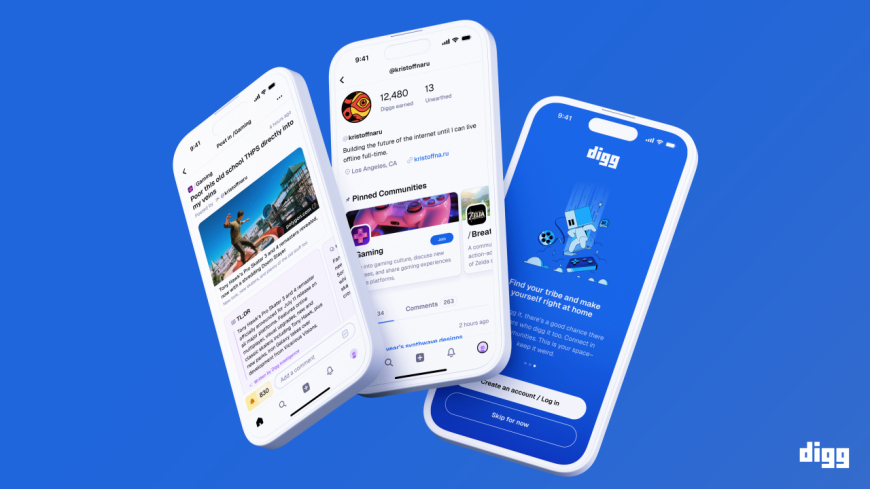
Digg — the revived version of Kevin Rose’s once-iconic link-sharing platform — is laying off a significant portion of its team, the company confirmed on Friday. Despite the cuts, Digg is not shutting down, according to CEO Justin Mezzell. Instead, Rose will return and commit fully to the project as the company redefines its direction.
Although Rose will remain involved as an advisor at investment firm True Ventures, Digg will now be his primary focus.
The startup originally aimed to position itself as an alternative to existing online community forums, offering users a place to share links, media, and written content and to participate in topic-based discussions. It introduced new ideas around improved content moderation and user verification, attempting to ensure that participants were genuine individuals. However, despite these efforts, the company acknowledged that it quickly became overwhelmed by bot activity shortly after launch.
Referencing the so-called “dead internet theory,” which suggests that much of today’s web activity is driven by bots rather than real people, Mezzell addressed the scale of the issue in a blog post published on Digg’s website.
“When the Digg beta launched, we immediately noticed posts from SEO spammers noting that Digg still carried meaningful Google link authority,” the company wrote in its announcement. “Within hours, we got a taste of what we’d only heard rumours about. The internet is now populated, in meaningful part, by sophisticated AI agents and automated accounts. We knew bots were part of the landscape, but we didn’t appreciate the scale, sophistication, or speed at which they’d find us.”
According to the company, it took extensive measures to tackle the issue — including banning tens of thousands of accounts, building internal moderation tools, and collaborating with third-party vendors. Even so, those efforts fell short. Because Digg relied on user voting to surface and rank content, the presence of large numbers of bots undermined trust in the system, making it difficult to determine which votes were legitimate.
Mezzell emphasised that this challenge goes beyond Digg itself, describing it as a broader issue affecting the entire internet ecosystem.
He also acknowledged the difficulty of competing with established platforms — an apparent reference to Reddit — noting that the competitive barrier was not just a protective moat but more like an impenetrable wall.
While the company did not disclose the exact number of employees affected, it stated that a smaller team will remain in place to rebuild Digg into something “genuinely different.” The Digg app has already been removed from the App Store, and currently, the only content available on the company’s website is the announcement detailing the layoffs. Meanwhile, the Diggnation podcast — a video series hosted by Rose — will continue as usual.
For background, Rose and Reddit co-founder Alexis Ohanian acquired the remaining assets of the original Digg last year, with the intention of creating a platform where communities would have greater control over moderation and ownership. The acquisition was structured as a leveraged buyout involving True Ventures, Ohanian’s venture firm Seven Seven Six, both founders personally, and the investment firm S32. Financial terms of the deal were not disclosed.






























 Like
0
Like
0
 Dislike
0
Dislike
0
 Love
0
Love
0
 Funny
0
Funny
0
 Angry
0
Angry
0
 Sad
0
Sad
0
 Wow
0
Wow
0