
































Fusion Startups Turn to Defence Partnerships as Climate Funding Slows
Fusion startups are finding new opportunities in defence partnerships as companies explore laser technology and high-energy fusion applications.
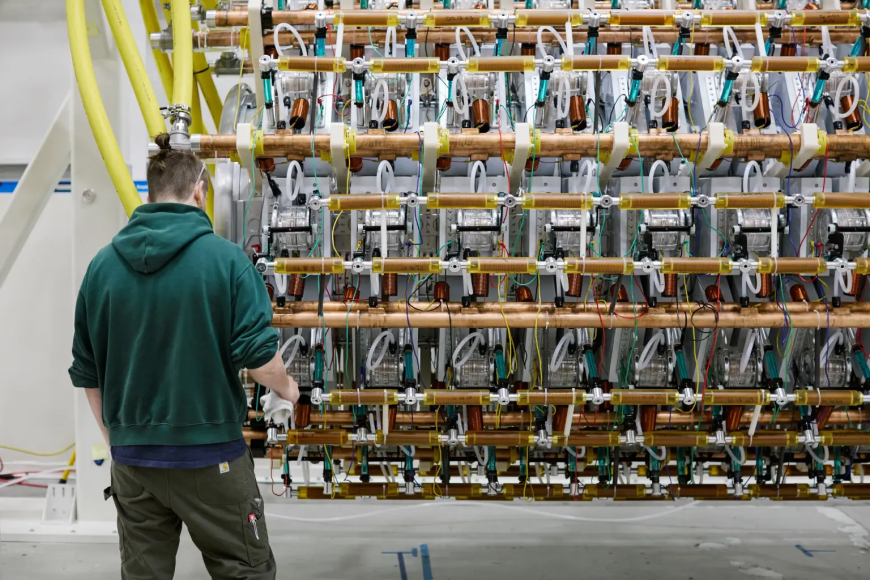
Fusion energy startups are finding new momentum through defence partnerships as they continue working toward commercial power generation. Companies developing advanced fusion systems are now exploring collaborations involving high-powered lasers, national security research and military applications that can provide additional funding and strategic support.
The move comes as fusion remains a capital-intensive technology. While climate tech investors have backed many fusion companies, startups are increasingly exploring additional opportunities as they work toward building practical fusion power plants.
Why defence companies are interested in fusion technology
Defence companies are showing growing interest in high-energy technologies, particularly laser systems designed for applications such as countering drone threats. Unlike traditional interceptors, laser systems aim to use electricity to deliver repeated strikes without relying on expensive one-time-use missiles.
Laser-based fusion companies already develop powerful laser and control technologies relevant to these applications. That overlap has created new opportunities for partnerships between fusion startups and defence firms.
Xcimer, a laser-based fusion startup, recently announced a partnership and investment from RTX, the parent company of defence contractor Raytheon. Under the agreement, RTX Ventures is investing in Xcimer while exploring potential uses for the company’s laser technology.
Xcimer operates what it describes as the world’s largest privately owned laser system and is developing a future fusion power plant based on laser-driven energy generation.
Defence partnerships open new funding paths
For fusion startups, defence partnerships provide another route to funding and commercial opportunities while they continue developing energy systems. The relationships may also help companies apply their technologies to areas with shorter-term demand than utility-scale fusion power.
The broader market for advanced technologies is seeing increased investment from governments and companies focused on energy, robotics and national security. For fusion firms, defence applications can diversify business models while supporting research into complex high-energy systems.
Pacific Fusion expands research collaboration
Pacific Fusion has also moved closer to defence-related research through a memorandum of understanding with the National Nuclear Security Administration for high-energy-density fusion experiments.
The company is building a demonstration facility in New Mexico near Sandia and Los Alamos National Laboratories. The project is designed to test its fusion approach while supporting experiments involving powerful fusion reactions.
Fusion research has long been connected to national security work, dating back to Cold War-era thermonuclear research. The latest partnerships show that connection remains important as startups seek funding, markets, and applications beyond the power grid.
What's Your Reaction?
 Like
0
Like
0
 Dislike
0
Dislike
0
 Love
0
Love
0
 Funny
0
Funny
0
 Angry
0
Angry
0
 Sad
0
Sad
0
 Wow
0
Wow
0