






































Apollo Atomics Raises $31M to Build Smaller, Factory-Made Nuclear Reactors
Apollo Atomics raises $31 million to develop compact nuclear reactors using a smaller steam generator designed for factory production and faster deployment.

Nuclear startups have raised billions of dollars trying to reinvent reactors, fuels and cooling systems. Apollo Atomics is taking a narrower approach: keep much of the proven nuclear technology and redesign one of the plant’s largest components.
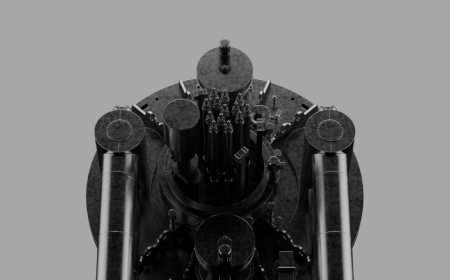
The MIT spinout is focusing on the steam generator, which transfers heat from a reactor’s coolant system to water, producing steam for electricity generation. Apollo says that making that component dramatically smaller could allow entire nuclear plants to be manufactured more like industrial products rather than constructed as large, customised projects.
The company recently announced $31 million in seed financing to advance testing, manufacturing and regulatory work. FCVC led the financing, with investors including Y Combinator, TeleSoft Partners, Alumni Ventures, Robinhood Ventures, Nucleation Capital, and Pelion VC.
A smaller steam generator changes the reactor footprint
Conventional nuclear steam generators can stand several stories tall and require extensive on-site construction. Apollo Atomics says its compact steam system can provide much higher power density while using commercially established nuclear fuel and supply chains.
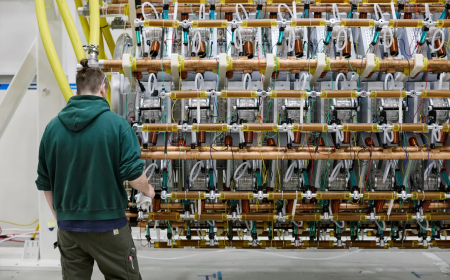
Instead of running coolant through large arrays of tubes immersed in water, Apollo’s design routes the two fluid loops through a compact metal structure with extremely small channels. Increasing the surface area available for heat transfer allows the system to transfer heat more efficiently while reducing equipment size.
According to Apollo’s Y Combinator launch description, its compact steam generator is about 20 times smaller than a conventional version while delivering comparable thermal power. The company says that change can make the overall reactor roughly 40 times more compact.
CEO Assil Halimi and co-founder Drew Walker developed the company around research originating at MIT. Apollo has already built and tested a small reactor-system demonstrator at MIT as it works toward larger commercial hardware.
Factory construction is central to the plan.
The smaller footprint is important because Apollo wants to move much of reactor construction away from individual project sites and into factories. Large nuclear projects traditionally require extensive on-site engineering, specialised labour and long construction schedules, all of which can contribute to high costs.
Apollo says its reactors could instead be assembled and tested in factories before being transported to customers. The company is targeting deployment in less than 24 months and is developing three models: a 10-megawatt A-10, a 50-megawatt A-50 and a 300-megawatt A-300.
The strategy differs from advanced reactor companies developing new fuels or fundamentally different cooling systems. Apollo is building around pressurised water reactor technology and commercially available low-enriched uranium, to reduce the technical and supply-chain changes needed to reach deployment.
Apollo is targeting natural gas-like economics.
Cost remains one of the largest obstacles facing new nuclear projects. Lazard’s Levelized Cost of Energy analysis shows that new nuclear generation remains more expensive than several other sources of new electricity generation. In contrast, construction timelines and capital requirements remain significant challenges.
Apollo believes shrinking and standardising the plant can change those economics. The company is targeting electricity production at about 3 cents per kilowatt-hour, although that figure remains Apollo’s projection rather than a demonstrated commercial operating cost.
Halimi has said the company’s objective is not simply to make nuclear power incrementally cheaper but to compete directly with natural gas. Apollo expects labour savings, factory production, and a smaller physical footprint to reduce construction costs compared with conventional nuclear plants significantly.
The company is now working toward a 1-megawatt demonstration system while pursuing regulatory approvals and longer-duration testing. Its broader commercial plan targets customers ranging from data centres and industrial facilities to utilities seeking round-the-clock electricity.
Apollo bets that nuclear power may not require an entirely new reactor concept to become cheaper. If its compact steam generator performs at commercial scale as intended, changing one traditionally overlooked part of the plant could have an outsized effect on how quickly and cheaply reactors can be manufactured and deployed.
What's Your Reaction?
 Like
0
Like
0
 Dislike
0
Dislike
0
 Love
0
Love
0
 Funny
0
Funny
0
 Angry
0
Angry
0
 Sad
0
Sad
0
 Wow
0
Wow
0