







































TerraPower Natrium Reactor Uses Storage for AI Data Centres
TerraPower’s Natrium reactor pairs nuclear power with molten salt storage, allowing output to rise from 345 MW to 500 MW as electricity demand increases.
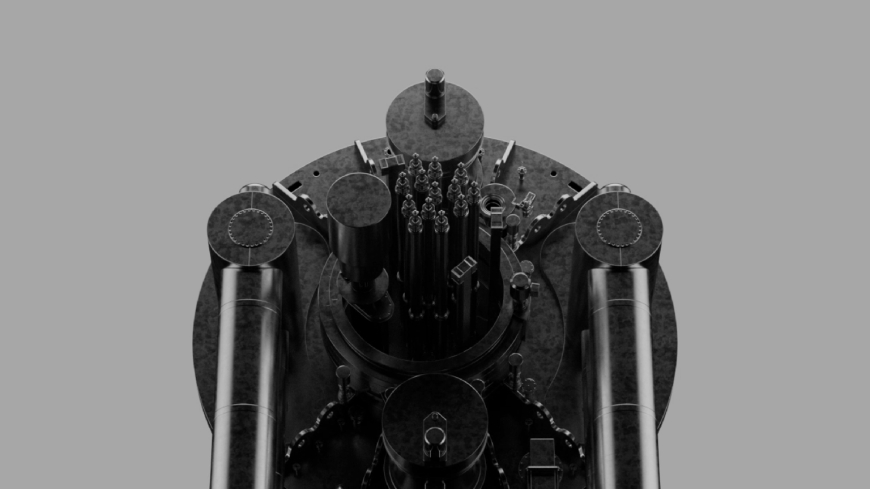
TerraPower is preparing to bring its Natrium nuclear technology to the data centre market, where rapidly changing electricity demand presents a challenge for power plants designed to operate steadily. Bloomberg reported that the Bill Gates-founded company plans to announce its first data centre project this year, with construction expected to begin in 2027.
TerraPower has not identified the customer. In January, the company announced an agreement with Meta to develop up to eight Natrium plants in the United States. Its first commercial-scale Natrium project is already under development in Wyoming.
Energy storage gives Natrium added flexibility.
Nuclear plants are designed to operate for long periods at high output. The U.S. Department of Energy has reported that nuclear has the highest capacity factor of major U.S. energy sources, with plants producing maximum power more than 92% of the time.
That reliability comes with a limitation when electricity demand changes quickly. Data from the National Laboratory of the Rockies’ Annual Technology Baseline for nuclear power uses a reference ramp rate of 5% of rated power per minute for large reactors and 10% for small modular reactors.
Operating nuclear capacity below its potential can also weaken the economics of a technology in which capital spending accounts for a major share of costs. NLR’s Annual Technology Baseline tracks capital expenditures, operating costs and capacity factors across generating technologies.
Why AI workloads create a different problem
AI data centres can impose rapidly changing electrical loads as GPUs move between training, inference and other computing tasks. Those fluctuations can create problems for conventional power equipment. Investor’s Business Daily has reported that fluctuating AI computing loads can place damaging stress on thermal turbine generators.
One response is to use batteries or other equipment to smooth those changes. TerraPower’s Natrium design approaches the problem differently by combining a 345-megawatt sodium-cooled fast reactor with built-in molten salt thermal energy storage.
Natrium can store heat instead of slowing the reactor
Rather than repeatedly increasing and decreasing reactor output, Natrium can keep the nuclear side operating steadily while directing heat into its storage system. When electricity demand increases, that stored thermal energy can be used to generate additional power.
TerraPower says the 345-MWe plant can increase electrical output to 500 MW using its energy storage system. NLR also notes that pairing a reactor with thermal storage can allow faster changes in electrical generation without requiring the reactor itself to change power at the same rate.
The storage concept was developed in part to make nuclear generation more compatible with variable renewable sources such as wind and solar. That same characteristic could prove useful for data centres, where demand can fluctuate on the consumption side rather than the generation side.
For TerraPower, the combination offers a way to preserve one of nuclear power’s main strengths, steady high-capacity operation, while giving the generating plant more flexibility to respond to changing electricity demand. The planned data centre project could provide an important test of that approach, as AI infrastructure operators seek large amounts of reliable power.
What's Your Reaction?
 Like
0
Like
0
 Dislike
0
Dislike
0
 Love
0
Love
0
 Funny
0
Funny
0
 Angry
0
Angry
0
 Sad
0
Sad
0
 Wow
0
Wow
0