























Kodiak AI secures $100M funding round at lower valuation as shares plunge 37%
Kodiak AI raised $100 million in a discounted funding round, triggering a 37% drop in its stock price amid investor concerns about valuation and growth.
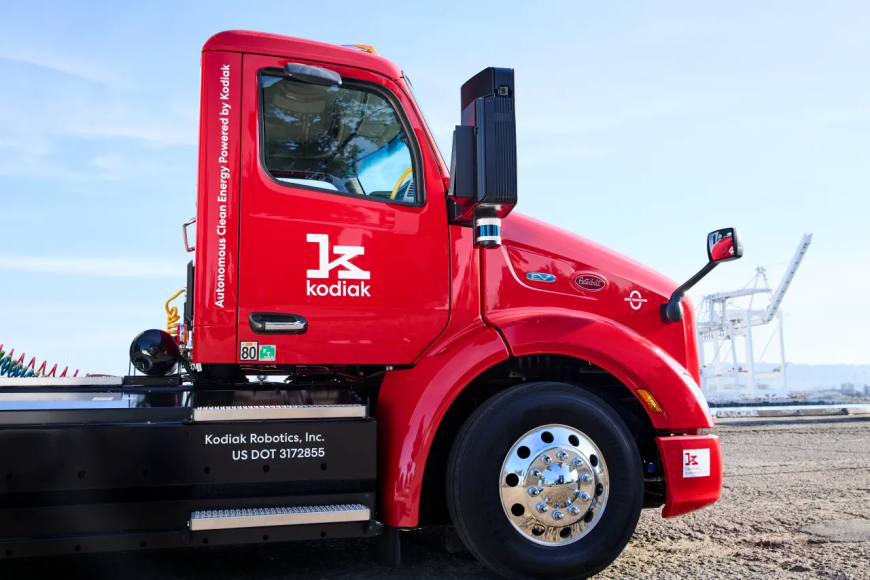
Kodiak AI's stock dropped sharply in after-hours trading on Thursday after the autonomous trucking company revealed it had raised $100 million through a discounted share sale, signalling that investors were still willing to fund the company — but at a much lower valuation than the market had previously assigned.
According to a filing with the U.S. Securities and Exchange Commission (SEC), Kodiak sold shares at $6.50 each, significantly below its previous closing price of $9.10. The financing package also included warrants, which give investors the option to purchase additional shares later at a predetermined price. In this case, some warrants were priced as low as $6 per share.
The announcement triggered a sharp market reaction, sending Kodiak's stock down 37% in after-hours trading. The funding round included participation from existing investor Ares Management, as well as several undisclosed institutional investors.
The new capital arrives as Kodiak continues investing heavily in scaling its autonomous trucking operations across both public highways and industrial off-road environments. The company's broader goal is to eventually reach profitability by operating self-driving trucking services at scale. Kodiak reported first-quarter revenue of $1.8 million, an increase from the $1.4 million recorded during the same period a year earlier. However, the company's operating losses widened considerably. Kodiak posted a loss from operations of $37.8 million during the quarter, roughly double the losses reported during the same quarter last year.
Those financial results appeared to reinforce investor concerns around the discounted financing terms. While the company succeeded in raising substantial capital, the numbers also highlighted how aggressively Kodiak continues to spend as it works toward commercial deployment.
Despite the financial pressure, Kodiak has recently expanded its commercial activities. The company announced a new agreement with Roehl Transport, launched a pilot program involving autonomous trucks for West Fraser Timber Co.'s log-hauling operations in Alberta, Canada, and expanded its work with General Dynamics Land Systems to develop autonomous military ground vehicles.
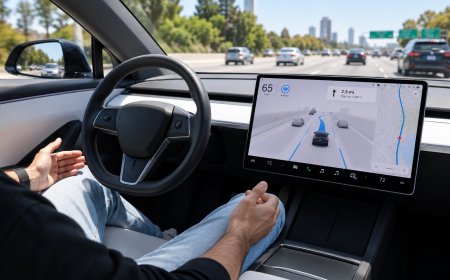
Under the newly announced Roehl partnership, Kodiak-equipped trucks will transport freight autonomously between Dallas and Houston on four round-trips each week. The vehicles will drive autonomously along the entire highway portion of the route, although a human safety operator will remain behind the wheel as a precaution.
Kodiak founder and CEO Don Burnette said the company remains on schedule to begin fully driverless trucking operations on public highways later this year.
"We have tons of over-the-road long-haul initiatives, and bringing on new partners continues to show momentum," Burnette said in an interview. "We're excited about the progress that we're making as we march toward our driverless launch later this year."
Currently, Kodiak owns the trucks used in these operations, employs the safety drivers, and directly handles freight movement for customers, including Roehl, Werner, J.B. Hunt, Bridgestone, Martin Brower, and C.R. England.
However, Burnette said the company plans to shift away from owning trucks once fully driverless operations begin. "We intend not to own the trucks at that point [but to] operate our driver-as-a-service model, where [customers] own and operate the trucks," Burnette explained.
He added that Kodiak already uses a similar model with Atlas Energy Solutions for autonomous operations in the Permian Basin of Texas. Although Kodiak intends to remove safety drivers by the end of 2026, Burnette stressed that the company will begin driverless public highway operations only after completing extensive safety validation.
"It's already operating under all of the conditions that we expect to launch driverless, but there's a lot of validation work that we need to do, and that's where we bring in our autonomy readiness measure," Burnette said.
Kodiak also introduced a new internal "autonomy readiness" metric on Thursday. The system assigns the company a score from 0 to 100 based on the extent of its internal safety validation process that has been completed. Burnette said Kodiak had reached 86% readiness as of April.
The company, formerly known as Kodiak Robotics, became publicly traded in September through a merger with special-purpose acquisition company Ares Acquisition Corporation II, which is affiliated with Ares Management. That transaction valued Kodiak at approximately $2.5 billion at the time.
As part of the public listing, Kodiak raised $275 million in financing. More than $212.5 million came from institutional investors, including $145 million in PIPE financing — a structure in which investors purchase shares directly from a public company. Kodiak also received approximately $62.9 million from the SPAC trust account. The trust account originally held around $562 million. Still, much of that capital was withdrawn after SPAC investors exercised redemption rights before the merger closed, a common occurrence in SPAC transactions.
What's Your Reaction?
 Like
0
Like
0
 Dislike
0
Dislike
0
 Love
0
Love
0
 Funny
1
Funny
1
 Angry
0
Angry
0
 Sad
0
Sad
0
 Wow
0
Wow
0