































OpenAI Expands AI Infrastructure Spending to $750 Billion Through 2030
OpenAI plans to invest $750 billion in AI infrastructure through 2030, beginning with its $20 billion Project Camellia data centre in Georgia.
OpenAI is significantly increasing its long-term investment in artificial intelligence infrastructure, announcing plans to spend an estimated $750 billion through 2030. The revised figure, reported on Wednesday, represents roughly a 25% increase from the company’s earlier projections and underscores the growing demand for large-scale computing capacity needed to develop advanced AI models.
The announcement comes as progress on OpenAI’s Stargate data centre initiative appears to have slowed, prompting the company to move forward with new infrastructure projects. The first major investment under the expanded strategy will be Project Camellia, a massive data centre campus planned in the U.S. state of Georgia.
Project Camellia becomes OpenAI’s first major investment
Project Camellia is expected to cost approximately $20 billion and will be built across 1,400 acres northwest of Savannah. According to OpenAI, the facility will eventually draw at least 3.2 gigawatts of electricity from Georgia Power, making it one of the largest AI data centre developments announced to date.
Georgia Power said the required generating capacity is expected to become available between 2028 and 2032. OpenAI has stated that it will cover the full cost of both the infrastructure and the associated electrical service required to support the facility.
The project also benefits from local economic incentives. According to the Effingham Herald, OpenAI has secured a 50% property tax abatement lasting 15 years from Effingham County, reducing part of the long-term cost of the development.
Power supply raises environmental questions.
Neither OpenAI nor Georgia Power has confirmed exactly how the enormous data centre will be powered. However, recent regulatory filings provide insight into theutility’ss future electricity plans.
Last December, the Georgia Public Service Commission approved Georgia Power’s request to add nearly 9,900 megawatts of new generating capacity. The utility expects all of that capacity to be contracted by the end of 2026, with OpenAI’s planned electricity demand accounting for roughly one-third of the expansion.
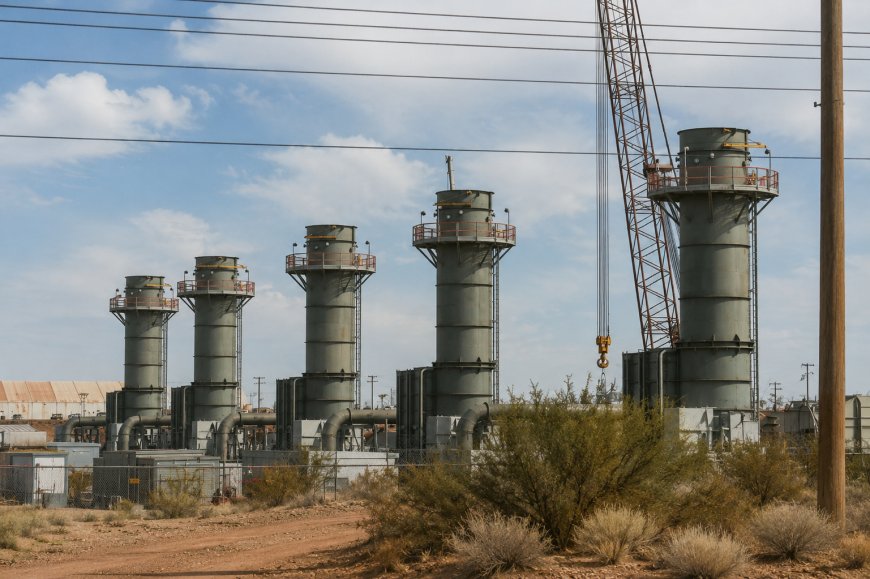
Documents submitted to regulators indicate that most of the additional generation will come from natural gas facilities. Georgia Power plans to build or procure approximately 5.8 gigawatts of gas-fired generation, including a portion supplied by simple-cycle turbines that produce higher emissions. The remainder of the planned expansion will come from grid-scale battery storage and new solar energy projects.
Georgia Power also said OpenAI has agreed to reduce its electricity consumption by as much as one gigawatt during periods of peak demand to help maintain grid reliability.
Construction timeline remains unclear.
Although electricity for Project Camellia is expected to begin flowing between 2028 and 2032, OpenAI has not disclosed when the facility will become operational or when its first graphics processing units (GPUs) will be installed.
The company recently hired Brett Mayo to oversee data centre construction. Mayo previously led development ofxAI’ss Colossus data centre in Memphis, a project widely recognised for its rapid construction schedule.
Colossus has also attracted environmental scrutiny. The facility is the subject of legal action filed by the NAACP and the Southern Environmental Law Centre, which allege that dozens of unpermitted natural gas turbines operating at the site have negatively affected local air quality. The lawsuit claims the turbines were operated under an exemption from certain federal clean air regulations.
As OpenAI accelerates one of the technology industry’s largest infrastructure investment programmes, Project Camellia illustrates both the scale of computing resources required for next-generation AI systems and the growing debate over the energy and environmental impact of powering massive data centres.
What's Your Reaction?
 Like
0
Like
0
 Dislike
0
Dislike
0
 Love
0
Love
0
 Funny
0
Funny
0
 Angry
0
Angry
0
 Sad
0
Sad
0
 Wow
0
Wow
0