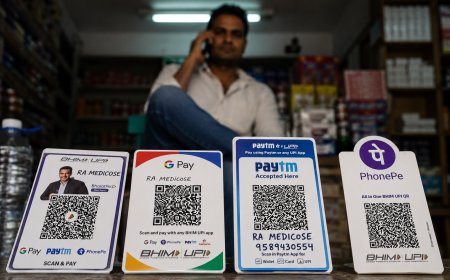








































Salmon secures $100M funding to expand digital credit access in the Philippines
Salmon raises $100M in equity and debt to expand digital credit services for underbanked Filipinos, aiming to improve financial inclusion.

The Philippines has millions of unbanked adults, and its consumer lending market is gradually modernising. Salmon, a Manila-based consumer finance app, has now raised $60 million in equity and $40 million in debt financing to expand digital banking services across the country.
Salmon was founded by Pavel Fedorov, George Chesakov, and Raffy Montemayor, all of whom previously worked at Russian digital bank Tinkoff. Montemayor was also Tinkoff’s first employee in the Philippines and led the company’s expansion efforts in the country starting in 2016. In March 2022, the trio left Tinkoff and launched Salmon.
“We saw that the Philippines and broader Southeast Asia were proving themselves in terms of innovation,” Fedorov said in an interview. “The Philippines is probably one of the most exciting markets for disruption in the financial services industry in the world.”
The Philippines is among the most active mobile markets globally, with a young, tech-savvy population and a strong social media presence that has earned it the label of social media capital of the world. However, its financial infrastructure has struggled to keep pace with this digital growth.
Salmon is targeting underbanked Filipinos, particularly those with little or no credit history, as well as customers dissatisfied with the reliability of traditional lenders.
Notably, Salmon used a strategic shortcut to enter the market. In January 2024, the company acquired a rural bank founded in 1963 to secure a banking license. The startup is now building a full suite of financial products, including revolving credit lines, instalment loans, cash loans, motorbike financing, and deposit products.
“We started by solving the hard things first, lending, and then followed up with many other products. By now, we have around seven or eight different products,” Fedorov said. “It’s impossible for a traditional bank to solve this problem given the current credit market infrastructure in the Philippines.”
Fedorov said the company is addressing a market where even basic loans, such as for a motorbike, can require weeks of paperwork, home visits, and long waiting periods. Salmon aims to simplify and digitise the entire process.
“Customers fill out a form on their phone, upload a few documents, and get a decision in 20 seconds. The bike is ready for pickup the next morning. Instead of using credit history, we score borrowers in real time using behavioural and digital data, and raise limits quickly for those who repay on time,” he explained.
Salmon’s credit products offer up to a 62-day grace period, which Fedorov says effectively makes them interest-free for customers who repay on time. Its banking subsidiary, Salmon Bank, also offers term deposits with returns of up to 8% interest.
With the new capital, Salmon plans to scale its operations and develop additional financial products. If execution goes as planned, the company may consider international expansion within the next two years, according to Fedorov.
The funding round’s dual structure was intentional, he said. As a lending-focused business, Salmon requires both equity capital for operations and growth, and debt capital to fund loans to customers. For its debt financing, the company tapped the Nordic bond market.
Salmon has raised a total of $310 million to date, including $160 million in equity and $150 million in bond financing.
Investors in the latest round include Spice Expeditions, Washington University Investment Management Company, Moore Strategic Ventures, and FJ Labs. Previous backers include IFC, ADQ (Abu Dhabi’s sovereign wealth fund), Lunate, and Antler VC.
What's Your Reaction?
 Like
0
Like
0
 Dislike
0
Dislike
0
 Love
0
Love
0
 Funny
0
Funny
0
 Angry
0
Angry
0
 Sad
0
Sad
0
 Wow
0
Wow
0