



























Sauron, the High-End Home Security Startup for “Super Premium” Customers, Appoints New CEO from Sonos
Sauron, the high-end home security startup, appoints a new CEO from Sonos as it aims to revolutionise premium security systems. Discover the latest updates on Sauron’s mission and product development.
When Kevin Hartz's security system failed to alert him as an intruder rang his doorbell and attempted to enter his San Francisco home late one night, the serial entrepreneur realized that existing security solutions weren't adequate. His co-founder, Jack Abraham, had faced similar frustrations at his residence in Miami Beach. In 2024, they launched Sauron — named after the ominous, all-seeing eye from "The Lord of the Rings" — to develop what they envisioned as a military-grade home security system for the tech elite. The idea gained traction in the Bay Area, where crime had become an increasingly prevalent concern during and after the pandemic, despite official statistics showing declines in property crime and homicide rates.
The startup raised $18 million from executives behind Flock Safety and Palantir, as well as investors from 8VC, Abraham's startup lab Atomic, and Hartz's investment firm A*. Sauron emerged from stealth mode exactly a year ago, with plans to launch in the first quarter of 2025. The product would integrate AI-driven intelligence, advanced sensors like LiDAR and thermal imaging, and 24/7 human monitoring by former military and law enforcement personnel.
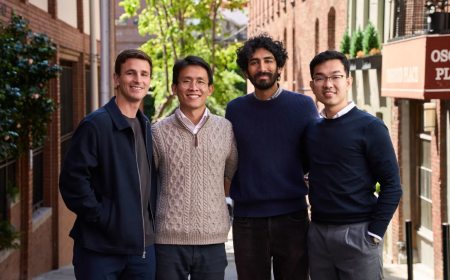
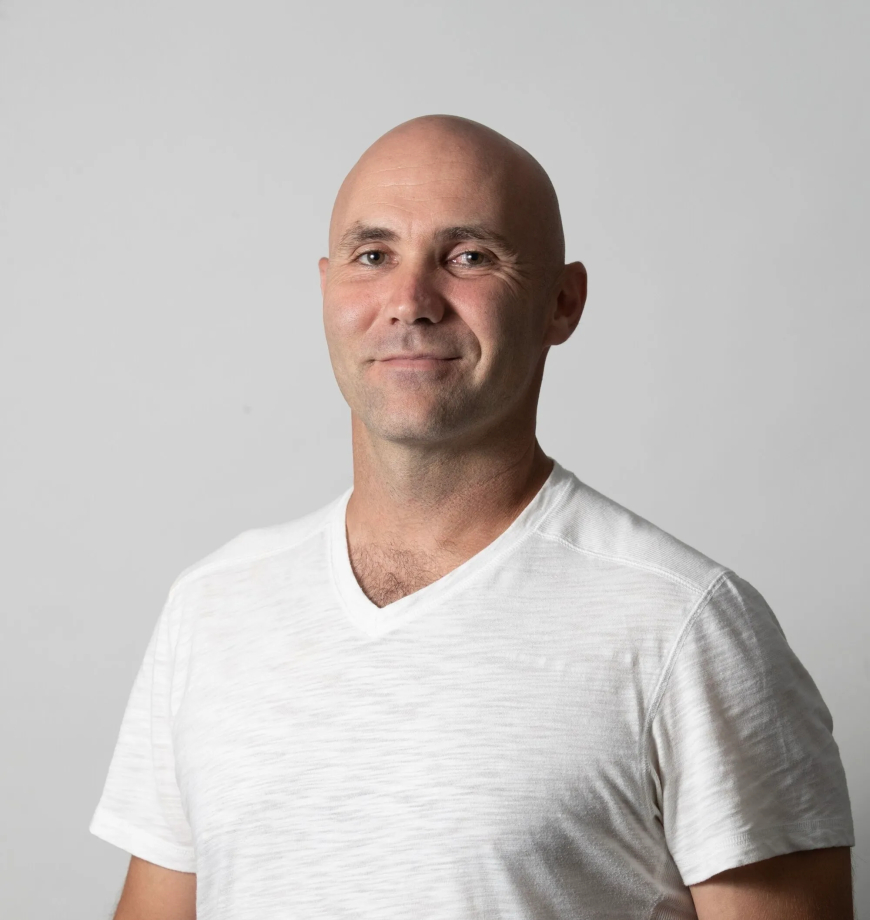
However, a year later, Sauron is still in development mode, a reality acknowledged by its new CEO, Maxime "Max" Bouvat-Merlin, in a recent interview with TechCrunch. After nearly nine years at Sonos, where he served as Chief Product Officer, Bouvat-Merlin became Sauron's CEO last month. He's spending his early days on the job finalizing key questions about sensor selection, the specifics of the deterrence system, and a realistic timeline for product delivery.
The product's release date is now pushed to 2026 at the earliest, a considerable delay from the original timeline.
"We are still in the development phase," said Bouvat-Merlin. "Our solution will be rolled out in phases. Our concierge service, AI software, smart cameras, and other components are coming together into a cohesive plan that we only finalized recently."
Bouvat-Merlin draws strong parallels between Sauron and his previous experience at Sonos, as both companies target high-end consumers first, rely on word-of-mouth growth, and combine advanced hardware with sophisticated software. "I recently had lunch with John MacFarlane, Sonos' founder," said Bouvat-Merlin. "The discussions we're having at Sauron are very similar to those Sonos had in its early days. We're facing the same strategic questions: Should we start with super-premium customers or mass premium? Should the system be professionally installed or DIY? Build everything in-house, or partner with an existing ecosystem?"
The security problem Sauron aims to address is the widespread dissatisfaction with current solutions. "People are not happy with existing systems," said Bouvat-Merlin. "There are too many false positives, and law enforcement often doesn't respond to alarms because they assume they're false."
Sauron is focusing on clients for whom safety and security are critical concerns—people like Hartz. The plan is to begin with a high-end segment, establish a reputation for serving demanding clients, and then expand to a broader premium market.
The Product – Still Taking Shape
So, what exactly is Sauron building? The product is still in development, but early plans include camera pods with multiple sensors—potentially up to 40 cameras —along with LiDAR, radar, and thermal sensors. These pods would be connected to servers running machine-learning software for computer vision, with the entire system linked to a 24/7 concierge service staffed by former military and law enforcement personnel.
"The team understands patterns," Bouvat-Merlin said. "They'll help us refine our machine learning solution and train our system to detect unusual behaviors."
Regarding the deterrence system, specifics remain unclear, but options under consideration include loudspeakers, flashing lights, and other measures to deter intruders. "The key is to prevent intruders from even approaching the property in the first place," Bouvat-Merlin emphasized, referring to detecting surveillance activity and suspicious behaviour well before any intrusion occurs.
Sauron's plans to use drones, previously mentioned in the company's early announcements, remain in development. "These are roadmap conversations, and we're not rushing to implement them," said Bouvat-Merlin. The focus remains on building the product ecosystem through strategic partnerships rather than reinventing the wheel.
Timeline and Business Model
With fewer than 40 employees, Sauron plans to hire 10 to 12 additional employees in 2026. The company plans to work with early adopters in 2026 and aims to raise a Series A by mid-year.
"Raising a Series A is about showing progress," said Bouvat-Merlin. "We want to demonstrate how we'll use additional funds to accelerate growth, launch our first end-to-end product, and expand our customer base."
Sauron has already attracted interest from potential clients, thanks to the efforts of its three co-founders, including roboticist and engineer Vasumathi Raman. Initially, the company will rely on word-of-mouth to build its reputation before scaling.
However, Bouvat-Merlin is cautious about growth, emphasizing the need to maintain premium service quality as the company expands. "We want to ensure sustainable growth while preserving the premium experience our clients expect," he said.
The Surveillance State Question
Privacy concerns, particularly around facial recognition, loom large in discussions about security products. Bouvat-Merlin outlined an approach to address these concerns: a trust-based system in which homeowners grant access to designated individuals. For example, when someone is granted access, the system would recognise them and permit entry. Others would be identified as unknown persons.
License plate detection is also being explored to track suspicious vehicles in neighbourhoods. "How do we assess if that's a threat?" Bouvat-Merlin asked. "Our ex-military and ex-law enforcement team will help us fine-tune the machine learning system to detect and respond appropriately."
Bouvat-Merlin is confident in Sauron's approach. "A lot of companies started as traditional security firms and are now trying to incorporate tech," he said. "We're different. We're a tech startup from San Francisco bringing cutting-edge technology to the security space."
Sauron is launching at a time when concerns about crime in wealthy neighbourhoods are rising. Recent incidents, such as the armed robbery of tech investors Lachy Groom and Joshua Buckley in San Francisco's Mission District, highlight the vulnerabilities of affluent areas.
"We see more crimes targeting the wealthy," said Bouvat-Merlin. "The gap between the wealthiest and the rest of society is growing, and this is creating anxiety among potential clients eager to secure their homes."
Sauron still faces significant challenges in finalising product details, sensor configurations, and manufacturing locations. As Bouvat-Merlin noted, the company will likely begin production in the U.S. to maintain proximity and control, then shift to more cost-effective locations as volume increases.
Sauron must also adapt to different customer environments, from large estates to dense urban residences, while maintaining the premium service standard. For now, Bouvat-Merlin is focused on listening to his team, building credibility, and finalising the company's strategy. "I want to show people why they should trust us, rather than demanding trust upfront," he said.
The company expects to reveal more about its products in the coming year.
What's Your Reaction?
 Like
0
Like
0
 Dislike
0
Dislike
0
 Love
0
Love
0
 Funny
0
Funny
0
 Angry
0
Angry
0
 Sad
0
Sad
0
 Wow
0
Wow
0