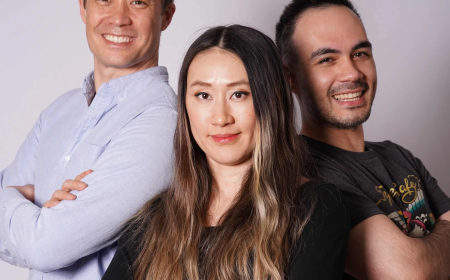
At Etsy, Zoë Weil played a key role in boosting gross merchandise volume by over a billion dollars within a single year by enhancing the company’s AI-driven ranking systems. With her new venture, Sequen, she is now aiming to apply her and her co-founders’ expertise in AI research and product development to a broader range of consumer-focused businesses.
The startup, which recently secured $16 million in Series A funding, provides real-time personalisation technology and ranking infrastructure — capabilities typically used by major tech companies but often out of reach for other large consumer businesses due to the scale of the data required.
While the technical details may not be widely understood outside the tech industry, users of platforms such as TikTok, Instagram, and YouTube have already experienced these types of systems in action.
Weil, Sequen’s CEO, explained the concept by saying, “Modern tech isn’t really recommending content anymore. It’s bending your will in subtle ways over time to make you actually want things. And, in fact, the tech has gotten so good that a lot of people suspect platforms are eavesdropping on their conversations.”
She attributes this behaviour to a large-event model. Unlike large language models (LLMs) used in tools like ChatGPT, which process and generalise text, large event models focus on streams of events and patterns in human behaviour. This approach opens up applications beyond simply improving recommendation algorithms.
Weil believes Sequen’s technology could eventually replace cookies — the tracking tools commonly used to personalise web experiences but increasingly scrutinised for privacy concerns and regulatory pressures.
“Our large event models learn from live user actions, not just clicks and scrolls, but also hovers, conversations, and stuff within a given session — not static profiles or third-party cookies,” Weil said. “That’s how you personalise in real time, even with sparse data. So yes, we do unlock TikTok’s algorithms for Fortune 500 companies that don’t have the infrastructure to do it … but I would say we’re taking it a step further.”
Companies working with Sequen integrate its RankTune platform, which provides access to advanced ranking models and real-time decision systems through APIs. Since many businesses already rely on internal APIs to manage their recommendation systems, switching to Sequen’s solution typically involves replacing their existing API.
In addition to offering real-time personalisation, Sequen emphasises that its approach is less intrusive from a privacy standpoint because it does not rely on persistent user identity data. Instead, it uses live interaction signals, allowing it to function without identifying individual users. The system is also designed for speed, delivering decisions in under 20 milliseconds.
“Our large event models can generalise to streams of real-time events that they get,” Weil explained. “It doesn’t matter who is performing those events — they’re able to understand events and be able to make sense of them without relying on the user’s identity. So actually, the user’s identity is completely irrelevant.”
Despite its privacy-focused design, the company claims its technology can significantly boost revenue.
In one case, a major furniture retailer reported a 7% increase in revenue after adopting Sequen’s system, compared to a previous benchmark of 0.4%, which was considered successful. Another client, Fetch Rewards, achieved a 20% increase in net revenue within just 11 days. The company is also working with a streaming media business and an online travel agency.
Sequen’s pricing model is based on requests per second (RPS), with tiers ranging from 500 RPS to 1,000 RPS and beyond, offering cost reductions at higher usage levels. Among its first five customers, contract values have reached seven figures.
“We’ve seen a consistent pattern where clients choose the highest tier because once they test the system in one use case, they want to roll it out across their entire platform,” Weil noted.
Weil began her career in this field focused on research, but later shifted toward building products. Much of her experience has involved helping companies develop ranking systems that generate measurable business outcomes, which ultimately led to the creation of Sequen.
In less than 18 months, the startup has processed approximately 10 billion requests per month and secured partnerships with several Fortune 500 companies. Its technology stack includes proprietary large event models, ranking algorithms, and related infrastructure.
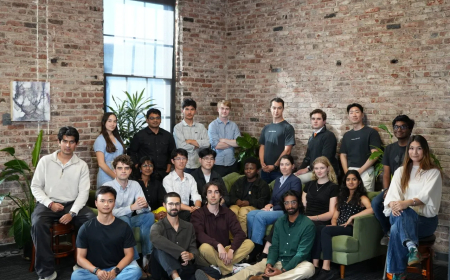
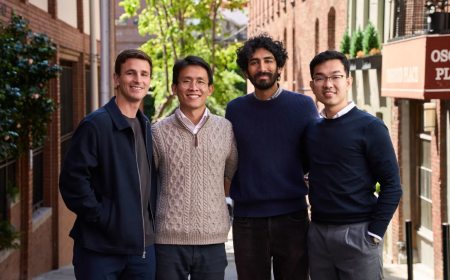
Weil is joined at Sequen by Ethan Benjamin, a former colleague from Etsy, as well as co-founders Mo Afshar and Alexander Thom. Raphael Louca, who previously worked at Meta, has recently joined the company as its chief product officer. Based in New York, the company’s 14-person team includes talent from organisations such as DeepMind, Meta, and Anthropic.
The Series A funding round was co-led by White Star Capital and Threshold Ventures, with additional participation from earlier investors, including Greycroft, which led the company’s seed round. In total, Sequen has raised $22 million to date.









































 Like
0
Like
0
 Dislike
0
Dislike
0
 Love
0
Love
0
 Funny
0
Funny
0
 Angry
0
Angry
0
 Sad
0
Sad
0
 Wow
0
Wow
0