

































South Korea’s Tech Giants Pledge $550 Billion to Expand Memory Chip Production
South Korean technology leaders are investing more than $550 billion to expand semiconductor manufacturing, strengthen AI infrastructure, and address the global memory chip shortage driven by rising AI demand.
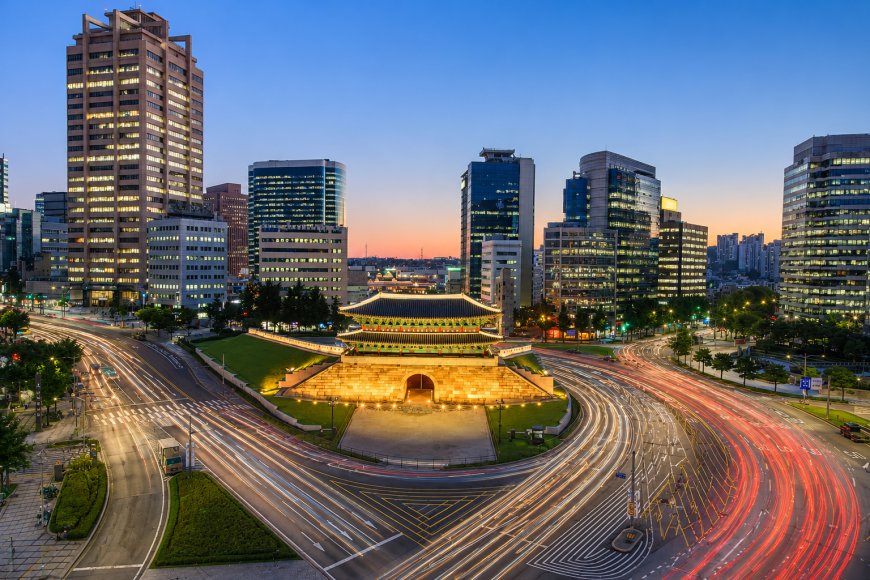
South Korea’s two largest memory chip manufacturers have announced plans to invest 800 trillion won (approximately $518 billion) to build four new memory semiconductor fabrication plants in the country’s southwestern region. This area has traditionally received relatively little semiconductor investment.
The announcement forms part of South Korea’s broader national strategy covering semiconductors, AI infrastructure, and physical AI, which was unveiled during a presidential briefing on Monday, attended by the chairpersons of Samsung and SK Hynix. The plan consists of three major investment pillars. The first allocates $518 billion for four new memory chip fabrication plants in the southwest, along with another $52 billion for a high-bandwidth memory (HBM) packaging hub in the central part of the country. A further 550 trillion won (around $356 billion) has been committed to AI data centres to be developed through 2035 by major Korean technology and energy companies, including SK Group, GS, and Naver.
Altogether, South Korean technology companies have pledged more than $900 billion toward AI infrastructure and the expanding demand for advanced semiconductor technologies. Through these investments, the country aims to strengthen its position as a global AI powerhouse. Samsung, SK Hynix, and U.S.-based Micron are already benefiting from record demand created by what many industry observers have described as “RAMageddon” — a worldwide shortage of memory chips driven by the rapid expansion of AI technologies.
In a televised address on Monday, President Jae Myung Lee described semiconductors, physical AI, and AI data centres as the “three pillars” of South Korea’s next industrial era. He said that 2026 would be a critical year for the country to establish itself as an “irreplaceable” industrial leader.
Lee noted that existing semiconductor manufacturing facilities in Yongin and Pyeongtaek, located south of Seoul within South Korea’s primary semiconductor cluster, have reached capacity. He encouraged companies to accelerate investment in the southwestern region as part of a broader effort to distribute AI-related economic growth beyond the Seoul metropolitan area.
“We must secure overwhelming production capacity in advance,” Lee said.
At the same time, the president rejected media reports suggesting the government had pressured corporations into making the investments. According to Lee, the decisions reflected the companies’ own business strategies, while the government’s responsibility is to create conditions that allow private firms to invest confidently and profitably.
Separately, Samsung announced plans to invest 2,655 trillion won (approximately $1.7 trillion) over the coming decade. Of that amount, 425 trillion won has been allocated to South Korea’s Honam region in the southwest. Samsung cited expected government support for electricity, water supply, workforce development, and regional living conditions as key reasons for selecting Gwangju, roughly 300 kilometres south of Seoul, for a new semiconductor fabrication facility. The company also plans to establish an AI data centre in Haenam, located at the southern end of the Korean Peninsula.
Although the figure appears enormous, it remains comparable with planned AI spending by major U.S. technology firms. According to Reuters, Alphabet, Amazon, Meta, and Microsoft are collectively expected to spend approximately $650 billion on AI infrastructure during this year alone.
Meanwhile, SK Group unveiled its own medium- and long-term investment strategy worth 2,100 trillion won (around $1.4 trillion). Of that total, 1,100 trillion won will support the expansion of semiconductor manufacturing capacity, while another 1,000 trillion won will be invested in AI data centres across South Korea. SK Hynix will lead much of the semiconductor expansion, while SK Telecom is expected to oversee the development of 15 gigawatts of AI data centre capacity nationwide.
Whether these ambitious commitments ultimately translate into completed projects remains uncertain. Semiconductor manufacturing and AI infrastructure require years of planning and construction, meaning market conditions can shift significantly before facilities become operational. If AI-related demand slows by the time these projects are completed, companies could face excess manufacturing capacity and declining chip prices. For now, however, the global AI supply chain—and particularly industries dependent on advanced memory chips—will be closely watching whether South Korea can successfully deliver on its long-term investment strategy.
What's Your Reaction?
 Like
0
Like
0
 Dislike
0
Dislike
0
 Love
0
Love
0
 Funny
0
Funny
0
 Angry
0
Angry
0
 Sad
0
Sad
0
 Wow
0
Wow
0