











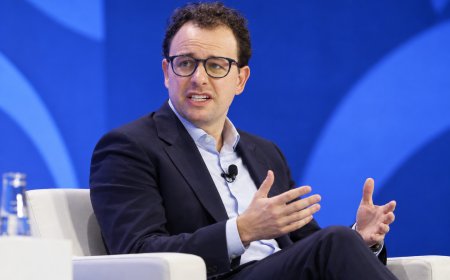





















The Path launches with a focus on safer AI-powered mental health support
The Path, created by former Calm executives and backed by Tony Robbins, aims to provide safer AI-guided mental health support with strong safeguards and expert oversight.
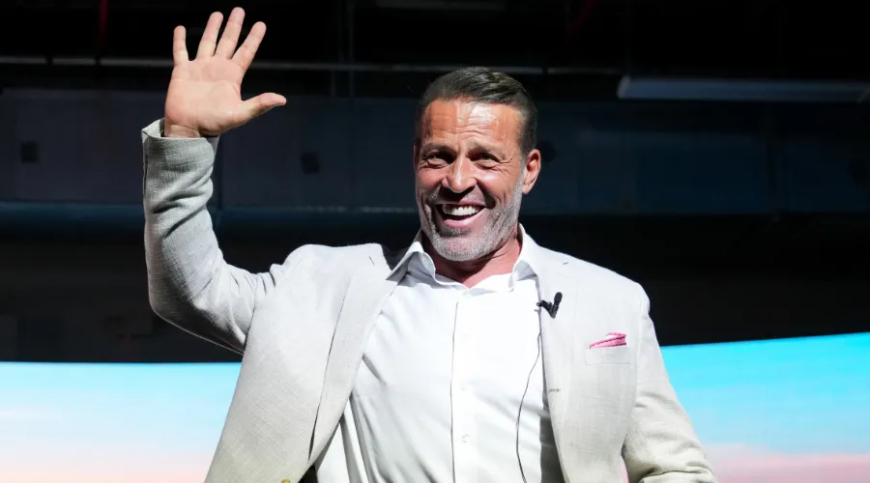
When the founders of a men's mental health application called Mental noticed that one particular feature — AI-powered interactive audio — was generating exceptional user engagement, they realised they had uncovered something with significant potential.
That discovery eventually led to the creation of a new platform designed to offer a different and, they hope, safer approach to AI-assisted therapy. The startup was named The Path, according to co-founder and CEO Anson Whitmer.
The project later attracted the attention of renowned author and motivational speaker Tony Robbins, who became increasingly interested in the company and ultimately joined the venture as a co-founder.
The Path has now secured $14.3 million in seed financing. The funding round was led by Prime Movers Lab, where Robbins serves as a partner. Additional participants included Apolo Anton Ohno, Deontay Wilder, and Designer Fund.
Following the investment from Prime Movers Lab, Robbins began working more closely with Whitmer and co-founder Tyler Sheaffer. Initial discussions centred on relatively minor topics such as branding and positioning. However, as Robbins became more enthusiastic about the product and contributed increasingly detailed ideas, the founders invited him to join the company officially as a co-founder. Since then, Robbins has helped shape The Path into a platform that combines therapeutic support with coaching methodologies inspired by his widely known personal development principles.
Whitmer's interest in mental health technology is deeply personal. Before launching The Path, he worked alongside Sheaffer as an early employee at tCalm, a meditation company. His motivation for entering the mental health field stemmed from painful family experiences.
When Whitmer was 19 years old, an uncle he deeply admired died by suicide. The tragedy inspired him to pursue a doctorate in psychology, with plans to build a career focused on academic research eventually. Yet another devastating event changed the direction of his professional ambitions.
While still attending college, Whitmer received a voicemail from a cousin. At the time, he did not fully recognise the message as a plea for help. By the time he understood its significance, it was too late. His cousin subsequently took his own life.
The experience profoundly affected Whitmer and encouraged him to focus less on academic research and more on bringing evidence-based psychological insights directly to people who could benefit from them. His work at Calm represented an important early step in that mission, particularly because substantial research supports meditation's positive impact on mental well-being. Nevertheless, after remaining with the company until 2021, Whitmer concluded that broader solutions were necessary.
According to Whitmer, even though Calm helped millions of people, the impact still fell short of addressing the complexity of individual mental health challenges.
"Even though we did have a big impact, it's not really a big enough impact," he explained. "The issue is, people's problems are just too idiosyncratic. They're too personal. They're unique."
He also believes that universal access to traditional therapy and coaching is unlikely because the global supply of qualified professionals remains far below demand. Whitmer views large language models and artificial intelligence as a potential solution to help bridge that gap.
"What's exciting and game-changing is that, for the first time in my career, I've seen that there's actually this possibility for every single person to have the personalised sort of access and care that they need to really get the help," he said.
Evidence of that trend is already emerging. OpenAI has stated that at least 900 million people use ChatGPT for mental-health-related questions and conversations each week.
However, Whitmer argues that mainstream consumer AI chatbots are not necessarily designed for effective mental health support. In his view, such systems are primarily optimised for user engagement, which can conflict with therapeutic goals.
Consumer chatbots frequently attempt to provide quick solutions and often reinforce user viewpoints in ways intended to encourage continued interaction. Whitmer contends that therapy and coaching require a fundamentally different approach.
Instead of rapidly offering answers, therapists generally seek to understand the underlying causes of a person's concerns, examine assumptions, and help individuals develop their own insights and solutions.
Whitmer says The Path's AI system has been specifically trained to follow this type of structured process. According to him, the platform is designed to establish a framework that enables users to gradually move toward meaningful resolution while ensuring that problems are understood in depth before solutions are explored.
As part of that effort, Whitmer says the company's specially trained AI model achieved a score of 95 on the Vera-MH mental health safety benchmark. He noted that leading consumer chatbot systems typically achieve scores closer to 65 on the same benchmark. "It's meant to challenge you. It's not just meant to agree with you," Whitmer said.
He further explained that The Path relies on models that have been post-trained from open-source AI systems rather than depending directly on major consumer large language models. As a result, he argues that the application is not simply another wrapper built around mainstream chatbot technology.
The Path currently allows users to choose among 11 virtual AI therapists. Users can also personalise various aspects of the experience, including how direct they would like the AI to be during conversations and other interaction preferences. For now, the service remains free as the company focuses on attracting and growing its user base. Over time, however, The Path intends to introduce a $40-per-month subscription model.
What's Your Reaction?
 Like
0
Like
0
 Dislike
0
Dislike
0
 Love
0
Love
0
 Funny
0
Funny
0
 Angry
0
Angry
0
 Sad
0
Sad
0
 Wow
0
Wow
0