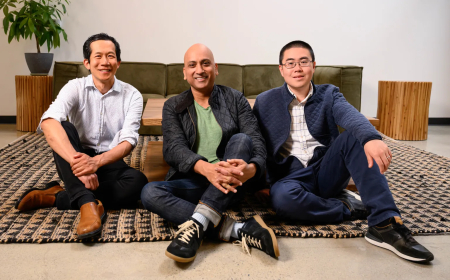

































Dili Raises $21.7 Million to Bring AI Compliance to U.S. Infrastructure Projects
Dili has raised $21.7 million to expand its AI compliance platform, which helps data centres and other U.S. infrastructure projects manage complex regulations.
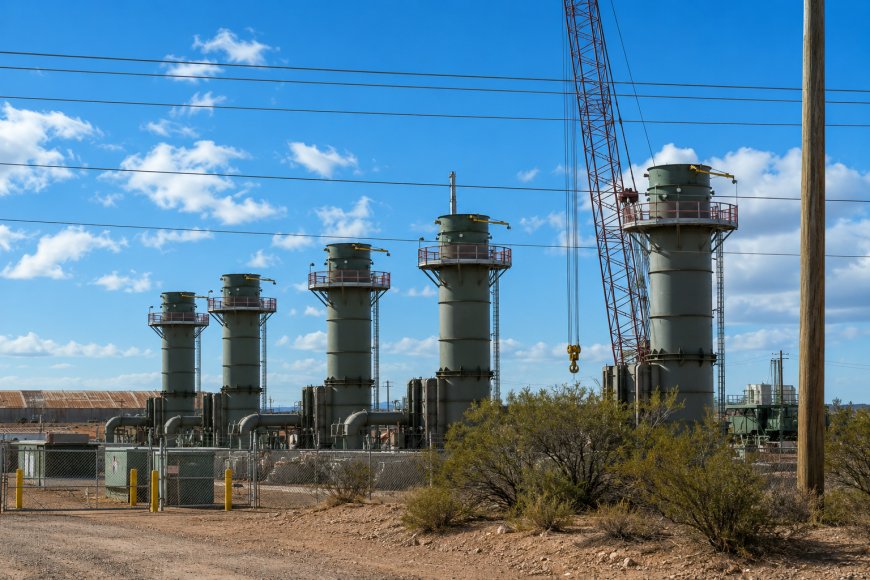
The artificial intelligence boom is driving demand for new data centres, power infrastructure and manufacturing facilities across the United States. Now, AI is also being used to help those projects navigate the complicated compliance requirements that come with building them.
Dili, an AI compliance startup focused on infrastructure projects, announced Thursday that it has raised $15 million in Series A funding. The financing follows an earlier $6.7 million seed round and brings the company’s total funding to $21.7 million.
The Series A was led by Khosla Ventures, with participation from Allianz, Rebel Fund, Brick and Mortar Ventures’ Darren Bechtel and Y Combinator CEO Garry Tan. Dili previously participated in Y Combinator’s Summer 2023 batch.
While a growing number of startups are applying AI to regulatory compliance, Dili is specifically targeting the complicated network of rules surrounding construction and infrastructure projects, particularly projects receiving federal funding.
Dili targets complex infrastructure compliance rules.
Dili co-founder and CEO Anand Chaturvedi points to Davis-Bacon requirements as one example of the complexity infrastructure developers face. Those rules allow the U.S. Department of Labour to establish prevailing wage requirements for certain federally funded or assisted projects.
Clean energy developments receiving support under the Inflation Reduction Act can face another set of prevailing wage and apprenticeship requirements. Depending on the type of project, developers may also have to comply with additional rules involving agencies such as the Occupational Safety and Health Administration and the Environmental Protection Agency.
The result is a complicated collection of overlapping requirements that companies must continuously track across workers, contractors, payroll records and project documentation.
Even relatively small compliance failures can become expensive.
“Non-compliance can result in millions of dollars of fines for those projects,” Chaturvedi said, arguing that checking all available information as it arrives can provide a major advantage over traditional approaches that rely on sampling only portions of project data.
AI converts documents into structured compliance data
Because compliance mistakes can carry significant financial consequences, accuracy is especially important for Dili’s platform.
Chaturvedi says the company has designed its system to limit the uncertainty commonly associated with large language models.
AI models are primarily used in Dili’s data layer, where they process unstructured information from documents and convert it into structured data. Once that information has been extracted, a deterministic system applies the relevant compliance rules.
Those rules may be complicated, but they are relatively fixed, allowing Dili to separate the AI-powered document processing stage from the final compliance decision-making process.
According to Chaturvedi, the approach can reduce work that previously required an entire day to just a few minutes.
The system can analyse information spread across a company’s internal documents, vendor records, enterprise resource planning systems and payroll platforms, then extract the specific information needed for regulatory reporting and compliance.
Dili says its software is already used across 700 projects
Dili is already deploying the technology across a substantial number of real-world infrastructure developments.
Chaturvedi said the company’s system is currently being used on approximately 700 projects, ranging from manufacturing facilities to data centres.
The startup currently operates through two different business models.
Roughly half of those projects use Dili as an internal software platform, allowing companies to manage compliance themselves using the startup’s technology. The other half outsource the broader compliance process to Dili, effectively using the company as a contractor.
Dili supports both approaches, although Chaturvedi expects the market to gradually move toward companies bringing more of these processes in-house as AI software becomes increasingly capable.
He believes software and AI will increasingly automate workflows that professional services firms have traditionally handled.
“Software and AI are going to start eating a lot of those professional services workflows, so I think more and more people will start to bring those in-house,” Chaturvedi said.
As investment in AI infrastructure drives construction of more data centres, energy facilities and related projects, Dili is betting that the compliance burden surrounding that expansion will create another significant market for AI software.
What's Your Reaction?
 Like
0
Like
0
 Dislike
0
Dislike
0
 Love
0
Love
0
 Funny
0
Funny
0
 Angry
0
Angry
0
 Sad
0
Sad
0
 Wow
0
Wow
0