



























Stanford Alumni Secure $11 Million to Develop a Noninvasive Hormone Monitoring Wearable
Two Stanford graduates have raised $11 million to develop a noninvasive wearable device designed for continuous hormone tracking. The technology aims to make hormone monitoring easier, more accurate, and accessible for healthcare, fertility, and wellness applications.
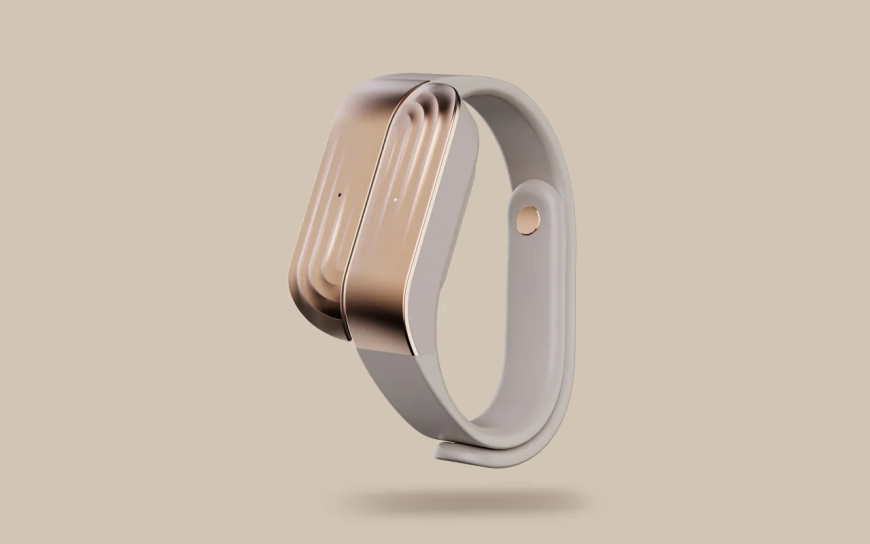
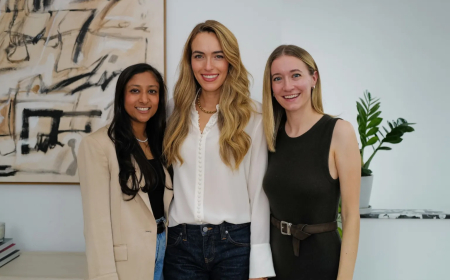
Stanford graduates Jenny Duan and Abhinav Agarwal are tackling two ambitious goals at once: creating an attractive wearable device and advancing hormone-monitoring technology to help women better understand their health.
Their startup, Clair Health, is developing a wearable platform to monitor inflammation, bloating, energy levels, menstrual cycle phases, hormonal fluctuations, and indicators of cycle irregularities and perimenopause. The company aims to provide users with deeper insights into hormonal changes and guidance on managing them.
Clair Health has raised $11.6 million in a funding round led by Khosla Ventures, with participation from a16z Speedrun, Brydge Club, Treehub, Cartan Capital, AGI House, Insiders VC, Anne Wojcicki, and Stephanie Coleman.
To personalise the experience, the company uses voice-based onboarding to gather health information directly from users. Clair Health says it has developed proprietary AI capable of analysing voice biomarkers and identifying a user’s menstrual cycle phase after only a few minutes of conversation.
“What we found is that in women’s health and in the current state of apps, women can’t communicate a large amount of symptoms because the apps are built for only specific ones,” said Duan. “With our voice stack, we are giving our users a way to communicate their own problems in their own way.”
According to the startup, its wearable evaluates multiple biomarkers to determine what drives hormonal changes and how the body responds throughout the four phases of the menstrual cycle, rather than relying solely on menstruation dates. The companion app also provides insights into inflammation, bloating, perceived exertion, and biological ageing.
Clair Health also hopes to improve care for women experiencing menopause and perimenopause by giving them detailed health data they can share with healthcare providers instead of relying only on verbal descriptions of their symptoms.
Duan said her interest in women’s health began while volunteering at a nonprofit organisation in Portland, Oregon, and later she took a women’s health-focused course at Stanford, where she met co-founder Agarwal.
The company believes that existing wearables, such as the Apple Watch and Google Pixel Watch, rely on sensor combinations that are insufficient for tracking hormonal health. Clair Health’s device incorporates 10 biosensors, including a proprietary biomagnetic sensor designed to generate hormone-related insights.
“Until today, there hasn’t been a single device, be it invasive or noninvasive, that can capture insights into hormones in real time and get to the source of a problem,” Duan said. “We didn’t start by thinking of building a particular piece of hardware. We just wanted to track hormones continuously.”
The startup is also building its own AI model using multiple biomarkers alongside data partnerships that provide access to millions of electronic health records and long-term health datasets. The company hopes this will support research into conditions including endometriosis, premenstrual dysphoric disorder (PMDD), perimenopause, and other hormone-related disorders.
Clair Health is currently testing the wearable with a private group of beta users and plans to begin shipping devices in November. The wearable will be priced at $369, alongside a monthly subscription costing $9.99. Preorders are already available.
Mary Minno, an investor at Treehub, said Clair Health addresses a significant gap in women’s healthcare by delivering practical hormonal insights.
“Users want a product that does what it says it is going to do,” Minno said. “Hormonal health measurement today is still archaic. Clair aims to provide information that previously required blood testing.”
The women’s hormone monitoring market is becoming increasingly competitive. Companies including Level Zero Health are pursuing continuous monitoring with glucose monitor-style devices; Hormona offers home hormone testing; and apps such as Ourself Health use AI to generate personalised insights from manually logged health data.
What's Your Reaction?
 Like
0
Like
0
 Dislike
0
Dislike
0
 Love
0
Love
0
 Funny
0
Funny
0
 Angry
0
Angry
0
 Sad
0
Sad
0
 Wow
0
Wow
0