


































US lawmakers divided as surveillance law deadline nears
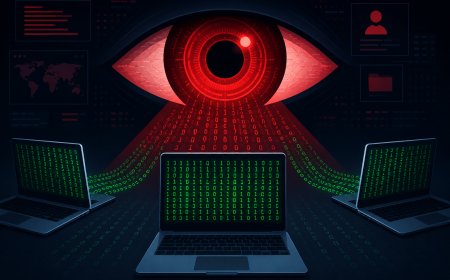
US lawmakers are split over renewing key surveillance laws as expiration nears, with debates focused on warrantless surveillance and privacy protections.

A long-running U.S. surveillance law that allows intelligence agencies to collect and analyze large volumes of overseas communications without individual search warrants is set to expire on April 30. As the deadline approaches, lawmakers remain deeply divided over whether to extend it without changes under the Trump administration.
The legislation, known as Section 702 of the Foreign Intelligence Surveillance Act (FISA), authorises agencies, including the National Security Agency, the CIA, and the FBI, to collect foreign communications that pass through U.S. infrastructure without obtaining individualised warrants.
Because global communications are often routed through U.S.-based servers, the program inevitably collects vast amounts of incidental data involving Americans, including phone records and emails of people communicating with foreign targets. Critics argue this raises constitutional concerns, as such collection occurs without traditional protections against domestic surveillance.
With the law nearing its expiration following a short-term extension passed last week, a bipartisan group of lawmakers in both the House and Senate is pushing for significant reforms. They argue that changes are "essential" to safeguard Americans' privacy rights.
Some members of Congress are calling for broad overhauls in response to years of reported surveillance abuses across multiple administrations. Others are delaying their support, using the debate to advance broader legislative priorities.
A social media post from President Trump indicates that the White House currently favours a straightforward reauthorization of Section 702 without major amendments.
At the centre of reform efforts is the Government Surveillance Reform Act, introduced in March by Sens. Ron Wyden (D-OR), Mike Lee (R-UT), and other lawmakers. The bill seeks to limit warrantless surveillance authorities and address long-standing concerns about how intelligence agencies use the data they collect.
One major proposal would close the so-called "backdoor search" loophole, which allows agencies to search U.S. communications collected under foreign surveillance programs without first obtaining a warrant.
Another provision would restrict federal agencies from purchasing commercially available data about Americans from data brokers. Such data, often collected through mobile apps and location services, is sold through intermediaries and can include detailed location histories.
FBI Director Kash Patel confirmed at a March congressional hearing that the FBI purchases Americans' location data without a court order.
Both Republican and Democratic lawmakers have expressed interest in closing this loophole, especially as agencies increasingly use AI systems to analyze large-scale location datasets. The issue is also reportedly affecting broader negotiations between the U.S. government and AI companies such as Anthropic and OpenAI over data access and tool use.
The bill has support from major privacy organizations, including the American Civil Liberties Union, the Electronic Privacy Information Centre, and the Project on Government Oversight.
However, its passage remains uncertain. Lawmakers argue that reform is increasingly urgent as advances in technology make surveillance more powerful and easier to scale.
Sen. Ron Wyden, one of the most prominent privacy advocates in Congress, has warned that many lawmakers are unaware of long-standing secret interpretations of Section 702 that significantly expand surveillance powers affecting Americans' privacy. He has called for declassification so Congress can fully evaluate the scope of the program.
Rep. Thomas Massie (R-KY) has also publicly opposed reauthorization, citing concerns about the FBI's interpretation of the law.
Even if Section 702 expires on April 30, U.S. surveillance activities would not immediately stop. A procedural mechanism allows intelligence collection to continue for up to a year under court oversight.
The Foreign Intelligence Surveillance Court (FISC) reviews and certifies surveillance practices annually, effectively enabling continued operations even without immediate legislative renewal.
Additionally, broader surveillance authorities remain in place outside of congressional oversight, including Executive Order 12333, which governs much of the U.S. intelligence community's foreign surveillance activity and can also incidentally collect data on Americans.
What's Your Reaction?
 Like
0
Like
0
 Dislike
0
Dislike
0
 Love
0
Love
0
 Funny
0
Funny
0
 Angry
0
Angry
0
 Sad
0
Sad
0
 Wow
0
Wow
0