


























Why Automakers and Energy Firms Are Racing Into Tesla’s Battery Supply Chain
Tesla’s battery business is attracting automakers, mining companies, and energy providers worldwide. Explore why demand for battery technology, energy storage, and EV supply chains continues to grow around Tesla’s ecosystem.
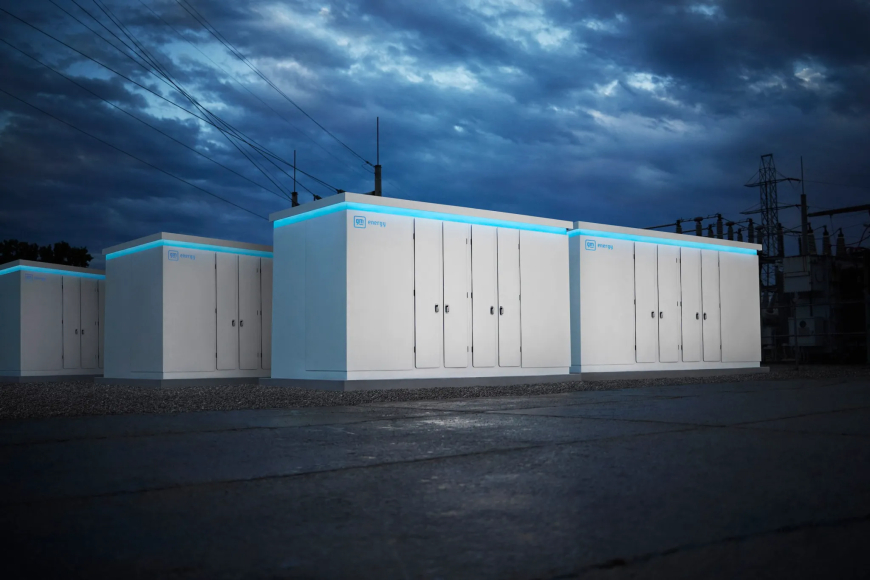
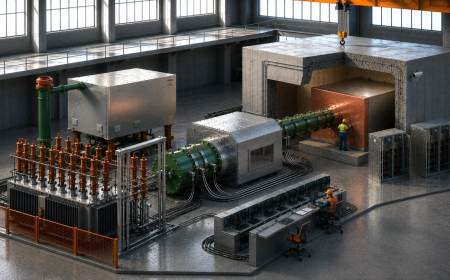
Tesla entered the market first, followed by Ford, and now General Motors is making a larger push into energy storage. As demand for large-scale battery systems continues to surge, more automakers are looking beyond electric vehicles and toward stationary energy storage as a major growth opportunity.
The appeal is clear. While EV sales growth in the United States has slowed, demand for large stationary battery systems has expanded rapidly, with installations roughly doubling over the last two years. Industry forecasts suggest the momentum is far from over.
Even after incentives were reduced under the One Big Beautiful Bill Act, the Solar Energy Industries Association expects annual energy storage installations to surpass 110 GWh by 2030, approximately twice current levels.
“There’s a lot of potential for this market,” said Kurt Kelty, GM’s vice president of battery and sustainability.
GM has previously explored energy storage projects, but this week the company made a more significant move by introducing a new sodium-ion battery chemistry designed specifically for the sector.
Several factors are driving growth in energy storage. One of the biggest is the rapid expansion of AI-related data centres, whose electricity consumption is expected to nearly triple by the end of the decade. At the same time, industries across transportation, manufacturing, and building systems are becoming increasingly electrified, further boosting demand for energy storage solutions.
“Data centres are a big part of the growth, but even without data centres, it started to really pick up,” Kelty said.
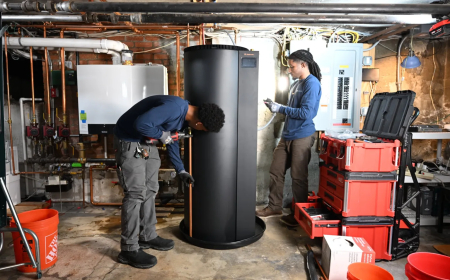
Automakers are not the only companies pursuing the opportunity. Startups have also attracted substantial investment as they attempt to capture market share. Base Power raised a $1 billion Series C round in October to expand beyond Texas, while Lunar Energy secured $232 million to grow its residential battery business. Meanwhile, companies such as Lightship have expanded beyond their original focus, with the electric RV maker now offering mobile battery systems for temporary power applications.
At present, Tesla remains the dominant player in the sector. Of the 57 gigawatt-hours of energy storage installed last year, the company accounted for roughly 82% of deployments. Revenue from Tesla’s energy generation and storage division has doubled since 2023, driven largely by strong demand for its Megapack and Powerwall products. Gross margins in the segment are around 30%, roughly twice those generated by Tesla’s EV business and well above traditional automaker margins. By comparison, GM’s average gross margin over the past 15 years has been slightly above 11%.
Despite the market’s strong outlook, GM is taking a measured approach. Its first major sodium-ion battery products are not expected to arrive until later this decade.
“We’re going to develop a family of cells that is appropriate for this market,” Kelty said.
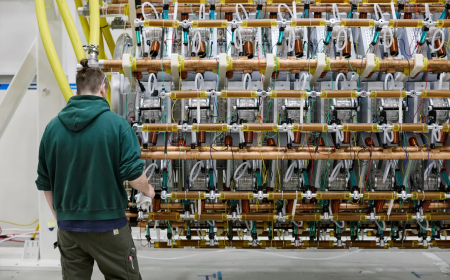
Kelty and his team argue that sodium-ion technology offers several important advantages. The raw materials are inexpensive and widely available, the batteries do not require active cooling systems, and they can tolerate significantly more charge-discharge cycles than conventional lithium-ion batteries.
Another benefit is supply-chain diversification. Unlike lithium-ion batteries, whose supply chains are heavily influenced by China, sodium-ion materials remain relatively open. For example, nearly all global cobalt processing is currently controlled by Chinese companies.
“It gives us a path towards supply-chain resilience and low-cost materials,” said Andy Oury, GM’s business planning manager. “Sodium-ion is very much in its infancy with the opportunity for the supply chain to grow anywhere people want to invest in it.”
GM could have entered the market more quickly by repurposing lithium-ion cells already being produced at its battery factories, similar to strategies pursued by Tesla and Ford. However, the company remains optimistic about the future of EV demand and is reluctant to divert production capacity that may be needed if the electric vehicle market accelerates again.
“It’s one thing to build cells when there’s excess capacity,” Oury said. “It’s another thing when we return to a high-growth mode, and every new battery you want needs a new plant.”
Part of that future growth may come from GM’s own battery innovations. The company is developing a lithium-manganese-rich (LMR) chemistry scheduled for introduction in 2028. GM believes the technology can deliver most of today’s EV driving range while reducing vehicle costs by roughly 10%, potentially bringing EV pricing much closer to conventional gasoline-powered vehicles.
Beyond LMR, sodium-ion batteries could eventually play a larger role in transportation. Chinese automakers have already begun experimenting with the chemistry. Although sodium-ion batteries tend to be heavier and offer a shorter driving range than lithium-ion alternatives, they are cheaper and less susceptible to fire. They may support rapid charging, making them attractive for lower-cost EV models.
“Is this the right play for EVs in the long run? That’s yet to be decided,” Kelty said. “It does give us the advantage that if we want to go that direction, it’ll be very easy for us because we’re going to be right doing a lot of research on this anyway. We’re not ruling it out.”
Of course, moving more cautiously than competitors carries risks. If demand for AI infrastructure weakens and data centre construction slows, GM could miss part of the opportunity. Still, Paul Menson, GM’s director of energy storage commercialisation, believes a strong product strategy will matter most regardless of market conditions.
“No market grows indefinitely forever,” he said. “That’s why you have to have the best product. Because if you have the best product, it doesn’t really matter what happens in the market contraction because you still have the best product.”
Even so, Kelty emphasised that GM is looking for ways to accelerate its entry into the sector.
“We’re actually exploring other ways to get into the market faster,” he said. “We’re definitely going to try and go as fast as possible.”
What's Your Reaction?
 Like
0
Like
0
 Dislike
0
Dislike
0
 Love
0
Love
0
 Funny
0
Funny
0
 Angry
0
Angry
0
 Sad
0
Sad
0
 Wow
0
Wow
0