



































Startup Develops Advanced Super Metals for Military Drones, Premium Watches, and High-End Chef’s Knives
A pioneering startup is developing next-generation super metals designed for military drones, luxury watches, and premium chef’s knives. Discover how advanced metal alloys could transform aerospace, defence, precision engineering, and consumer products.
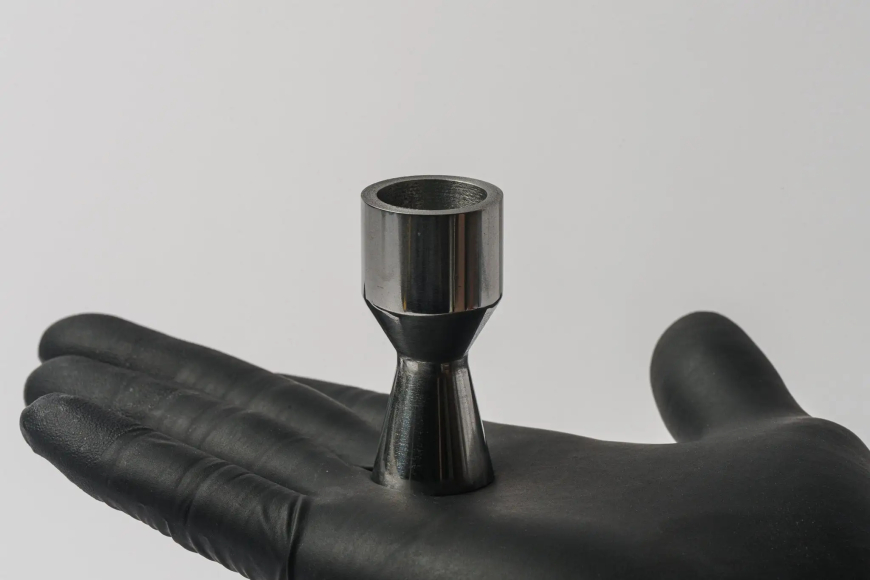
The way humans create metal alloys has remained largely unchanged since the Bronze Age: different metals are melted together to form a stronger material. Foundation Alloy believes it has found a better approach by eliminating the melting process altogether.
Instead of relying on heat, the startup has developed a solid-state alloying technique that repeatedly compresses and smashes metal powder particles together to form entirely new materials.
“We’re actually smashing metal powder particles together instead of melting them,” Foundation Alloy co-founder and CEO Jake Guglin said. “That allows us to create material properties that simply aren’t possible using traditional manufacturing methods.”
The company currently produces its custom alloys in relatively small quantities, but Guglin says demand is already outpacing production capacity.
“Our biggest limitation today isn’t finding customers—it’s making enough material to supply them,” he said.
Foundation Alloy is already running pilot programs with companies across several industries, including automotive, aerospace, semiconductors, defence, luxury watchmaking, and premium kitchen knives. According to Guglin, the new manufacturing process can significantly reduce production costs while minimising material waste.
To expand manufacturing capacity to several tons of alloy each week by 2027, Foundation Alloy has secured a $22 million Series A funding round led by Voyager Ventures. Other investors include Trust Ventures, Yamaha Motor, America’s Frontier Fund, Overlap Holdings, Material Impact, Engine Ventures, El Cap, and Kanematsu Corporation, which will distribute the company’s materials throughout Japan and Southeast Asia.
The startup’s technology is built upon more than two decades of scientific research. Researchers Tim Rupert and Chris Schuh spent years studying the behaviour of metals at the nanometer scale, laying the scientific foundation for the company’s manufacturing process. Schuh previously co-founded both Desktop Metal and Xtalic.
Unlike conventional alloy production, where metals are melted before mixing, Foundation Alloy uses specialised milling equipment to repeatedly compress metal powders until they coalesce into an entirely new material. Guglin says the solid-state process consumes roughly ten times less energy than traditional melting techniques.
The objective of alloy production is to create a uniform crystalline structure that evenly combines multiple metallic elements. Traditional manufacturing methods accomplish this reasonably well, but they often leave microscopic inconsistencies that can weaken performance, making materials more brittle or less heat-resistant.
Another limitation of conventional alloying is that metals with widely different melting temperatures cannot be readily combined, preventing manufacturers from producing certain high-performance materials with desirable characteristics.
Foundation Alloy’s approach removes many of those restrictions. The company has developed alloys capable of delivering both exceptional heat resistance and mechanical strength—two characteristics that have traditionally required difficult compromises. Metals designed for extreme temperatures often become brittle, while stronger industrial alloys typically lose durability under prolonged heat exposure.
The startup says its materials overcome these longstanding trade-offs. Early products are already being tested in manufacturing tools used by automotive companies, as well as in components for aerospace and defence applications. One promising defence opportunity involves drone manufacturing, where existing supply chains were originally designed for low-volume fighter aircraft production rather than large-scale drone assembly.
“They’ve been thinking about building around 100 perfect parts each year,” Guglin explained. “Drone manufacturing requires something closer to 10,000 parts every month.”
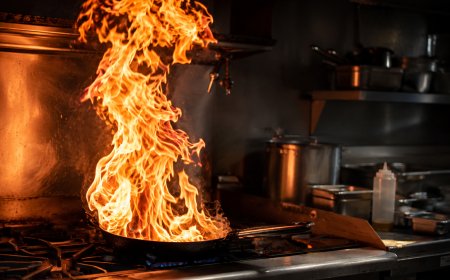
Guglin compares alloy development to cooking. Two chefs may begin with identical ingredients, yet achieve completely different results depending on how they prepare them.
“The quality of a meal isn’t determined only by the ingredients—it’s also about how you cook them,” he said. “We’ve developed an entirely new way to cook metal.”
What's Your Reaction?
 Like
0
Like
0
 Dislike
0
Dislike
0
 Love
0
Love
0
 Funny
0
Funny
0
 Angry
0
Angry
0
 Sad
0
Sad
0
 Wow
0
Wow
0