






























Fast Metals Turns Aluminum Waste Into a Source of Critical Minerals
Fast Metals has raised $4.3 million to scale technology that extracts iron, titanium, aluminium, and rare-earth elements from alumina refinery waste.
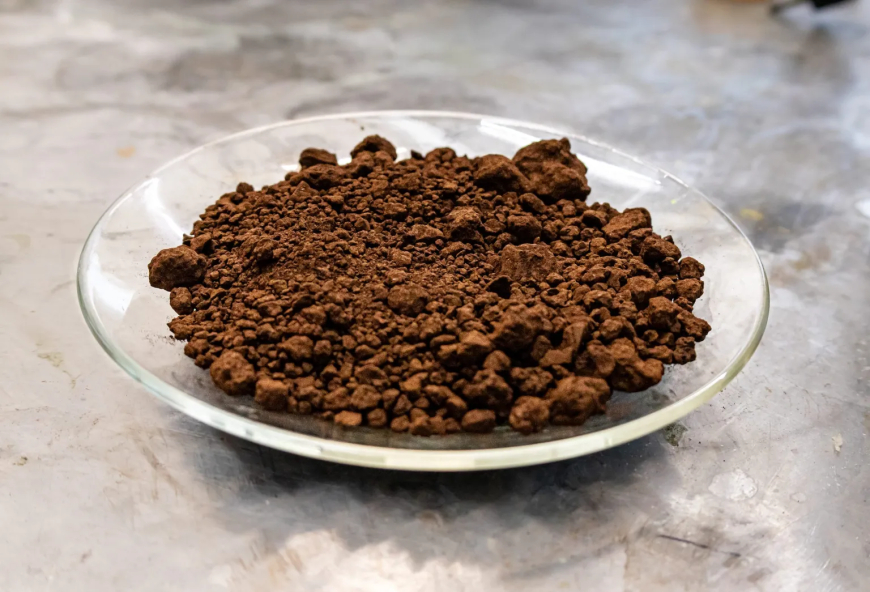
Billions of tons of waste left behind by aluminum production could become a new source of valuable critical minerals if Fast Metals can successfully scale its extraction technology.
The startup is developing a process to recover iron, titanium, aluminium, and rare-earth elements from red mud, a caustic waste product created during alumina refining. More than 3 billion tons of the material are currently stored around the world in open-air ponds and piles.
Fast Metals co-founder and CEO Sumedh Gostu sees those enormous waste deposits as an untapped mineral resource.
“It is a very rich resource,” Gostu said. “If you attack with the right chemistry, it can be very profitable.”
The startup recently raised $4.3 million in pre-seed financing to develop that approach. New Climate Ventures led the round, with participation from Azolla Ventures, Astor Swiss and Founders Factory, an accelerator backed by mining giant Rio Tinto.
Fast Metals uses one waste stream to process another
Red mud gets much of its distinctive colour from iron oxide, which is generally the most abundant compound in the material. But mixed alongside the iron are potentially valuable minerals, including titanium, aluminium and rare-earth elements.
The challenge has historically been economics. Separating those materials from the large quantities of iron oxide can be too expensive to make recovery commercially attractive.
Fast Metals believes it has found a way around that obstacle using a chemical process that incorporates another waste stream produced by alumina refineries.
Gostu developed much of the underlying process while completing his doctoral studies at the Colorado School of Mines. A key piece emerged later during discussions with co-founder Anthony Staley, when the pair realised that another refinery waste product could potentially make the extraction process significantly more economical.
The company combines that material with other chemicals and processes red mud through six stages. Different minerals are separated during various steps, potentially allowing Fast Metals to sell several products from the same waste stream.
Gostu said the economics are designed so revenue from recovered iron can cover operating expenses, leaving the more valuable materials to generate profit.
High-value minerals could improve the economics.
Some of the minerals contained in red mud can command significantly higher prices than iron. Titanium dioxide, for example, sells for roughly $2.50 to $3 per kilogram, while scandium oxide can sell for around $750 per kilogram.
Recovering those materials from existing industrial waste could also provide an alternative source of critical minerals without requiring entirely new mining operations.
Fast Metals plans to use its new funding to move the technology toward larger-scale production. The company has signed a commercial agreement with mineral processor Metalox to begin treating approximately one ton of red mud and refinery waste each week later this year.
If the process proves economical at larger volumes, Fast Metals could turn one of the aluminium industry’s largest waste problems into a source of commercially valuable minerals.
What's Your Reaction?
 Like
0
Like
0
 Dislike
0
Dislike
0
 Love
0
Love
0
 Funny
0
Funny
0
 Angry
0
Angry
0
 Sad
0
Sad
0
 Wow
0
Wow
0