

































DeepMind Alumni Launch Fusionality With $3.7M to Build Fusion Control Systems
Fusionality, founded by former Google DeepMind researchers, raised $3.7 million to develop reusable control and simulation systems for fusion reactors.
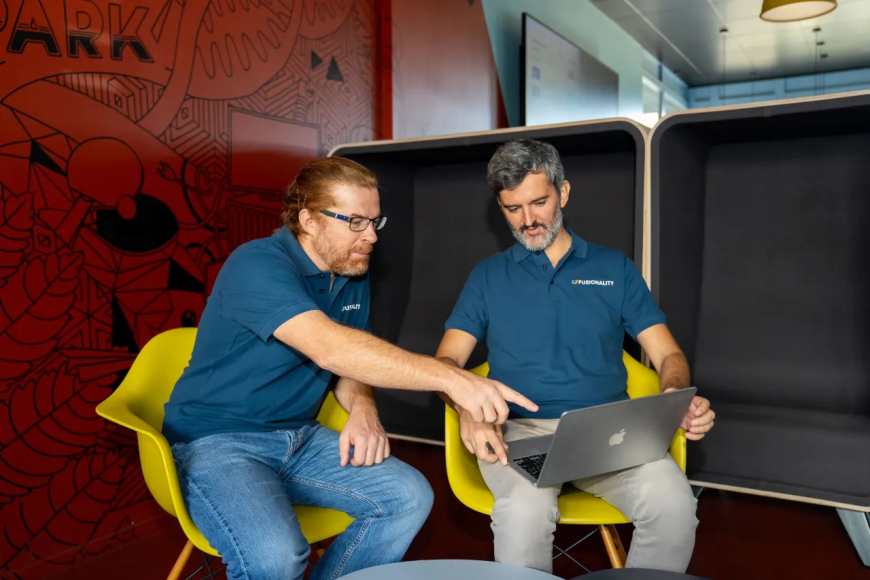
Former Google DeepMind researchers Federico Felici and Jonas Buchli have launched Fusionality, a Lausanne-based startup developing control systems and simulation tools for fusion companies.
The startup raised a $3.7 million (CHF 3 million) pre-seed round from Founderful and Playfair. Felici serves as CEO and Buchli as CTO.
The idea grew out of conversations with fusion companies that were building much of their reactor-control infrastructure themselves. Felici said developers wanted to buy more of those components but struggled to find suppliers that understood fusion technology’s specific requirements.
“We spent quite a lot of our time solving exactly the problems that our customers need to solve,” Felici said. “It felt like the right time.”
Building reusable fusion control systems
Fusionality is targeting the hardware and software used to control fusion reactors, an area where Felici said companies often recreate similar systems independently.
“Across the industry, many companies make their own control systems from scratch,” Felici said. “But actually, 80% of each company’s control system is really the same.”
Fusion systems require precise control of superheated plasma, including its temperature, shape and fuel level. Fusionality plans to use the common elements across reactor designs to build control technologies and simulation environments that customers can adapt to their own systems.
The startup joins a growing fusion supply chain that includes companies developing specialised components and manufacturers producing high-precision parts for reactor developers.
DeepMind research shaped the startup
Felici and Buchli met while working on using artificial intelligence to control an experimental tokamak, a doughnut-shaped device used in fusion research. Felici worked at EPFL in Switzerland, while Buchli worked at Google DeepMind.
Felici later joined Google DeepMind, where he worked on simulations and machine-learning interfaces for fusion devices.
He expects AI to have a role in future reactor-control systems but does not see it replacing the entire control architecture. Felici said AI is currently better suited to complement, enhance or optimise individual parts of the system.
Magnetic confinement comes first
Fusionality is initially focusing on magnetic confinement fusion, which uses powerful electromagnets to contain hot, dense fusion fuel. Commonwealth Fusion Systems, Realta Fusion, Proxima Fusion and Type One Energy are among the startups developing magnetic-confinement systems.
Felici said the company eventually plans to support other fusion approaches.
Fusionality currently has a team of seven. Its pre-seed funding will support development of what Felici described as a tightly selected group of technologies, although he declined to identify the first products.
He compared the strategy to building with Lego blocks, starting with a small number of technologies and expanding the portfolio over time. The company’s broader goal is to provide more of the systems needed to operate fusion reactors without forcing developers to build every control component from scratch.
What's Your Reaction?
 Like
0
Like
0
 Dislike
0
Dislike
0
 Love
0
Love
0
 Funny
0
Funny
0
 Angry
0
Angry
0
 Sad
0
Sad
0
 Wow
0
Wow
0