
































When Could Commonwealth Fusion Systems Go Public?
Commonwealth Fusion Systems has raised $4 billion and hired former Moderna CFO Lorence Kim, raising questions about when the fusion startup could go public.
Commonwealth Fusion Systems is the best-funded fusion power startup, having raised about $4 billion from investors over the past seven years, including another $1 billion announced this week.
With that level of funding, progress on its demonstration reactor, and early work on its first commercial plant, attention is increasingly turning to a key question: when could CFS go public?
One recent hire adds to that speculation.
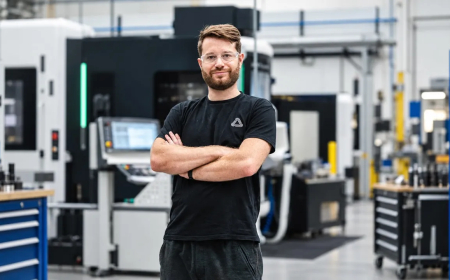
CFS this week named Lorence Kim as its new chief financial officer. Kim was previously CFO of Moderna, the biotech company known for mRNA therapies.
He joined Moderna in 2014 and helped guide it through its IPO in December 2018, staying on for about a year and a half afterwards before moving into biotech investing.
At CFS, Kim said he sees “something very familiar.”
“Fusion today is where mRNA was a decade ago: scientifically real, commercially yet-to-be-proven, and closer than the consensus thinks,” he wrote on LinkedIn.
CFS brings in an executive with IPO experience
While a biotech executive might seem like an unusual fit for a fusion company, Kim is not the first leader in the sector with that background.
Eric Lander, co-lead of the Human Genome Project, also co-founded fusion startup Pacific Fusion and serves as its CEO.
Christine Dunn, CFS’s head of external communications, said Kim brings experience scaling a science-driven technology with major geopolitical and commercial implications.
Still, the company emphasised that his hiring does not mean IPO preparations are underway.
Moderna went public roughly four and a half years after Kim joined. But CFS is at a different stage, and some observers think a public listing could come sooner.
Fusion faces a different regulatory path than biotech
One major difference is regulation.
Moderna’s products require extensive clinical trials and regulatory approval before reaching the market, a process that can take years and significant capital.
That is because medical treatments can directly affect patient safety.
Fusion energy operates under a different risk profile. Unlike nuclear fission, fusion reactions are designed to shut down automatically if conditions are not maintained, rather than risk a runaway reaction.
Regulators have reflected this by creating separate frameworks for fusion technology.
That could give CFS more flexibility in development and commercialisation compared with a biotech company bound by clinical trial timelines.
Sparc could provide a major milestone.
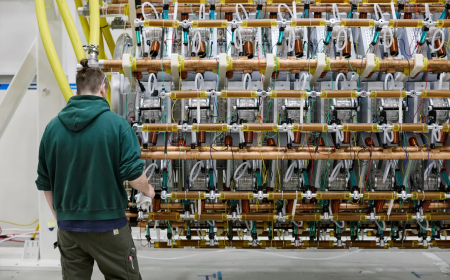
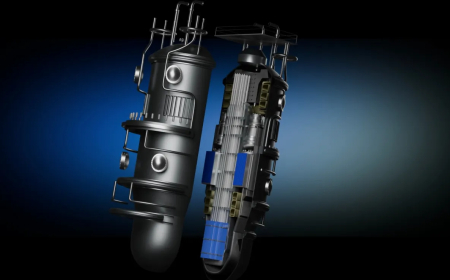
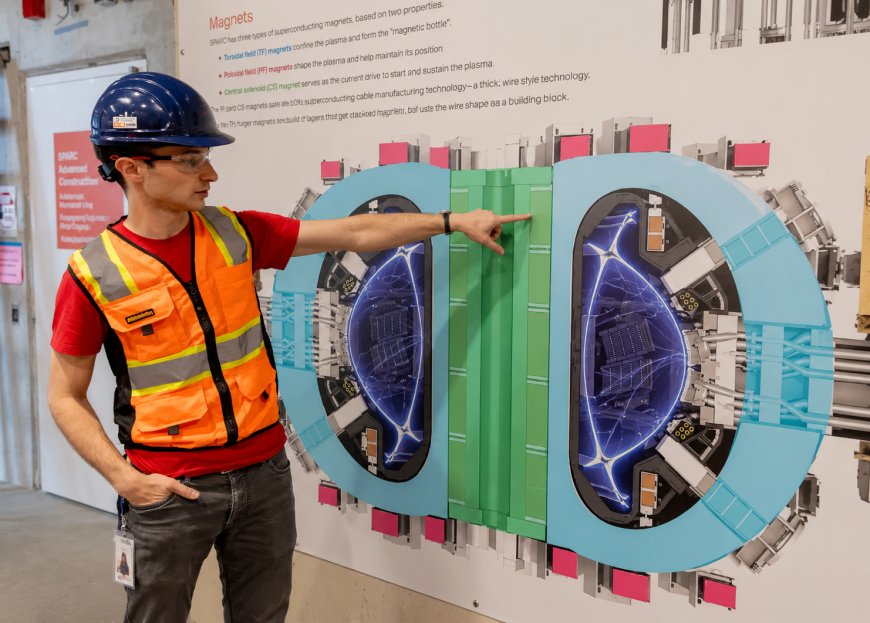
CFS is also advancing Sparc, its demonstration reactor.
The company originally aimed for operation in 2025 and now expects it to come online later this year. While delays are common in first-of-a-kind engineering projects, CFS has largely kept its timeline intact.
It hopes Sparc will achieve scientific breakeven next year.
That milestone means producing more energy from fusion than is required to start the reaction. It would not yet represent commercial power production, but it would be a major validation of the technology.
Only one fusion experiment has reached that point so far, making Sparc a critical test for CFS.
CFS has already started work on Arc
Alongside Sparc, the company is developing Arc, its first commercial fusion plant.
CFS has selected a site in Chesterfield County, Virginia, and is already working through permitting.
The goal is to have Arc operating in the early 2030s.
Even if CFS goes public in the near term, it would still require years of heavy investment before Arc begins producing electricity.
Kim’s experience at Moderna may be relevant here, as he helped manage the company during its early public-market years when it was still unprofitable before the COVID-19 boom.
The AI boom could create an attractive IPO window.w
Rapid growth in electricity demand from AI data centres could also shape timing.
Tech companies are competing for large-scale power sources, increasing interest in technologies that can deliver reliable, high-output energy.
Other fusion companies are already tapping public markets. General Fusion went public via SPAC earlier this month, while TAE Technologies plans a public listing through a merger with Trump Media and Technology Group.
CFS has also secured interest from major customers.
Google has agreed to purchase half of the output from its first commercial plant.
None of this confirms an IPO is imminent, and CFS says Kim’s hiring should not be read as a signal of active preparations.
But with a seasoned public-company CFO, billions already raised, key technical milestones approaching, and rising demand for new power sources driven by AI, the company may have reasons to consider public markets sooner rather than later.
IPO windows do not stay open indefinitely, and CFS may not want to miss a period of strong investor appetite for advanced energy technologies.
What's Your Reaction?
 Like
0
Like
0
 Dislike
0
Dislike
0
 Love
0
Love
0
 Funny
0
Funny
0
 Angry
0
Angry
0
 Sad
0
Sad
0
 Wow
0
Wow
0